Treasure Talk with Bob Evans, News, Rare Coin Articles
Treasure Talk: Episode 6 Part 2Dimes – another “Collective” favorite
Jun
Treasure Talk: Episode 6 Part 2Dimes – another “Collective” favorite
There is another group of coins that are one of my favorites: the dimes.
Twenty-three years passed between the project’s previous visit to the S.S. Central America shipwreck site in 1991 and my next look at it. The process of degradation continued to reduce known features into less recognizable rubble. But much bigger changes had transformed the human and technological players.
The onward march of technology and computer controls is omnipresent and never ceasing. When we finished the early expeditions in 1991, my recollection is that our shipwreck operations used the equivalent of five (5) IBM AT computers. (I’m not actually a computer guy, but this is what I recall.) When we returned in 2014, each crewmember had more than that much computer memory in his personal cellphone. In 1991, our ROV Nemo employed the horsepower of a large riding lawnmower, and traveling between locations on the shipwreck was time-consuming and always involved moving the surface ship as well. In 2014, Zeus packed the power of a sportscar, and it could zip around the site with fair independence from the ship.
The company changed radically. As California Gold Marketing Group was acquiring the treasure in 1999, Tommy Thompson was collapsing the company staff into a skeleton crew, with functional legal and accounting practices, but little real progress, as Tommy tried to sell his next project. Contractors and investment partners sued in 2005, asking for accountability. What had happened with the money the company had received for the treasure? Thompson had the company attorney, Rick Robol, employ all kinds of tactics to delay and obfuscate in court, while he avoiding appearing himself. Ultimately, after years, in August 2012, the federal judge told Robol that he was ordering Thompson to appear before the bench in one week and give an accounting.
Tommy Thompson fled.
US Marshals pursued him for 2 ½ years, until nabbing him in a Florida hotel room in January 2015. Meanwhile, in State Court, Judge Patrick Sheeran held a receivership hearing to determine if new court-monitored management for the company was warranted or possible. Thompson had left the company leaderless and essentially insolvent, with one major investor still loyally fronting enough to maintain a corporate pulse, but little else.
In preparing for the receivership hearing Rick Robol had called me, asking me to come into court and provide evidence that treasure had not gone missing, and that real records and controls had been maintained. It was during my testimony, in an answer to cross-examination, that I told the judge I would be happy to work with whomever he appointed.
Ira Kane was appointed as Receiver, and hired me as a consultant, as well as another deep-sea shipwreck consultant of high reputation, David Mearns of Blue Water Recoveries. While I worked during the summer of 2013 trying to fully audit and clean up issues remaining from earlier treasure inventories, (ultimately and completely resolved!) David assessed the company business records and other files and worked on the feasibility of a return expedition. I was fully convinced of the potential of a return expedition, after more than twenty years. But Ira explained to me (as it was otherwise obvious) that he couldn’t just accept my word that there was sufficient “down treasure” remaining on the shipwreck. He needed an independent outside opinion.
I assisted but did not interfere in David’s assessment. He tallied up the “down treasure” and arrived at numbers similar to my own. It was sufficient to consider an expedition, so I was satisfied. He had one line item in his list that I had not previously considered, “Ship’s money, potential face value $5,000.”
I thought at the time, “OK, that’s interesting.” My focus really was on gold from California, but yes, the ship was a business traveling to and from Panama with some intermediate stops, usually in Havana. They would have paid for supplies, food, repairs, etc., with the cold cash of the day, gold and silver. It was a big business. So, I accepted David Mearns estimate, and didn’t give it too much more thought.
The next April found me back at sea working on the shipwreck I last saw 23 years previously. The crew of the Odyssey Explorer treated me, at first an outsider, with real respect, which I truly appreciated. I will admit that a whole mental circus unfolded in my mind as I felt like a native guide ushering a team of world class explorers into a place that only I knew well. Or I thought I knew it well.
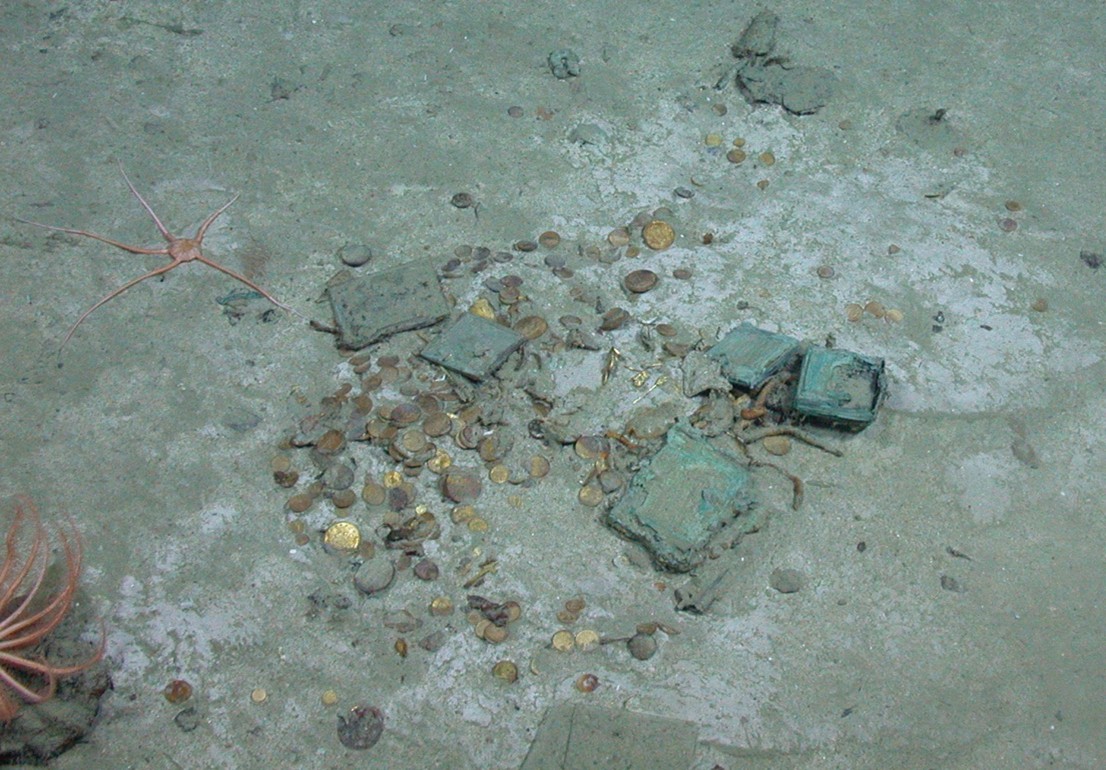
The technology in 2014 was worlds removed from the tech of 1991. During the receivership hearing in 2012, I was asked about any plans I had for future expeditions, and I testified that the first step should be a thorough survey of the entire shipwreck site. And that is what happened, a full photo-mosaic and multi-beam sonar survey, mapping the whole main shipwreck and surrounding debris field. I remember team members enjoying the sport of browsing through the images of the photo-mosaic, looking for piles of coins in the debris field, and recording each such location. Each image, slightly overlapping the previous one, represented a straight-down photo from 2 or 3 meters above the seabed. I recall hearing some delighted remarks as piles of gold coins marched into view, “Whee!” “Bingo!” “Yahtzee!” “Jackpot!”
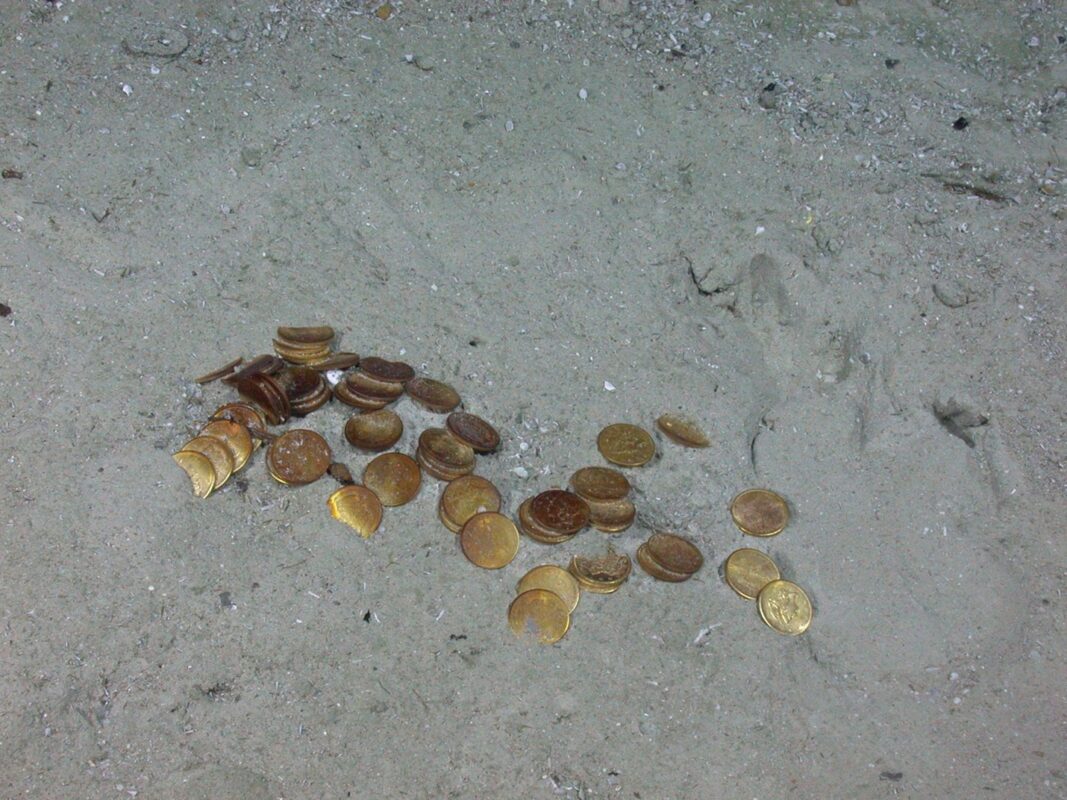
We focused on survey and recovery from outside the main shipwreck at first. We found plenty during that photo-mosaic survey to keep ourselves busy with coin piles.
There was so much variety in the coin piles representing passenger money, more than we had ever seen from the commercial shipment, which was dominated by gold bars and boxes of double eagles. Now we had the whole coin shop. Gold coins ranged from tiny 25¢ California Fractional Gold to $20 double eagles, found sometimes in close juxtaposition.
My partner in representing the original company on the Odyssey ship was Craig Mullen, a legend in deep-sea operations, and ten years my senior. Craig knew all the business and administration. I knew all the science and history. A perfect partnership. We monitored the contractor’s operations 24/7. Craig had the day watch: 0900 to 2100 (9AM to 9PM.) I had the graveyard shift 2100 to 0900. It worked well, since Odyssey’s guys changed watches at 12 and 6, so everyone in the management and operations team came into contact with everyone else regularly, and the continuity of information and actions was maintained.
My usual process was to turn things over to Craig at 0900, then take a half hour to unwind, before hitting my cabin and trying to sleep through the day’s activities. If I shut all my curtains (easy) and shut off my mind (sometimes difficult), I could get a decent day’s sleep.
After a couple weeks, I got the hang of it. One day in May, I awoke from a good sleep, grabbed a cup of bad coffee (they eventually got that sorted out), and wandered into the “offline room.” This chamber sounds relatively unimportant, but this was actually the control center from which the archaeologist, the client representatives (Craig and I) and the Odyssey’s Project Managers would monitor the action.
It wasn’t my shift for a few hours yet, but I was curious to see what was going on. As I entered, a member of the crew (I forget who) excitedly announced, “Bob! We found a safe!”
My immediate reaction was “Where? Are you looking in the main pile?”
“No. In the debris field. We passed it a while ago. We’ll get the pictures up for you.”
They arranged a screen for me and started scrolling through the dive’s frame grabs. The coffee was kicking in, so I began yakking, sharing my experience and commenting skeptically, “Oh yeah. We saw all kinds of iron boxes, giant and small. Those water tanks are big iron boxes, you know? Back in ‘91, we landed next to a smaller box once and cut into it. Nothing. Maybe a box of tools or nails or…”
The right scene appeared on the screen, and I abruptly stopped gabbing.
My jaw dropped as I slowly intoned, “That… could be… a safe.”
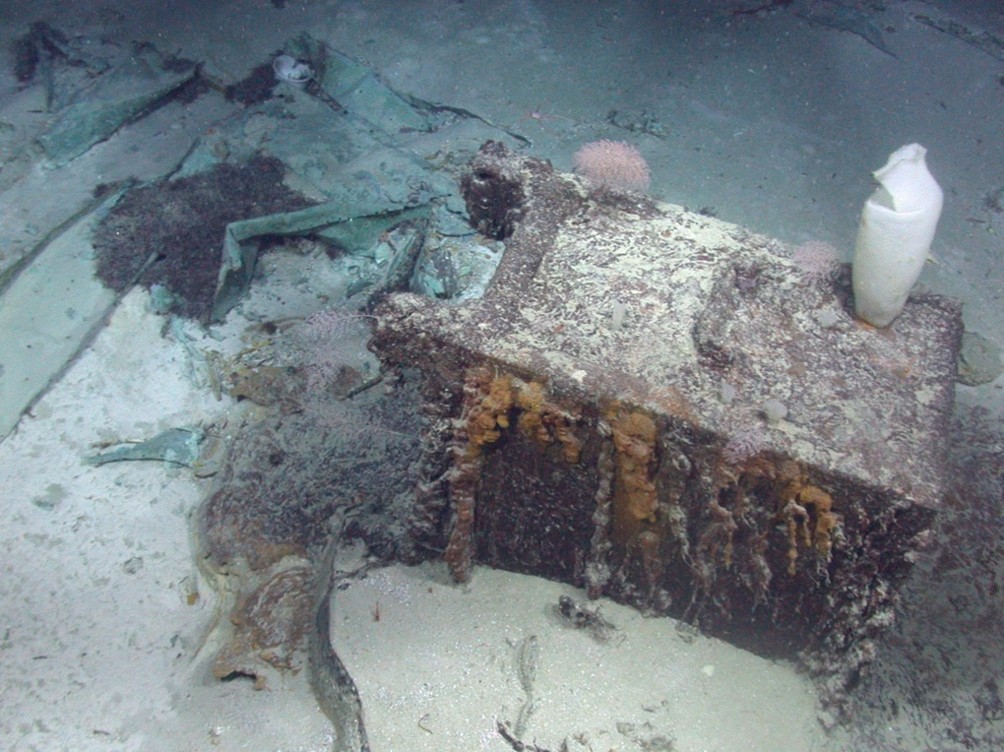
The others laughed at my reaction, and then we discussed this new discovery. We puzzled over the box for some time, but the general consensus was that it was, in fact, a safe. Its location 28 meters from the port side of the shipwreck was a mystery, but it honestly looked like a cast iron box with legs, lying on its side, and covered with both rust and biology.
Could we recover it? Intact? Or was that too risky? It must be heavy – it’s a safe.
We decided to test the iron. We landed next to the base and probed one of the legs. The water exploded into a murky, orange cloud as the cast-iron support disintegrated.
Well. We can’t move it unless we enclose the whole thing. We can’t do that, can we? And we still don’t know if it really is a safe, and what is in it.
Can we open it? How “surgical” can we be? It was hard to tell which side was which through all the bubbling rust, but we settled on the opinion that, if the box was indeed a safe, it was lying on its side (the left side when facing the upright unit) and so the door was accessible. We probed the upper corner, knocked away some of the rust, producing the same clouds we saw with the leg. But now the operator was using the nozzle of the “vacuum,” our suction dredge, which kept the scene clear.
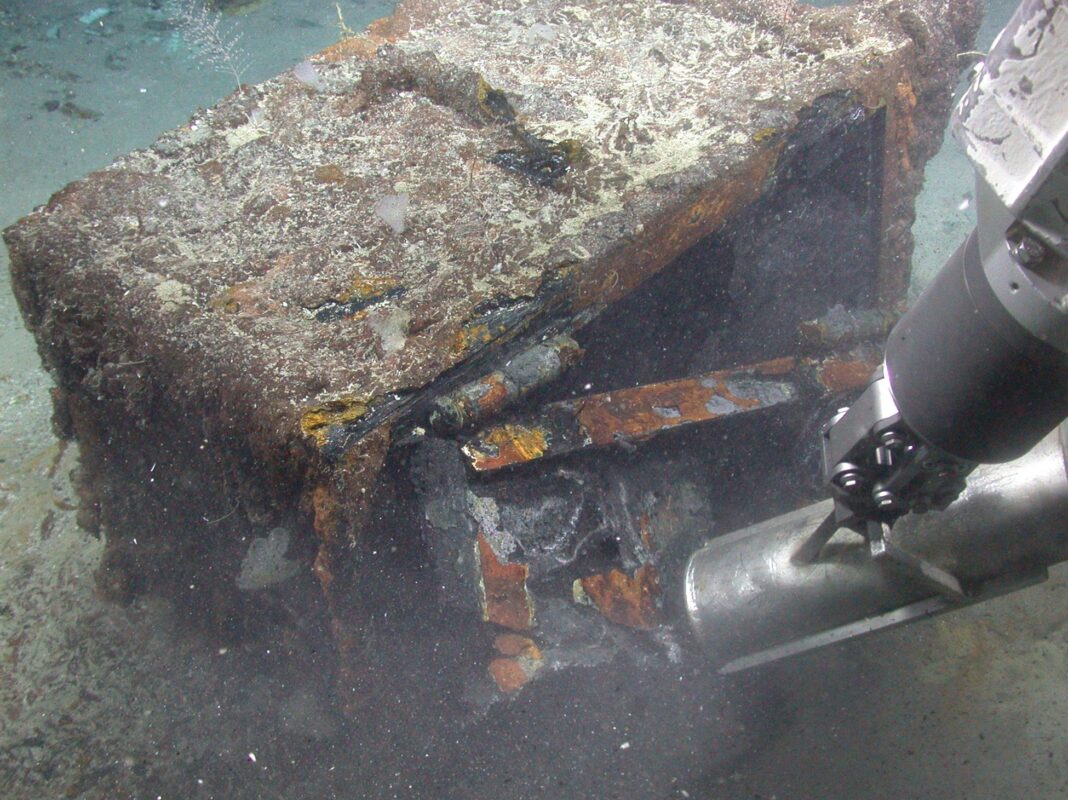
We exposed hinges, confirming our analysis that it was lying on its left side.
We pushed on a hinge and the door came loose.
OK. We were right. It was better to open it in place than to risk a disaster by moving it. We pushed on the second hinge, and the heavy door crumbled onto the sediment clouding our view. Once it cleared, we could see different chambers inside. There appeared to be unknown contents sitting there, having waited 157 years to be seen again.
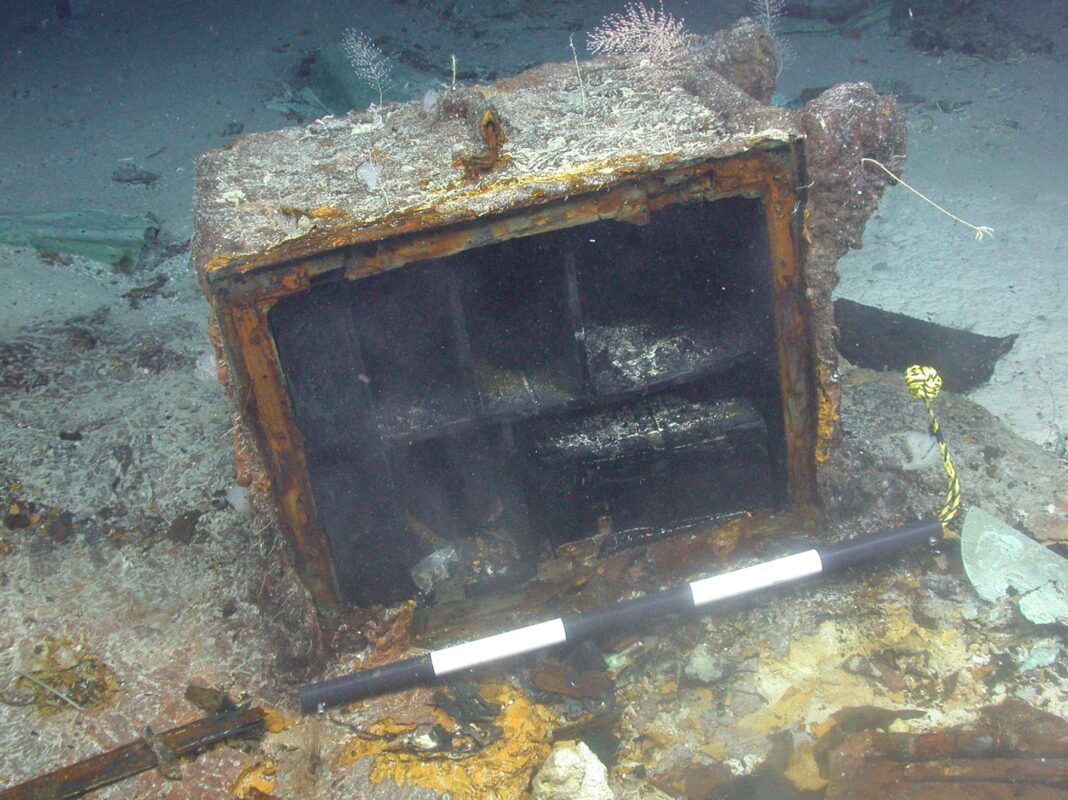
During the dive when we opened the safe (Dive 14 for the season), we removed three parcels from what would have been the lower right chamber. These turned out to be a saddlebag, a vest, and a torn-up pair of pants, each of which had been bundled up and tied with cord. The knots securing the bundles were sealed with wax. These all contained small bags packed with gold dust. This was the Odyssey crew’s first realization that gold dust, not coins, not ingots, but golden dirt, would present unique recovery challenges on this mission. “Blimey” was a word I heard more than once, uttered by the Brits among the crew.
We were due back in port in a few days for the mid-May, regular monthly change (called a rotation) of the professional contractor’s crew. This expedition was not like the old days (80s and 90s,) when the Columbus-America Discovery Group’s crew would sign on for the whole season. The professional tech crew who performed survey and recovery ops on the Odyssey Explorer rotated on a monthly basis, during port calls set for the 15th of every month.
It was a truly international bunch of guys (all male on the Odyssey ship) from the UK, Canada, New Zealand, Spain, Germany, France, Belgium, South Africa, and probably one or two other places that I’m missing. The 2014 FIFA World Cup played out on the pitches of Brazil, while several men from around the globe gathered during off hours to watch on the satellite TV, in a lounge next to the galley on a small speck of a ship on the vast, remote Atlantic. It was quite a scene, particularly since Germany ultimately won the Cup and Germans were among the crew. The Spanish members of the ROV crew were disappointed, since Spain didn’t make it out of Group Play. The merchant marine crew who operated the ship was largely European (UK, Poland and Ukraine), and served for longer stints of a few months at a time. The monthly rotations were something the techies looked forward to. For those guys, this was one of those jobs where you go to an isolated place and work like hell for a month; and then you get a month off. So, we had opened the safe and discovered parcels of gold dust inside. We had just a couple more dives before the mid-month port call.
We decided to try to recover the big parcel sitting in the original lower left chamber, just inside the door.
That might be important!
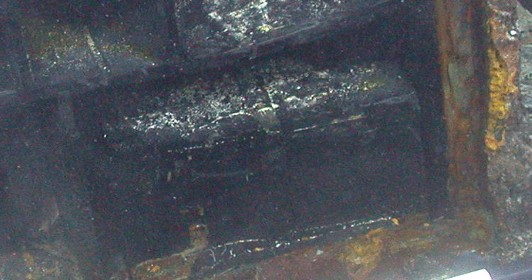
The engineers fashioned a spatula to shove under what appeared to be a box of some sort. In practice, this part worked fine, with the paddle sliding underneath without hanging up. But the parcel was constructed of some cardboard-like substance, which was soggy and limp, and we watched the walls flex as we carefully withdrew it from the chamber, lifting it just slightly, pulling it onto the seabed. It was obvious that a significant mass was inside, and we were worried about safely lifting the flimsy parcel with its heavy load into the cargo drawer on the ROV Zeus. So, we decided to open the box inside the box. This was starting to be like Russian Matryoshka nesting dolls.
The waterlogged parcel was bound by a belt of some sort, which gave way easily and allowed us to lift the lid. Inside there were two canvas bags.
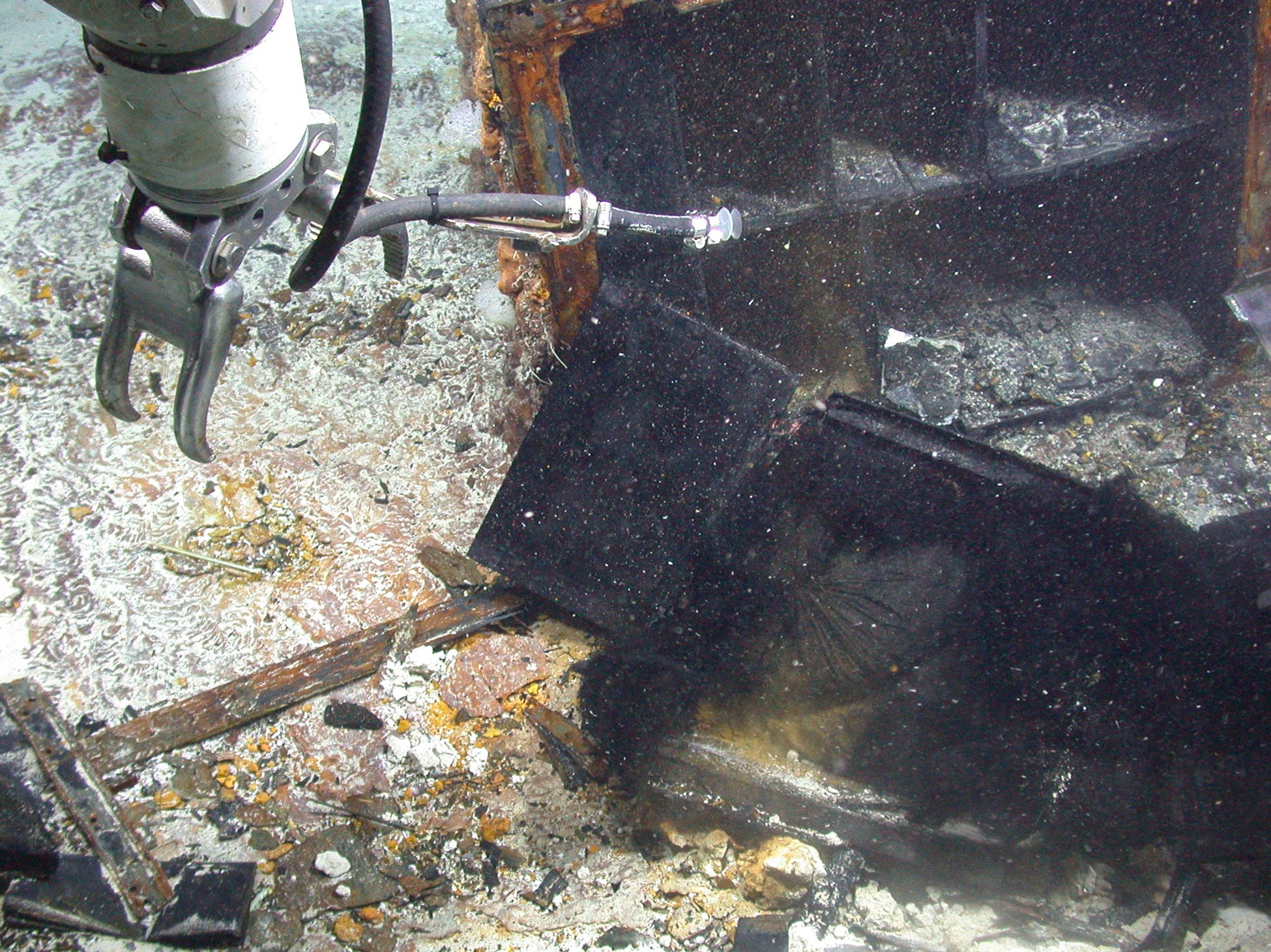
We lifted one bag up out of the parcel, and it did not spill its contents. So, we opened Zeus’s cargo drawer and swung the bag into our custody. Then we reached back for the second bag.
It was heavy, and very large, the size of a soccer ball. Our minds raced, “What the heck could this thing be full of?” as the pilot lifted it into the drawer.
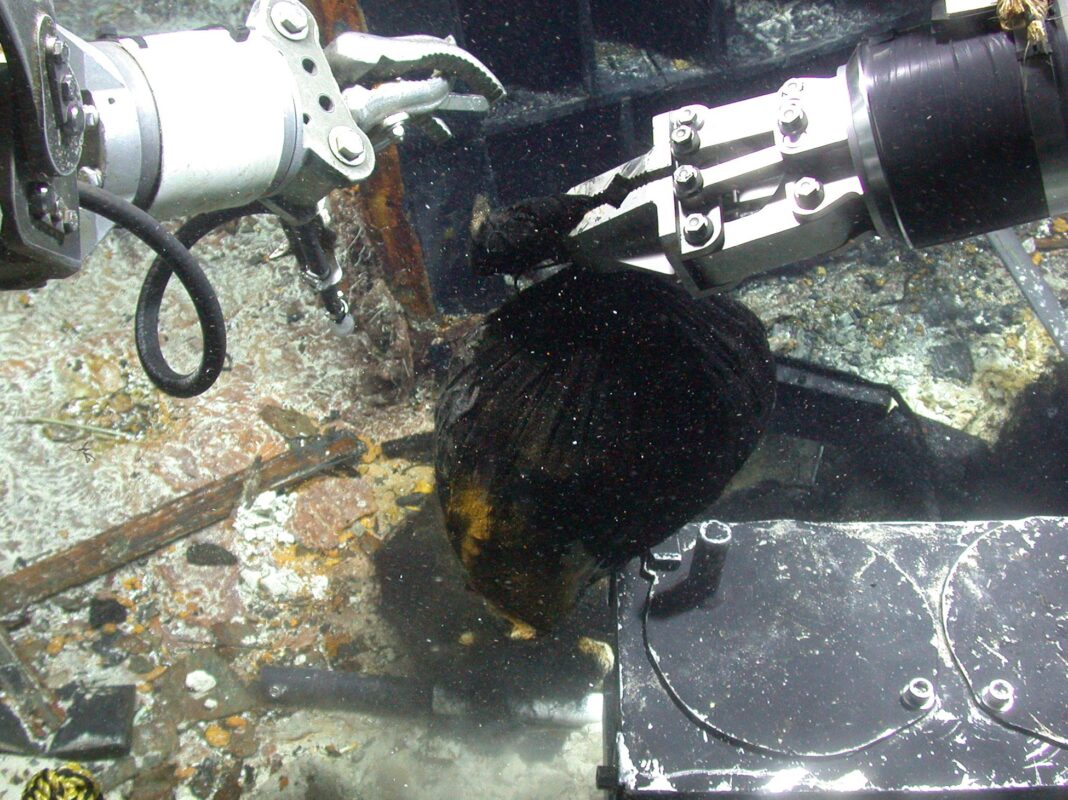
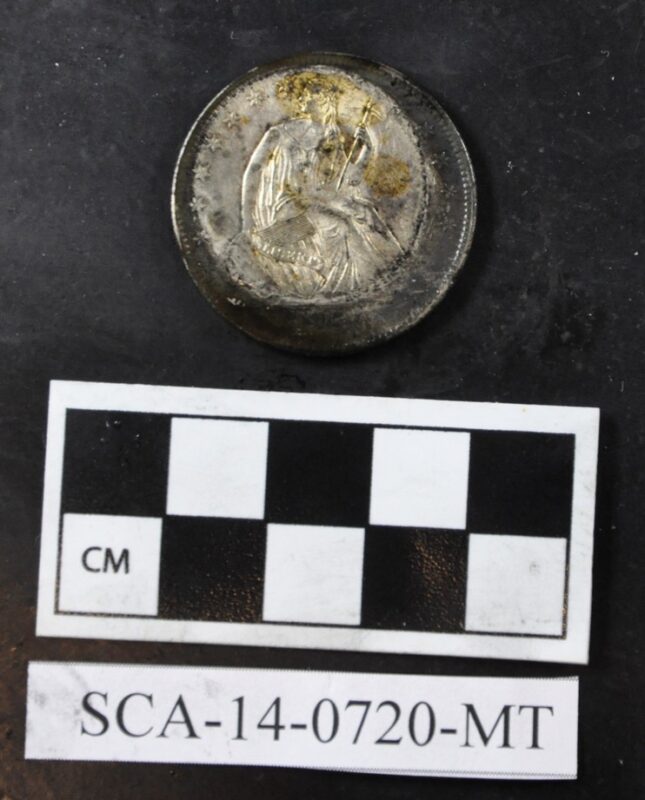
When we finished the dive and Zeus was on deck, we opened the drawer and carried the bags to the secure “Coin Room” to be examined. We opened the small bag and found it contained US half dollars and quarters. Standard protocol needed to be followed, so we fully examined and identified each coin, photographing the “new” ones (coin denomination-year-mint combinations that had not yet been seen during the season.) Since this was the year’s first encounter with a hoard of US silver, there were a lot of “new” coin photographs and entries into the spreadsheet. It took a couple hours. The Odyssey guys were professionals, but they weren’t too thrilled with silver, since they had seen huge numbers of silver coins on the S.S. Republic and the Mercedes.
While we were trudging through the quarters and halves, conversation ran to the other, larger bag. Since this bag held silver, was the big bag full of gold? The bag sat on the exam table awaiting opening. Coins inside pressed against the wet canvas, blackened by the 157 years in a deep-sea swamp. The bulging impressions looked like small coins. Could this really be a bag of small gold? That would be fantastic!
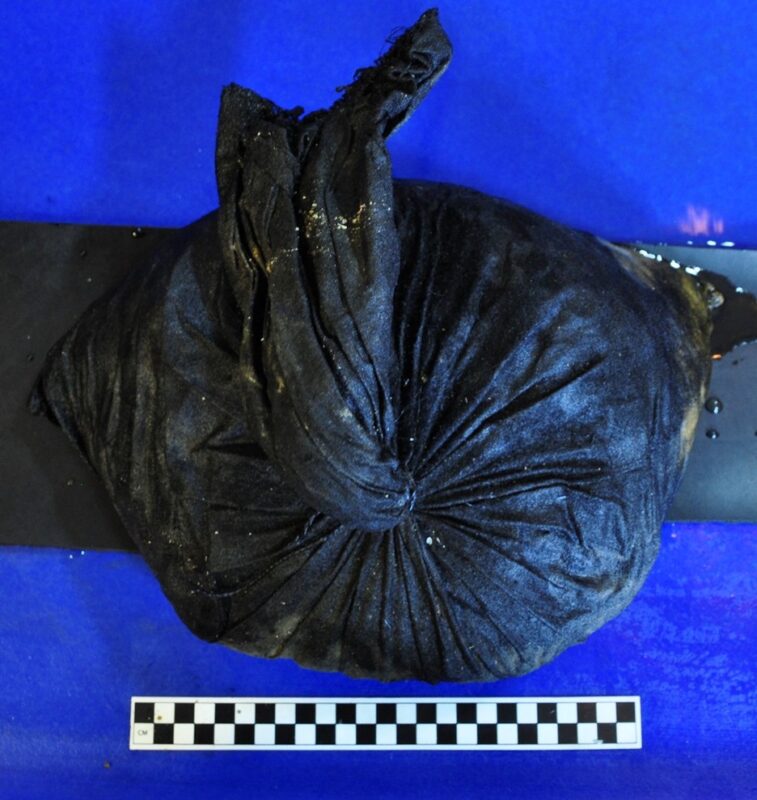
When we finished with the quarters and halves, the mid-day meal was being served. Meals were strictly scheduled, so we broke for lunch. I will admit that I was pretty excited about the big bag, and the possibility of it being small gold. I hyped this a little as we ate, and I think it raised the spirits of my silver-weary fellows.
We got back to the coin room, well fed and ready to tackle whatever we found. It promised to be a lot of coins, whatever it was. It was well past my 10AM bedtime, but we only had a few days left before our mid-month break. I could catch up on sleep then. I fortified myself with the resident bad coffee.
Fred van der Walle, the conservator, stood over the bag sitting on the wet examine table. The tabletop consisted of a large, inverted, plastic bin cover, with a black rubber mat covering the inside surface. This gave us a shallow tub that contained any spills, or at least most of them. It got pretty wet in there at times. Fred opened the bag as anticipation mounted. He announced, somewhat dejectedly, “It looks pretty black.” Then he reached in with his exam-gloved-hand and pulled out a handful of coins, plopping them onto the black rubber. Then he poured out some of the contents.
Dimes!
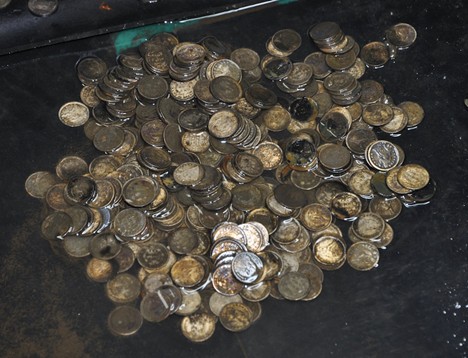
According to the soundman for the video crew that was filming, the air went out of the room, and the men appeared downcast.
As this new reality set in, an excited voice pierced the silent disappointment.
“COOL!”
It was me. Almost immediately I began to put the pieces of the puzzle together. This was the SHIP’S MONEY, as David Mearns had forecast that we might find.
When we first found the safe, it was given the name “Captain’s Safe” for purposes of reference in the logs and spreadsheet. It was 28 meters off the port side of the shipwreck, slightly aft of midship. For some time, I have favored a theory in which the Central America burst like a giant wooden water balloon when it hit the bottom, expelling the upper decks and much of the interior contents up and over to the port side. The engines are still inside, but the boilers sit well out into the portside debris field. At first it seemed improbable that something like a heavy safe would be so far away from the main pile, but the boilers were also misplaced by the sinking. Projecting the safe’s position back into the shipwreck, it seemed to correspond with either the captain’s quarters or the purser’s. Personally, I figured it was the purser’s safe.
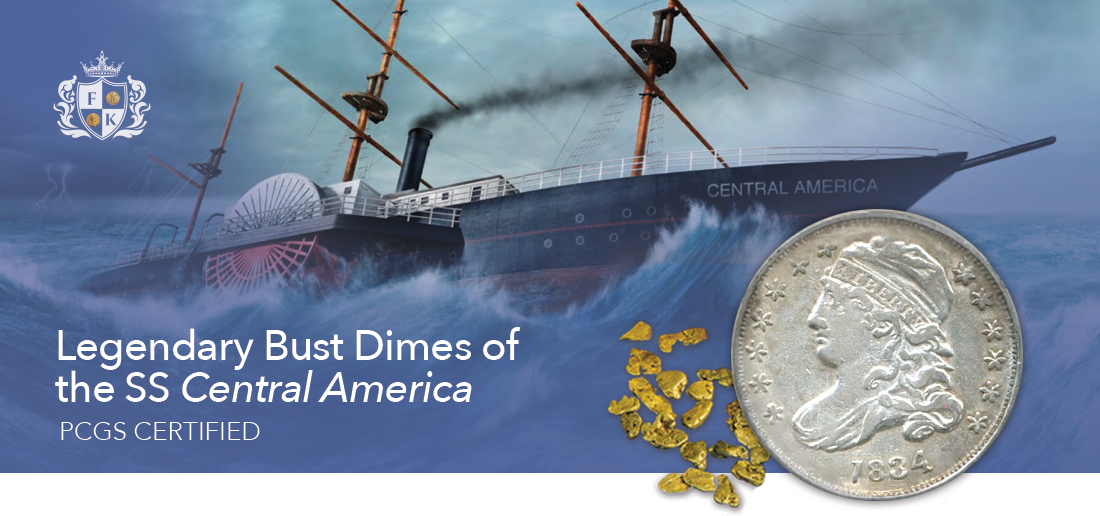
And now we had a bag of almost 9,000 dimes. Obviously, this was not being shipped from San Francisco. This was the cash box of the ship, the working funds for a major, mid-19th century business. And it was yet another treasure within the treasure. Entirely different from the commercial shipment and personal gold carried by passengers from California, this was an east-coast treasure.
Of course, my personal excitement over this historical discovery did not extend fully to my crewmates, who were more focused on getting the work done, and were anticipating getting back to land in a few days. We brought this treasure ashore in mid-May, and it went into secure storage, awaiting further study and curating.
Years later, the details of this bonanza emerged in a California laboratory. By December of 2017, all the legal deals and business decisions had been made. The treasure was transferred to California where we set up a lab inside the headquarters building of the Professional Coin Grading Service (PCGS), ideal for me because I didn’t have to be concerned at all about security or transportation to the grading service; just work on the treasure. For the purpose of curating the treasure, I was given exclusive use of a little-used storage room with a large electrical apparatus sitting like a bench/cabinet near the door (A transformer of some sort, I guess. I never asked.) I’m a field scientist, and I have set up labs on ships, in tents, in basements and attics, under awnings, and in the trunk of my car. In other words, this setting was wonderful for me!
I was in a clean, indoor setting, with a couple tables, a microscope, and a portable sink that needed to be re-filled with five gallons of water from a nearby restroom – no problem for a field scientist. There were five wire shelving units with a convenient space-saving design, that rolled on rails set in the floor. This gave me lots of “horizontal space,” always a good commodity in a laboratory.
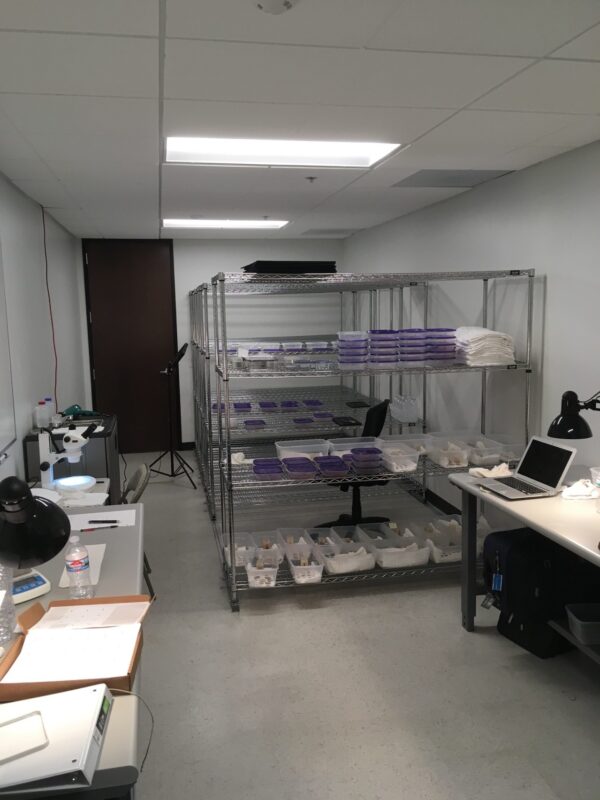
Beginning in January of 2018, I worked for the next year and a half on curating the treasure we recovered in 2014. The laboratory produced discoveries, just as the at-sea season had. This rhymed with my earlier experience, curating treasure in 2000 that we had recovered years earlier, 1988 – 1991. In 2018, I had fewer gold pieces to work with than I had in 2000. But there was a lot more variety. The new components of the treasure were more like separate treasures, in and of themselves. In addition to the commercial shipment, there were coin piles and bags representing individuals transporting personal wealth. And there was the ship’s money.
I curated the gold first in 2018, starting with the double eagles and working my way down into the “minor” gold. Once that was finished, I turned my attention to the silver.
The silver inside the safe experienced a kind of natural miracle, logical in the final analysis, but counterintuitive to the long experience of shipwreck enthusiasts and coin collectors. These coins, submerged in salt water for 157 years, did not corrode the way silver coins in the sea normally do. Some of them do show evidence of “environmental damage,” as would be regarded by PCGS or by any serious numismatist. But most of the silver dimes, quarters and halves from within the safe were unscathed.
Why?
They spent all those years at the bottom of the sea enclosed within a sacrificial anode! When different metals are within a solution where they are electrically coupled, the more reactive metal corrodes first. So, the more reactive iron safe bore the brunt of the corrosion while the coins inside remained unaffected.
And so, true miracles like the finest known 1856-S emerged, an MS65 beauty. Although you might expect the SSCA to have a lot of 1856-S dimes, there was only this one. All other US dimes were products of the Philadelphia and New Orleans Mints. After I had processed around 5,000 dimes, I didn’t really expect to find an 1856-S, even though there were 1856-S quarters and halves. But one day, after a curatorial treatment, I flipped over a really nice looking 1856 dime, expecting to see an “O” or nothing, and there it was.
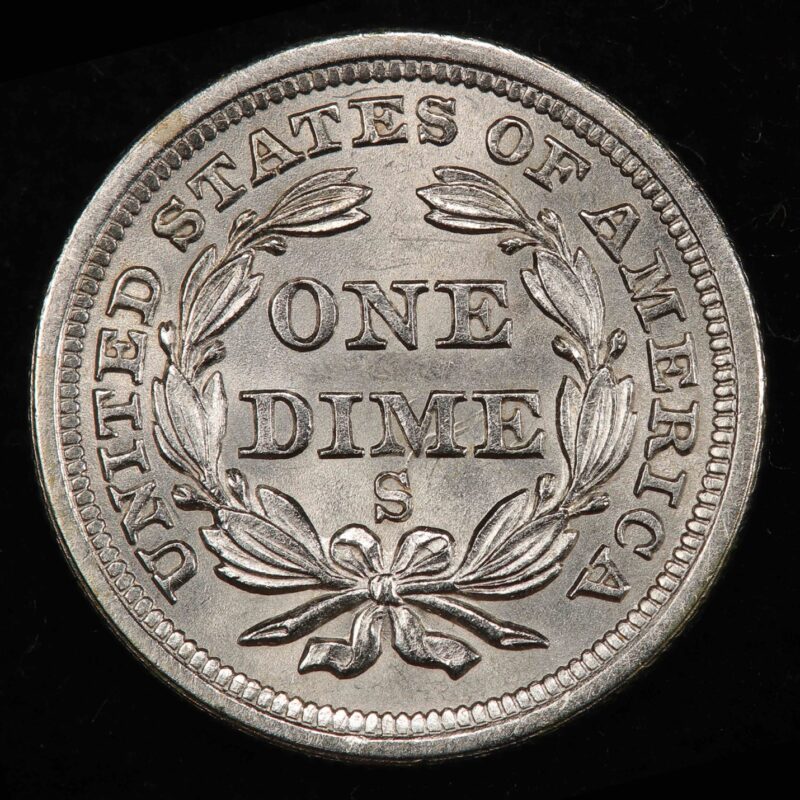
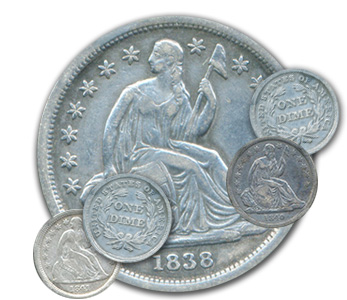
It became obvious that these small workhorse coins were the common everyday currency of choice. They did their business to the nearest dime, paying for supplies, food, repairs, and labor. The seamen’s wages were paid with these dimes. As long as it was demonstrably a dime, no matter how worn or bent, it circulated. There are some heavily worn examples. One of my favorites is this specimen, representing “The Dawn of the Dime.”
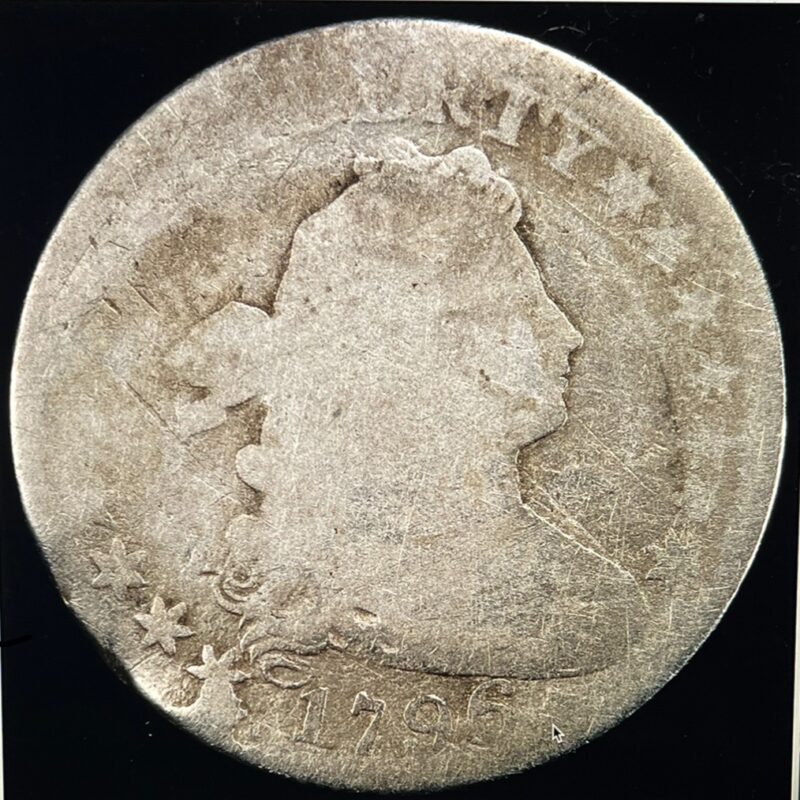
For 61 years, this little sliver of silver was tossed across countertops, worn down in pockets and purses, rubbed by countless fingers and palms, and even apparently used as a screwdriver (left of the date.) Yet it survived as part of a bag of dimes supporting commerce that was the life blood of the nation’s economy, the transfer of gold from California to the world.
Of course, most of these coins were of the Liberty Seated (1838 to 1857 and beyond) and Capped Bust designs. This was a whole ’nother ball game for me, thoroughly educated (even possibly expert) in the gold designs by then, but a complete novice with Liberty Seated and Capped Bust. I poured over books and joined the Liberty Seated Collectors Club to make up for lost time.
There was such variety. Most of the dimes were of “recent” issue, within a few years of the 1857 sinking, “common” coins such as this 1850 dime.
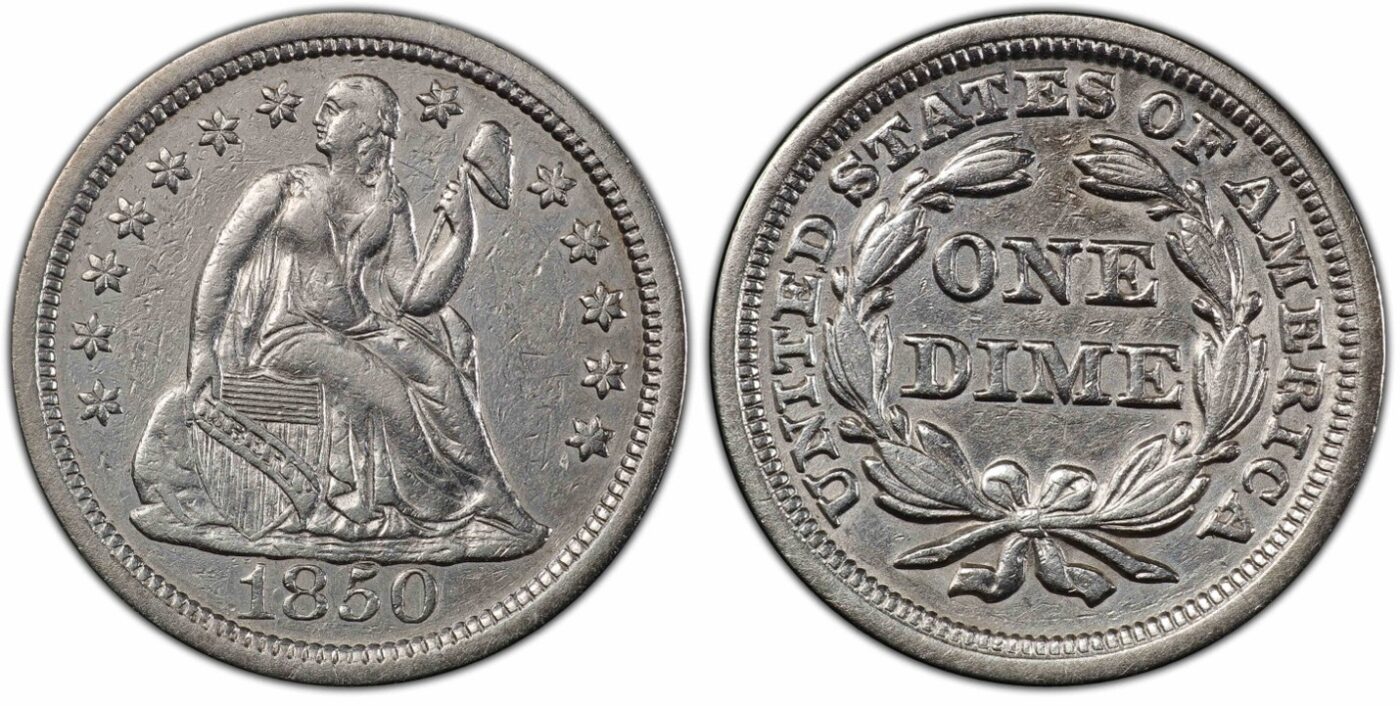
This is not unexpected, since the bag of dimes represents a large unbiased sample of what was in circulation on this ship and in the ports that it visited in 1857. However, since it is such a large, representative sample, some oddities and rarities did appear. It was delightful to find something truly rare.
I was told, “You’ll never find an 1829 Curl Base. (The “2” in the date has a curled base.) Well…
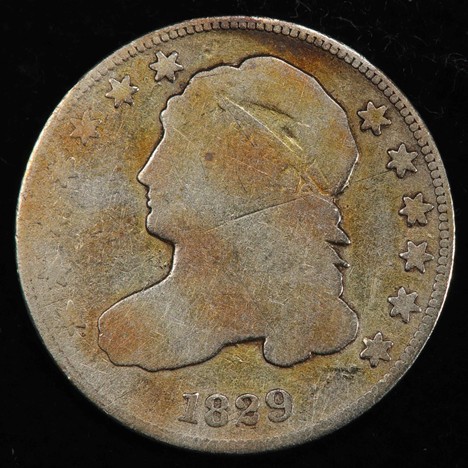
It was also fun to find another scarcity, which had circulated for 43 years, an 1814 “STATESOF” dime, where the legend on the reverse “UNITED STATES OF AMERICA”, has some poorly spaced letters.
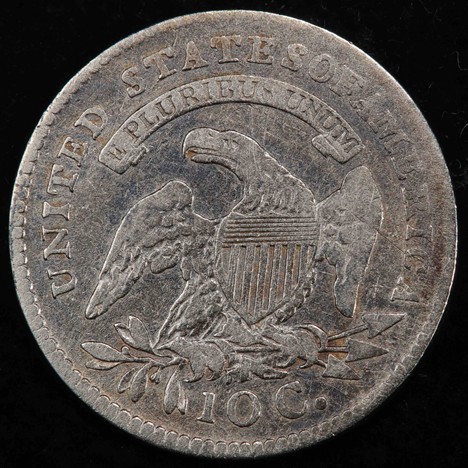
The dimes are among my favorites because most of them are so ordinary, so human. They were the basic fuel for the day-to-day commerce that supported the explosive growth of the nation’s economy, and made possible the transport of tons of California gold.
Until next time, Bob