

Treasure Talk with Bob Evans, News, Rare Coin Articles
Treasure Talk: Episode 4 Part 2
The Trials Continue
Apr
Treasure Talk: Episode 4 Part 2
The Trials Continue
The Insurance Companies.
Our relationship with the other group of claimants lasted much longer. As we arrived with the gold in Norfolk, we received word that 39 insurance companies had filed suit, claiming that they were the owners of the treasure we found and recovered. I won’t go into every procedure and detail of what ensued, but in a few months, this was whittled down to nine entities. Some of the original claims had been based on smoke and conjecture, or on strange legal theories. But when there are millions of dollars of gold at stake everyone with a wisp of a connection will file a claim. Anyway, the “Claimant Underwriters” became our project’s constant federal court adversaries for the next decade.
At stake was a groundbreaking and fundamental point of law. Is the property abandoned? If so the Law of Finds should be applied. Or does the property have owners? In this case the Law of Salvage should be used to decide a salvage award for those who found and “rescued” the property.
I will say, that as far as I am concerned, the Underwriters’ attorneys and consultants were professional and polite, tough but respectful. Not at all like that other guy I mentioned.
In 1990 we went to trial based on the Law of Finds, most simply understood as “Finders Keepers.”
Of course, it’s not quite that simple. Where was the property found? Is the property owned by some entity? When found, had it been previously abandoned?
In previous Admiralty Court actions, our project had established the exclusive rights to work in a quadrangle (a rectangle imposed onto the sphere of the earth) defined as an area four minutes of latitude by five minutes of longitude, obviously a patch of ocean and seafloor that contain the SSCA shipwreck. The US District Court in Norfolk, VA, Judge Richard B. Kellam presiding, had extended in rem jurisdiction over the site, which lies in International Waters, thus setting a landmark legal precedent. So, that settled the matter of “where.” We had an injunction. Nobody else could work this site.
The other two matters were the topics of dispute during the trial before Judge Kellam in April, 1990: ownership, and abandonment. It was the underwriters’ contention that they were the subrogated owners of the treasure, for which they had paid claims to those shipping it, following the sinking in 1857. The evidence that contemporary newspapers said that claims would be paid (strategically announced to forestall the effects of the Panic of 1857), as well as a scrapbook of newspaper excerpts maintained by one insurer, and noting the loss of with a clipping and cryptic marginalia, was not enough to convince the Court that the owners had not abandoned their gold shipment.
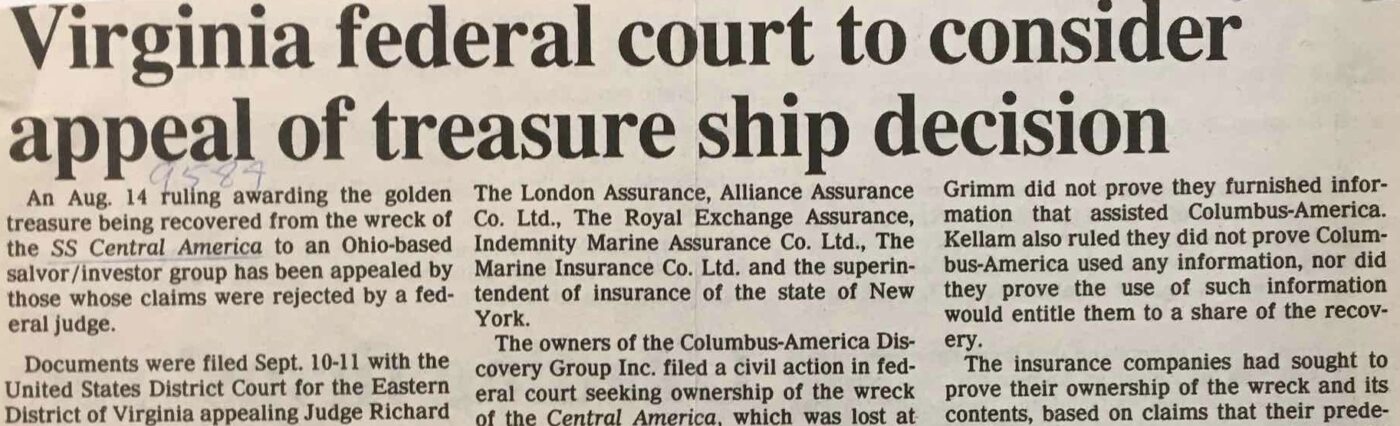
In an August 1990 decision, Judge Kellam awarded us 100% ownership of what we found and recovered, based on the Law of Finds. It was Finders Keepers, for a while. The underwriters appealed, of course.
We encountered a few technical difficulties in the 1990 season, but we did find a second major part of the “Garden of Gold” deposit, the commercial shipment we found in the stern. Part of the original treasure room on the ship had detached from the rest of that chamber, and fallen to the starboard (right) at some point during the shipwreck’s 13-decade collapse. Then this part had been buried in sediment that collected over the debris on that side of the interior of the stern. So, it wasn’t as easily visible as the part of the treasure we found in 1988. Our big explorational achievement that year was exposing this second significant pile of degraded boxes of bars and coins. It showed that much remained to be recovered, intermingled with a pile of coal in the starboard stern.
The decision from the court that it was 100% ours was met with celebration, and a wave of planning in various directions. The technical team tooled up for the following season. Barry Schatz explored ways to tell the world about our finds, while I learned what I could about what we did find, as fast as I could. Trying to put the brakes on media hype became one of my major concerns.
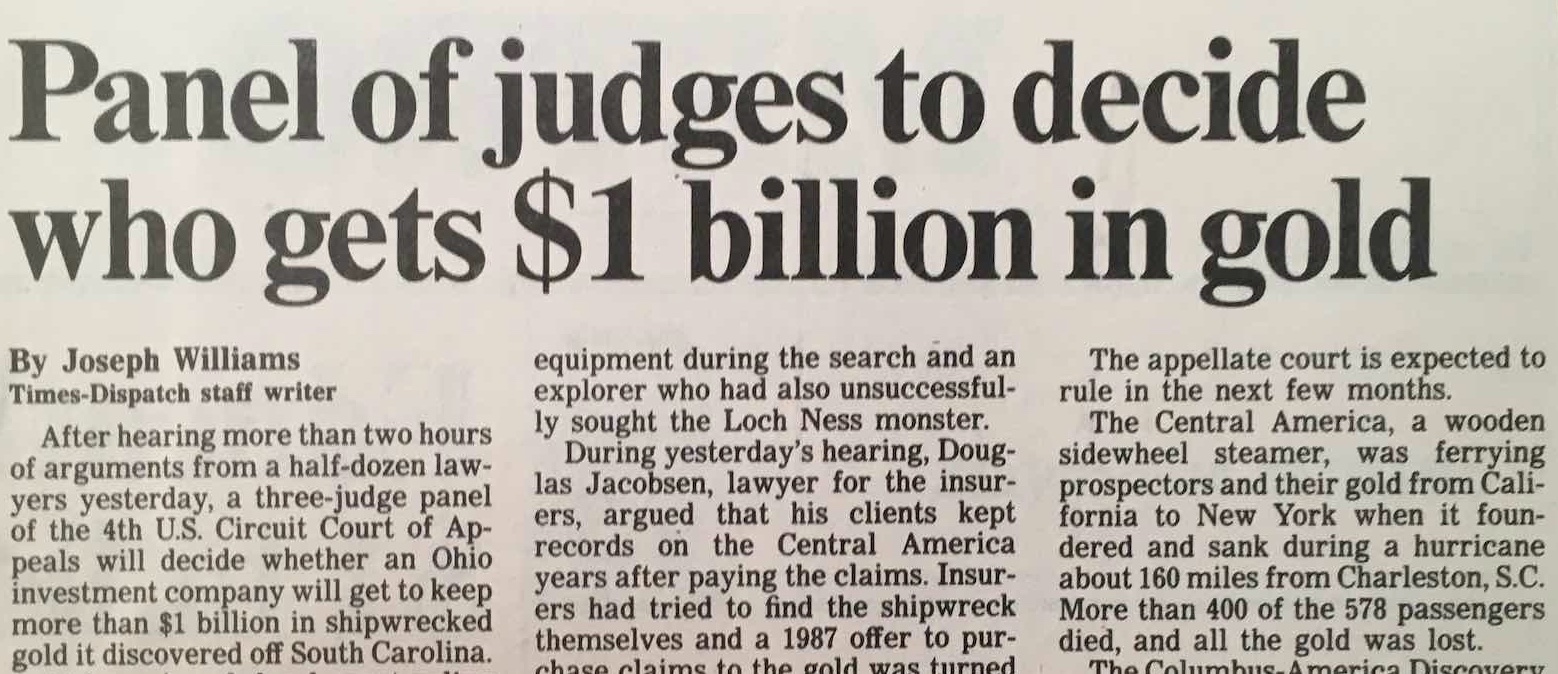
Somewhere, as part of our original announcement, Tommy Thompson had reacted to a reporter’s hypothetical prodding, “Could it be a billion dollars?”
“It could be.” was his non-emphatic response, setting expectations that were hard to shake forever after. It became A BILLION DOLLARS in newspaper headlines and articles after that. Never mind what we actually found and recovered. I was immersed in that reality, studying the numismatic details and the real populations of coins and ingots. What we found was fantastic, everyone’s dream treasure. But simple algebra revealed that the thousands of coins and hundreds of bars were not a billion dollars. It could add up to a hundred million or more, but not a billion.
Nonetheless, the BILLION DOLLARS persisted. I suppose this myth was harmless hyperbole, at least until someone started doing the real accounting.
Barry Schatz was our media guy. I worked with him to set up interactions with the world, as we reached out with our story while we planned for another huge season of recovery.
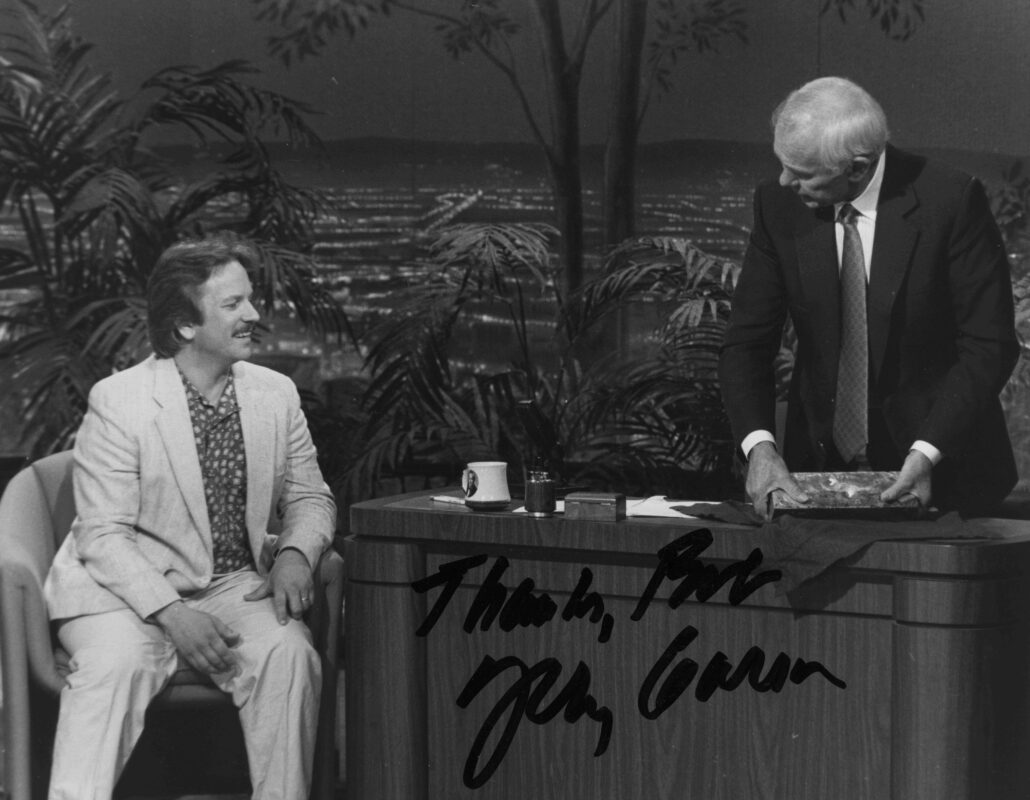
On May 10, 1991, I was on the Tonight Show with Johnny Carson. I have already written briefly about this (see the January episode of Treasure Talk,) but it was a true highlight of this early period of outreach with the treasure.
Also, that spring, we made arrangements for a show with the Discovery Channel. They came out to visit us at sea in 1991, which caused us to alter our dive objectives and plans a little bit. But it was not too much of a disruption.
Overall, the season was going very well, and it was exciting to share a little piece of our adventure with the world. I remember their onscreen personality, the guy who was interviewing us. He had a little trouble maintaining his balance during the filming, even though it was not a particularly rough day.
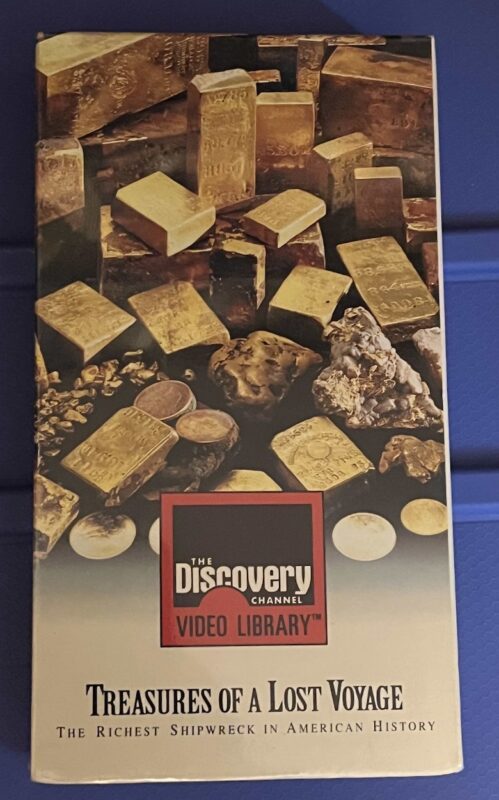
As originally broadcast, it was a two-hour “special documentary,” Treasures of a Lost Voyage: The Richest Shipwreck in American History. Ultimately, it was edited down to a one-hour video, part of the Discovery Channel’s Video Library.
Our 1991 season was successful, and we recovered a little more than another ton of treasure, bringing the total recovery to over two tons.
In face value, this equaled over 90% of the value of the historically listed commercial shipment. But it was not all of it. And we had not even begun to explore for the large amount of passenger gold that had to be there. There was plenty of reason to return, and we had every intention of doing so. But there was no rush.
According to the Court’s 1990 decision, we owned the shipwreck site and everything on it. The tech team worked on designs for the next generation of equipment for our operations. Tommy Thompson saw no imperative for a 1992 summer season at sea. Next time we would have new tools.
Then the bottom dropped out.
On August 26, 1992, the US Fourth Circuit Court of Appeals overturned Judge Kellam’s decision, saying that he had erred in applying the Law of Finds. The matter was remanded back to his court for a new trial, to be based on the Law of Salvage.
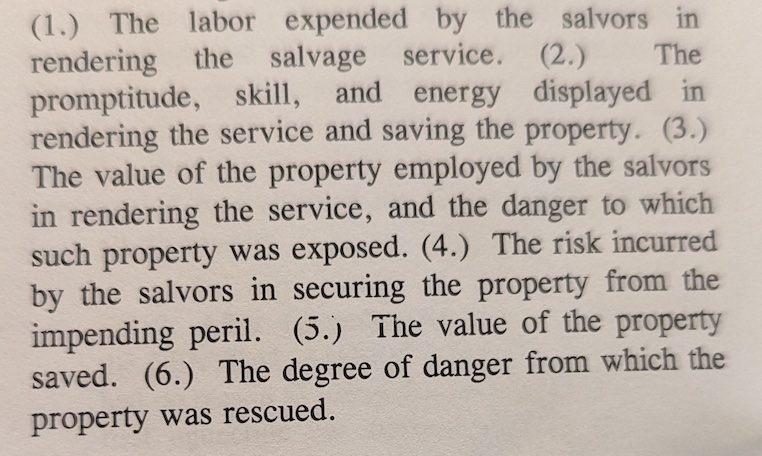
Under the Law of Salvage, the property (in this case the treasure) is not considered abandoned, and the original ownership (the underwriters) is acknowledged. Then, a salvage award is granted to the salvor (our project) based on certain established salvage factors. These are known as the Blackwall Factors, because of the 1868 Blackwall salvage case, in which the precedent was established:
The appellate decision basically killed any thought of a timely return to the shipwreck site. As it turned out, the next time I made it back was over two decades later, in 2014.
At what I call the “Salvage Trial,” in 1993, the Underwriters’ attorneys were now faced with a very different game. Whereas, in 1990, they had argued that we were brilliant young geniuses that had surprised them and the world with our amazing discovery, under the salvage rules that argument didn’t play well for the owners, particularly absentee landlords. Salvage Law deals with the rescue of property from a state of peril. Underwriters had not done anything to rescue their own property in over a hundred years. That was much of Judge Kellam’s initial reasoning for ruling the treasure to be abandoned.
We obviously scored very high on the Blackwall Factors: our labor, our skill and energy, our valuable equipment and danger faced, our risk, a very valuable property, sunken in a state of marine peril for 130+ years.
For the new trial, Underwriters’ attorneys needed to downplay our achievement, to turn our genius into routine. So, they reformed their opinions, and now we were a bunch of unsophisticated kids with bachelors’ degrees, certainly not worthy of a large salvage award.
It didn’t work. Judge Kellam had handled the whole history of the case, from our first encounters with rival salvors at sea in 1987. His original 1990 decision, as well as the appellate decision, both extoled the virtues of our project, practically giving us a grade of A+ in Blackwall Factors.
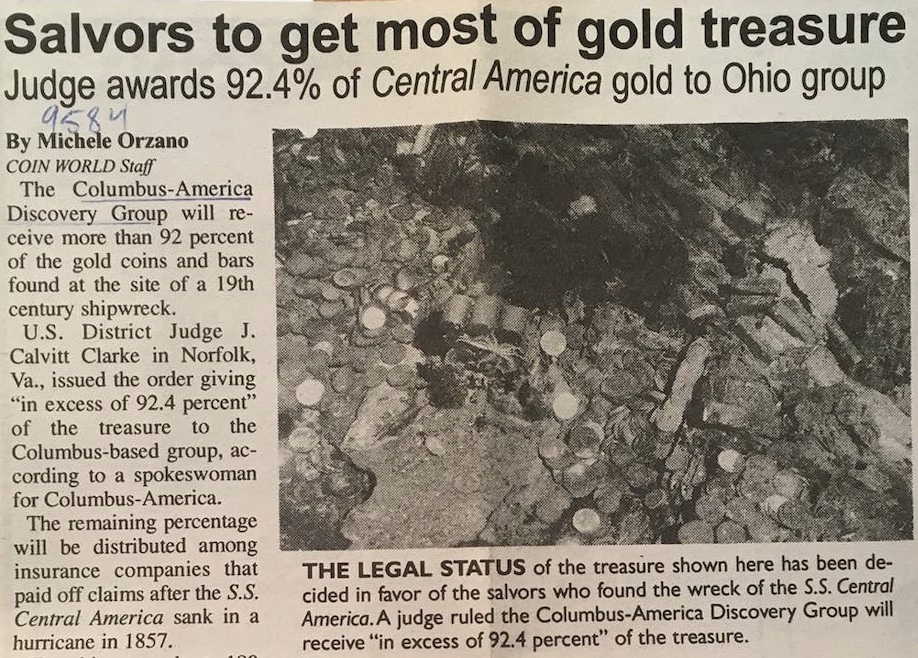
We were granted a 90% salvage award, but it dragged on, for a few more years. They appealed. It was upheld on appeal. Finally, re-opening an unresolved matter, we appealed, contending that two of the insurance entities had not proven they were connected with this treasure in any way. So, those entities were removed from the list of claimant underwriters, and the Underwriters percentage was reduced slightly, and ours increased reciprocally. This is how we arrive at the final figures often reported in the press, 92.4% for us, or “seven and a half percent” for the Underwriters.
Note: My summaries of our legal cases are simplistic. There were a lot more motions, appeals, hearings, and such than I can’t easily recount without glazing over the eyes of anyone but the most hardcore attorneys. I haven’t even touched here on the legal issues we, principally Thompson, encountered with marketing partners, matters that were mostly clerical and contractual, and fortunately did not involve me very much.
Legal actions and troubles hung over the gold almost from the moment we found it and throughout the 90s. Meanwhile, most of the treasure sat in relative obscurity at Brinks, still covered with rust and minerals, its true condition, grade, and many of its secrets still unknown, waiting to be discovered.
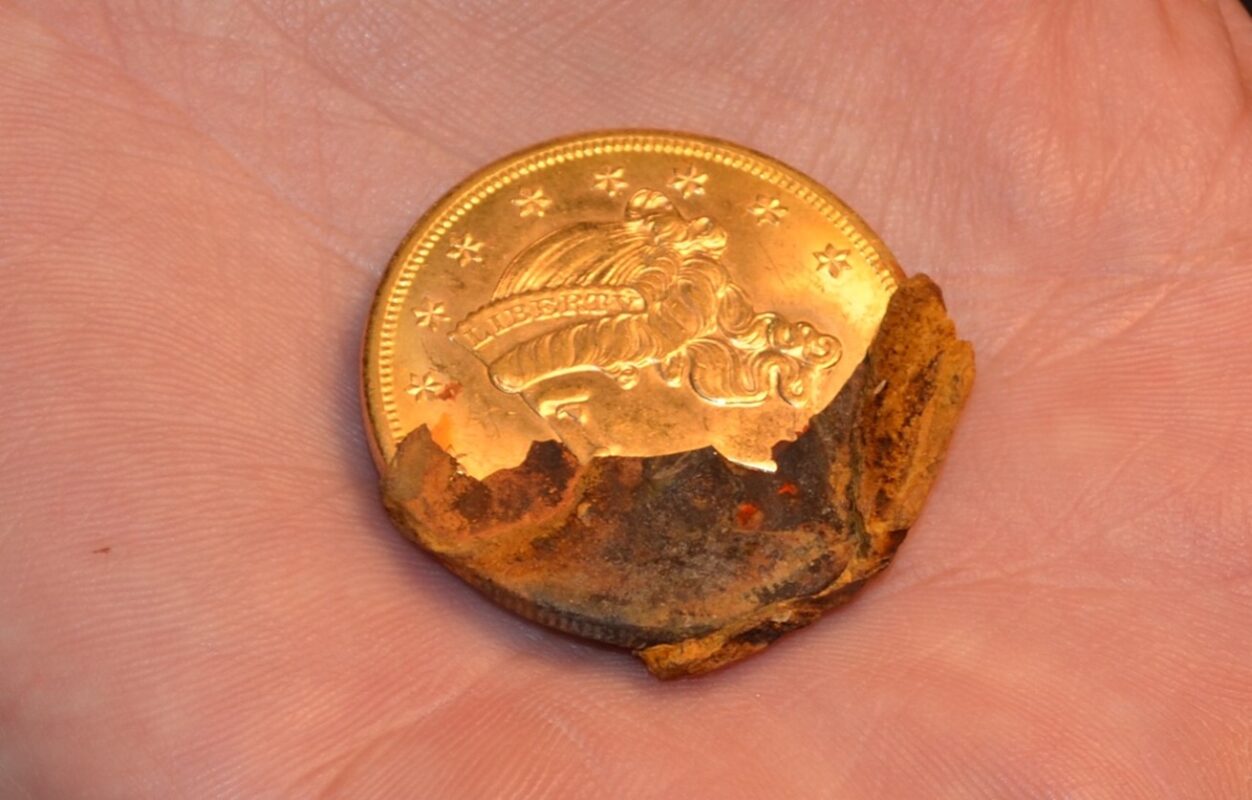
During the 90s I arranged to transport to my lab, and curate, a few hundred coins and a few dozen bars. But there were over 7,000 gold coins and more than 500 gold ingots. Ever since our discovery, I had subscribed to various numismatic publications. So, I read the frustrations that were expressed. Everyone wanted to know everything about the treasure. Me too. These matters could not be fully resolved until the legal issues were all settled. We needed to establish who owned what portion of the pie before we could see if it was apple or cherry or rhubarb.
Thompson could not reach an agreement with the Underwriters for a unified marketing and monetization. For our part, during the 90s we spent a lot of resources examining grandiose marketing schemes with top consultants, people who had managed Olympic Games, displayed the Hope Diamond, and built grand opera sets. We cooperated with author Gary Kinder who wrote a non-fiction bestseller about the project, Ship of Gold – in the Deep, Blue Sea. We also had two somewhat small-splash exhibits locally in Columbus, at the Art Museum and at the Columbus Zoo, highlighting our photography and technology, and non-gold artifacts. We did not feature much gold at all. We had an arrangement of gold dust and nuggets in one case, no bars or coins.
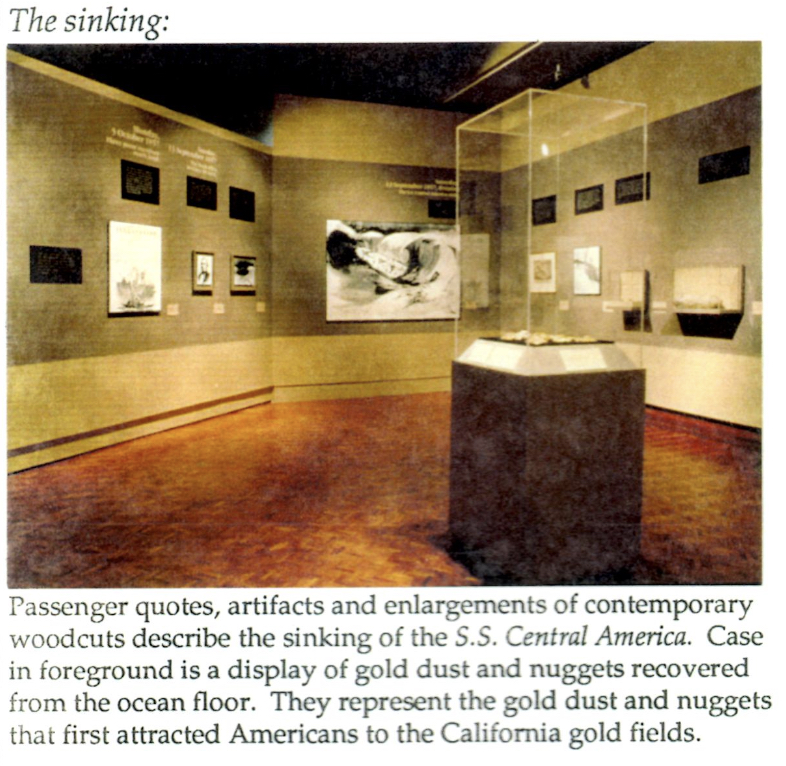
A scene from the Columbus Museum of Art exhibit.
Judge Kellam passed away in 1996, and US Federal District Judge J. Calvitt Clarke inherited the case. Because the Underwriters and Tommy continued to disagree about marketing, he ordered a “Division in Kind.” The treasure was to be split physically, with each party receiving title and ownership to its own portion.
There is a set of problems in mathematics that deals with “Algorithms of Fair Division.” In other words, how do we divide things fairly. The simplest illustration is that we have a cake. I cut the cake into two parts, and you get to choose which “half” you would like. Fair enough. If I cheat and don’t divide it evenly, then you can just take the larger “half.” It becomes more complicated with a large group of unlike things, like, for instance, a treasure.
The subject is longer than I wish to address here. I will eventually write a whole chapter for the math nerds. But we agreed that I would divide the treasure into 90 parts. The Underwriters were to receive seven of the 90 parts. The idea was that the Underwriters would select first, then us, then them, then us, etc., alternating until they had their 7/90 of the treasure.
To provide expertise for the Underwriters, the Court had previously appointed Fred Holabird to examine the treasure and advise them. At our first meeting at Brinks in 1997, we danced around each other with various declarative statements for about ten minutes. Fred figured out that I was real (who knows what their attorneys had told him,) and that I had properly handled and catalogued everything. I found out that we were fellow geologists, and he was just as genuinely interested in what we had to look at as I was. Although working for different “sides,” we quickly became friends, cooperative partners in an examination that took a total of 22 days (not consecutive.) We both just wanted to find out more of the truth about the wonderful treasure. It obviously had stories to tell. Those days were great, and we thrilled together at each newly discovered detail.
Fred did a thorough, meticulous job with his examinations, and the inventory he prepared became the standard for the rest of the legal case.
So, on June 17, 1998, we assembled a courtroom of sorts, at Brinks, in their 25-yard indoor gun range. It was a cul de sac enclosure within the Brinks building. Brinks had built a new facility, really more like a fortress, in the Hampton Roads city of Chesapeake, VA. The gun range they had constructed was very secure, just one way in and out.
Prior to this, we had never taken the entire treasure out of the Brinks interior vault at one time. Thompson and our attorneys were present, the other side likewise represented, with an actual executive from the Underwriters (first time I had met one,) their attorneys of course, and their experts, including Fred Holabird. A Magistrate was present to preside for the Court.
I and my assistants arranged the 90 parcels of treasure, still in sealed containers, around the perimeter of the range. It was a somewhat narrow corridor, maybe 15 feet wide, with a system for hanging targets for practice at varying distances, 5 yards, 10, etc., out to the full 25.
I had loaded, sorted, and sealed containers that consisted of only gold ingots, parcels with only gold coins, and some that were a mixture of coins and bars. Some were multi-unit parcels, two or three sealed containers, designated as 38a and 38b, for example.
There was one parcel that had all the native gold dust and nuggets. But it was all dry and theoretical until opened. There was no gleaming pile of gold. Everything they selected would be examined and accounted before we adjourned. It looked very industrial, with numbered ammo cans and plastic boxes running down both walls of a cinderblock hallway, with a human silhouette paper target hanging at the far end.
The division went off without a hitch. The opposition and tension were all gone. It was a little like the conclusion of a playoff hockey series, with all the players lining up and shaking hands. I was disappointed when the Underwriters selected the parcel with all the native gold, the rocks. That left a little hollow in my soul. But I was happy that we were now unburdened of our reluctant “partner” in the treasure. Now they could do what they wanted with theirs, and we could do what we wanted with ours.
At long last, maybe we could finally figure out exactly what we had found. A full curatorial examination, detailed cataloguing, and conservation awaited. After the Division in Kind, Tommy Thompson abandoned the grandiose marketing plans that we had conceived, and he settled on what was probably a more practical approach. In early rounds of market research, and in one of the deals he made (with Bruce McNall,) Tommy had brought us in contact with Larry and Ira Goldberg.
The Goldbergs were my hosts during my trip to be on the Tonight Show with Johnny Carson. That original deal with McNall had gone sour, in ways that are beyond my scope here. But after we split the treasure with the Underwriters, our attorney, Rick Robol, got back in touch with the Goldbergs.
On the golf course one day shortly thereafter, Larry Goldberg mentioned that the treasure was “available” to Dwight Manley. Manley jumped at the idea of marketing the SSCA treasure. He was 32, a young, energetic dealmaker, and he was a huge California history fan and patron. Here was the chance to be involved with the greatest California Gold Rush treasure that would ever be found, the greatest lost treasure in United States history. He had to have it.
Tommy Thompson arranged to meet Larry Goldberg and Dwight Manley, along with me, in Virginia, to examine the treasure.
Even by 1998, Tommy had not bothered to learn very many of the treasure details. We operated much of our business on a “Need to Know” basis, with important details being the bailiwick of one or two specific people. There was a lot of what Thompson did that I certainly didn’t need to know, it was not germane to my work. Perhaps, in all the legal brouhaha, Thompson figured it was better to not know too much. He didn’t need to know everything. Even about the treasure. He had “people.”
We all met in the morning in the hotel lobby, before we proceeded over to Brinks. I kept silent, watched, and listened until I was needed. We weren’t too far into the exchange of opening pleasantries, when Manley asked, “So, getting down to business, these coins… are they all 1857-S double eagles?”
Tommy looked blank, just poker faced. I was actually surprised at how unfamiliar he was with the details of the treasure he had been contesting in court for almost a decade.
“Uh…” In a moment, he turned to me for answers.
I jumped in, “Well, they’re not all 1857-S. There are significant numbers of 1856-S, 1855-S, as well as other mints, denominations, pioneer gold…”
Dwight sat up and gestured at me, as he turned to Larry, “This guy. He’s the one who knows about the treasure.” Larry nodded.
Shortly after that we drove to Brinks for the first of a few examinations that I hosted with Dwight and assorted potential marketing partners. Dwight put the pieces of a business, California Gold Market Group, together over the next year and a half. I have heard him say it was the most difficult deal he ever arranged. He needed to find the right partners. It was a huge deal, tens of millions or more. There was some legal baggage.
Christie’s was suing Tommy’s company for not following through with a signed contract that Thompson contended was just a “set of guidelines.” I believe the auction held at Christie’s on December 14, 2000, was at least partly to make this problem go away. Dwight turned it into a win-win for everyone. He got the deal done. There was a spectacular auction at Christie’s, with the “Créme de la créme” of the treasure, the finest known example of every date, denomination, mint, and variety of every coin recovered until that time, as well as a splendid selection of gold bars.
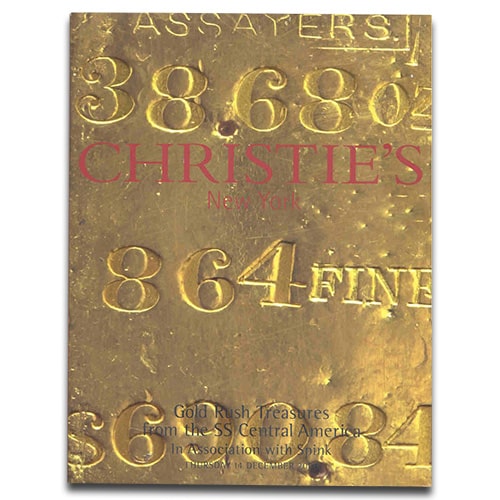
The Christie’s Sale Catalogue