-
×
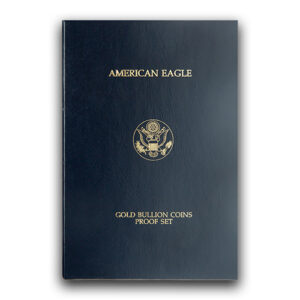 Four Coin Proof Gold Eagle Set - Box/COA (Date Varies)
1 × $9,398.45
Four Coin Proof Gold Eagle Set - Box/COA (Date Varies)
1 × $9,398.45
News
Stagflation Update
24
May
May
COIN MARKET INSIDER • VOLUME 33 • ISSUE 16
Stagflation Update
Evidence of stagflation is proliferating in the financial press, even where the mainstream media has declined to call it stagflation.
We see fears of recession and fears of inflation making headlines side by side. The only term that describes that is STAGFLATION, something Finest Known has been sounding the alarm on for far longer than just about anyone else.
Historically, gold has tended to appreciate during times of economic or financial uncertainty.
There is no circumstance more characterized by uncertainty than stagflation. Investors and policymakers alike have difficulty making correct decisions because often the moves one might make to hedge against inflation are wrong for a possible recession and vice versa.
Worries about an economic slowdown have recently driven more traders and investors toward physical gold investments.

Recent downside surprises in U.S. economic statistics and reports have increased the odds of a recession over the next year, with money-seeking safe havens such as gold.
Gold has gained more than 20% since its lows last September.
In the last three recessions since 2000, gold has outperformed US stocks by an average of 23%, justifying its position as a hedge against various forms of financial turmoil, and not just inflation.
The top-performing assets during periods of stagflation since 1973 have been defensive and real assets, including gold, which has averaged a price gain of around 30 percent.
Meanwhile, the inflation side of the stagflation equation remains intact with inflation fears in the US at a 12-year high.
According to the University of Michigan, the inflation expectations index just reached a 12-year high of 3.2. Meanwhile, Michigan’s consumer sentiment index has declined to 63.5, compared to a pre-pandemic high of 300. The deterioration in the situation of consumers is evident.
The official narrative from the Federal Reserve chair and administration politicians in Washington is that inflation is declining or even under control. However, the reality may be that reducing inflation from 9% to 5% is relatively easy. The challenge is to bring it back to 2 percent, which is the Fed’s official target.
The government’s inability to suppress inflation is clear.
Government spending has not been reduced. In fact, it continues to rise. That translated into a “higher consumption of newly created units of currency” …in other words, more dollars cheapened by inflation. Interest rate hikes only weaken the private sector while the government continues to spend way above 2019 levels.
Politicians claim that we must choose between inflation and growth, but that is a false choice. In fact, the available evidence is that we are experiencing stagflation, where inflation is elevated and growth is anemic.
Matters are not helped when it becomes clear that members of the Federal Reserve Open Market Committee are sending mixed signals on the economy. This is of course exactly what happens during stagflation:
Two Federal Reserve officials signaled they favored pausing interest-rate increases, while a third policymaker said the central bank’s task in subduing inflation was not complete.
In the face of growing uncertainty in a stagflationary economic environment, tangible assets are uniquely positioned to protect, and even grow, wealth.