Treasure Talk with Bob Evans, News, Rare Coin Articles
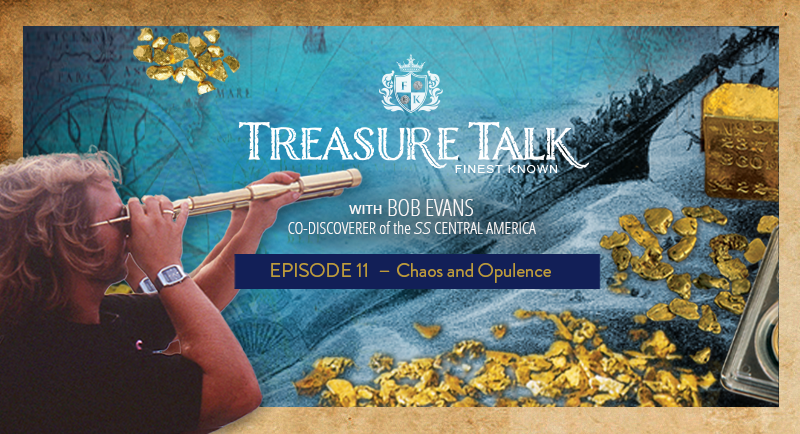
Treasure Talk: Episode 11 – Chaos and Opulence
Jan
Treasure Talk: Episode 11 – Chaos and Opulence
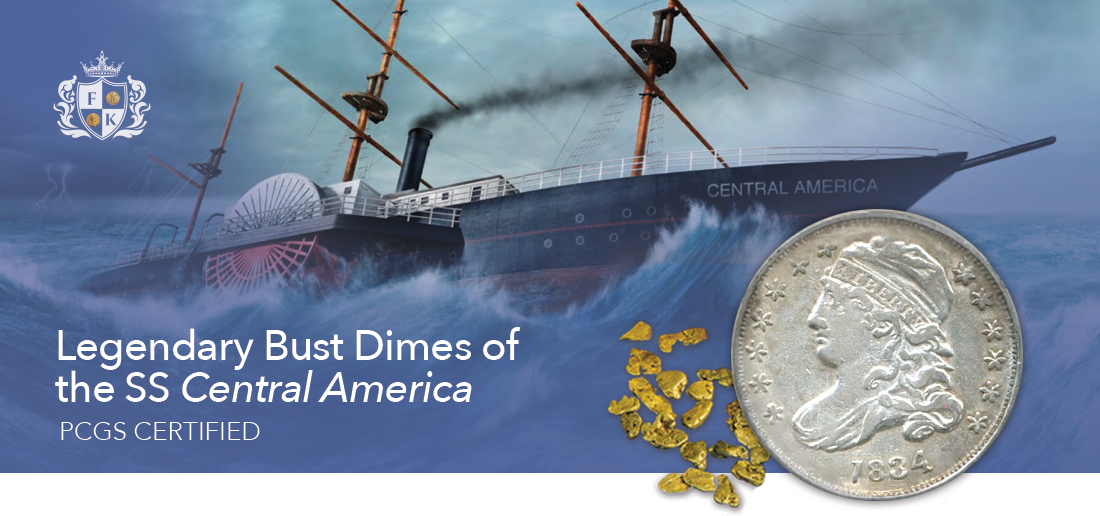
The S.S. Central America shipwreck is not a ship. It is the wreck of a ship, the remnants of wood and metal that once plied the ocean between New York and Panama, completing 43 voyages and over 170,000 miles of high-seas navigation.
Almost every period in history has its technological advances and revolutions, regarded as the “Miracles of the Age.” In the 1850s, these included the telegraph, with humankind’s instantaneous messages “brought by his servant, the lightning” as Mark Twain wrote. Electricity and Steam, these were the powers finding new applications in the world of the mid-19th century. The possibilities drove the industrial revolution. For the first time in human history, steamships offered the promise of long-distance ocean travel that could be scheduled. No more reliance on fickle winds and currents.
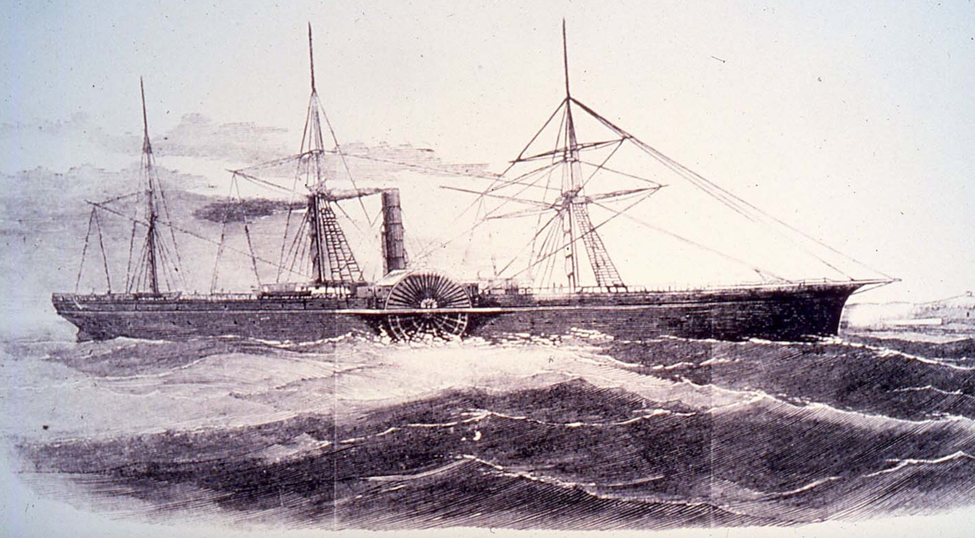
The S.S. Central America’s years of service sit squarely in the middle of these important transitions in transportation and communication. When gold was discovered in California, expedient, secure transportation and efficient communication with the new state became vital, national concerns. As California boomed, American industrialists quickly turned their attention to the Central American isthmus and the opportunity it presented as the fastest route to the gold fields. For the first few years of the Gold Rush, the journey still involved a few days amidst the jungles and mosquitoes of Panama.
In 1855, the Panama Railroad was completed, connecting the American port of Aspinwall on the Caribbean coast (now part of the city of Colón) with Panama City (Ciudad de Panamá) on the Pacific.
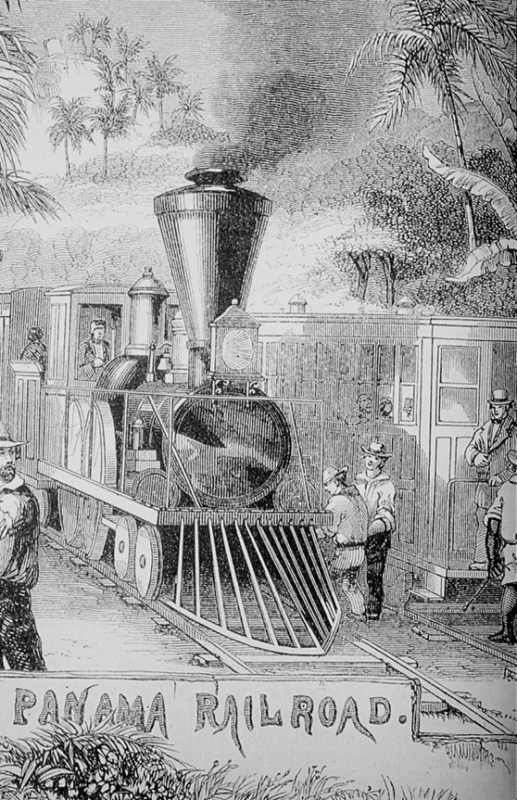
Steamship lines were established on both oceans soon after the start of the Gold Rush. Once the railroad across the isthmus opened, the trip between New York and San Francisco would take “only” 24 days. This was the fastest means of communication between California and “The States” as well. The telegraph would not cross the American West until 1861, so messages carried instantaneously by “the lightning” were not possible. San Francisco and the gold camps would have to wait for news and mail from family and associates back east, arriving by steamer, via Panama. Likewise, the east coast would wait for news and mail from California. And treasure. Tons of treasure, twice each month, the life blood of American commerce, with each arrival another financial heartbeat, sending gold surging into economic circulation.
There were rival companies that attempted to compete for a couple years. Cornelius Vanderbilt tried to establish a route through Nicaragua. This failed for both commercial and political reasons. Ultimately, most of this commerce and transport was carried by the two companies that won the all-important contract for the U.S. Mail: The United States Mail Steamship Company and the Pacific Mail Steamship Company, for the Atlantic/Caribbean and Pacific legs respectively. Almost all commercial shipments of gold were carried by the mail steamers.
Joining the “Panama Route” for its maiden voyage in November of 1853, the S.S. George Law (the SSCA’s original name) was a highly regarded addition to the mail fleet, which was the pride of American civil navigation. Because the transport of the mails and the millions in gold was so important for the nation, and because the nation was not at war, the masters of these vessels were to be U.S. Navy officers, although the vessels were privately (corporately) owned.
The George Law’s name was changed to the steamship Central America, in June of 1857, after its 42nd round-trip voyage, when it underwent routine ship repairs and maintenance. George Law, the man, a highly esteemed civil engineer and industrialist, had not been connected with the steamship company for several years, and so a new name was desired.
In 2025 it may seem unusual that the words “Central America” would conjure up images of opulence and luxury. But in 1857 that was exactly the case. “Central America” meant nothing but prestige for those who could afford the expensive passage, ounces of gold each way. Since the opening of the railroad across the jungles of Panama, eliminating much of the hardship of travel, men had been sending for their families. This was the preferred gateway. 24 days of steamship and railroad could bring you to the land of gold through Central America, without any overland trudge on foot or wagon. Genteel society flowed into California, and the trappings of wealth followed along, decorating the path.
It must have been beautiful, this ship, this symbol of success and prosperity. Then it sank on September 12, 1857, beaten by the overwhelming natural force of a hurricane, and the other natural forces took over. It was no longer a glorious, powerful steamship. It was a shipwreck.
When we first saw the Central America in 1988, we were fortunate enough to cross directly over identifiable features on the very first pass, the paddlewheels and engines. Reflecting back on my career’s highlights, this was possibly the best “shot” I have ever taken. Using the ship’s navigation records and the winch operators’ data from the 1986 sonar survey, I was able to apply algebra and trigonometry to determine what survey track we should follow to intersect the anomaly that had been imaged. Hooray for high school math!
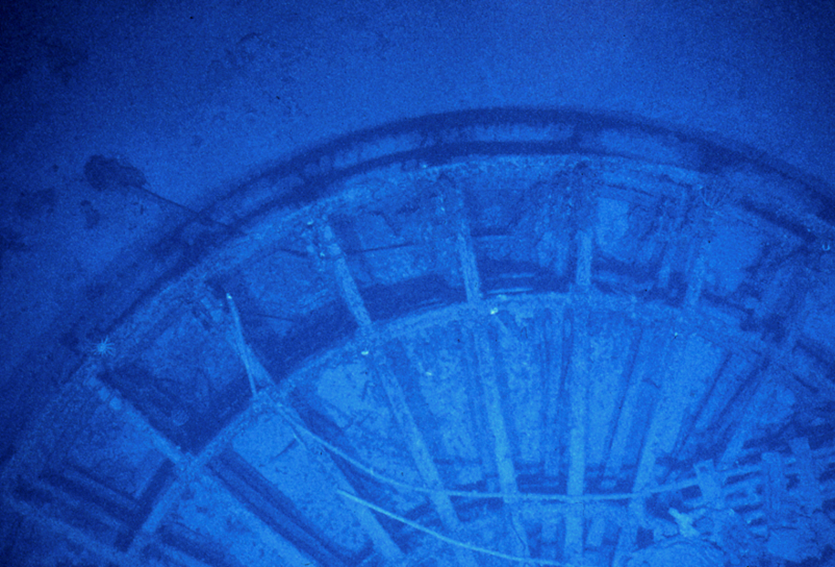
But very few features on the shipwreck were easily identified. We spent the first few hours of the first couple dives simply viewing the shipwreck and trying to figure it out.
In Treasure Talk Episode 9, I described how I found the first flake of gold dust in sediment that was recovered almost accidentally. Our survey photos revealed what looked very much like a bell up near the interior bow area, where you would expect a bell. When we recovered it, the identity of the shipwreck was confirmed, doubly so with the presence of gold dust.
Then we found the commercial shipment, the giant deposit that was the project’s main objective. For the next four summer seasons (through 1991,) we would spend most of our “bottom time” with Nemo the robot submarine, recovering gold coins and gold bars from the commercial shipment deposit in the stern of the shipwreck.
For the late 80s, when it was designed and engineered, Nemo was an amazing ROV (remote-operated vehicle.) But looking back, I find it remarkable that my tech colleagues managed to do what we did with the machine we had, recover over two tons of gold, with care taken to maintain the numismatic value and integrity. Nemo was very underpowered by 2025 standards.
On Nemo, sending power down the wire would interfere with high-quality video transmission, so giant lead-acid batteries were included near the robot’s base. These could provide the power necessary for the hydraulic functions, manipulators, and pumps, when we landed on the seafloor and were picking up treasure. When this power became depleted, we could liftoff from the seabed, sending power down the wire to re-charge the batteries, while we used lower-quality video to monitor our progress as we ran photographic surveys, trying to better understand the rest of the sprawling shipwreck site.
It is hard to argue with our results, over two tons of gold, 7500+ gold coins, 532 gold ingots, a lot of gold dust. But the S.S. Central America shipwreck is a big place. I have to admit, we finished the early expeditions not knowing the entire shipwreck well. What was once a ship had collapsed, the deep-sea biology colonized and consumed the massive wooden structure, and the hundreds of tons of iron corroded into barely recognizable forms.
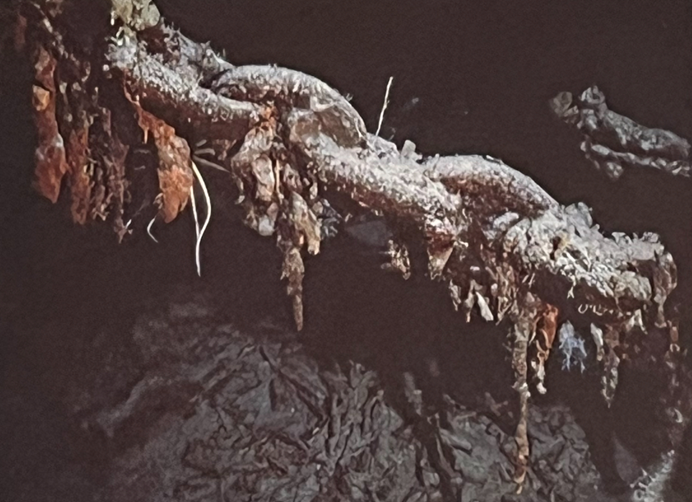
The visible “main pile” of the shipwreck is about 60 feet wide and 280 feet long (18m x 85m.) As the ship was sinking and when it hit the seabed it expelled large amounts of debris over into an extensive portside debris field which would cover a couple football fields. While it degraded the main shipwreck opened like a book with the sides splaying apart. The local sediment washed over the shipwreck as it collapsed, sediment that would take decades to fully settle as it drifted into the recesses, partially burying some parts, and exposing others. Exploring this chaos was challenging, particularly with the limited capabilities we had within Nemo. I have likened it to exploring a junkyard at night, with a flashlight, in winter, with snow drifting over the scene. Full, detailed exploration of the debris field would have to wait for a later generation of equipment. As it turned out, it was 22 ½ years.
We spent 1987 working on the wrong shipwrecks. But we learned from our experiences, and we discovered the true Central America and its treasure in 1988. This allowed the project to approach our investment partners again, and we launched into 1989 with better tools. I wrote before (Treasure Talk Episode 9) about our suction dredge and sediment trap system, essentially a vacuum cleaner that we would use to remove sediment and uncover treasure for recovery using the manipulator and its suite of tools. The dredge and sediment trap were the tools we used to recover much gold dust.
It was my job to sit out on deck, usually at night, when it was cooler, in the eighties, where I would clean out the sediment traps. Inevitably, some coins were sucked up by the dredge. We could watch while the operator held the nozzle and the trailing yellow corrugated plastic hose up in front of a light, where we could observe the coin tumble through the hose and into the chamber of the sediment trap. At first, I was concerned by this technique, but such collecting did not seem to result in damage, perhaps some very minor contacts indistinguishable from ordinary bag marks. Even this was unusual. I think the rust coating over the coins may have provided a layer of protection.
The main objective was to make sure no gold was left behind in the areas we were excavating. So, gold coins and any gold dust went up the nozzle along with any obscuring sediment. The gold and other heavy components (mostly rust) would settle into the traps, and the lighter sediment was expelled back onto the seabed.
In addition to their money, there were other signs of the wealthy society that once walked the decks of the Central America. Gold was money, but gold was also adornment, what we in the 21st century would call “bling.”
Jewelry.
In 1989, when I first settled into the messy process of searching the dredge tailings, collecting the coins and concentrating the gold dust, I also saw evidence of jewelry. It often came as individual links of gold chain, mixed in with the gold dust. Some of these little bits still reside within the various encapsulated “pinches” of gold dust from the SSCA. I see it every now and then when I examine one in detail. Then one night, an astonishingly beautiful and mysterious ring appeared, set with multiple stones, and glimmering in the ship’s bright deck lights as I held it up to examine. I recall that my quiet comment was an awestruck, “Wow!”
I wrote a message to our history department, Judy Conrad and our staff back at the home office in Columbus, describing a gold ring set (in succession) with a diamond, a pale ruby (possibly rose quartz,) an amethyst, a garnet, an emerald, and a missing stone. What was this assortment of stones? Was this a mother’s ring, with the birthstones of her children? That was my best guess.
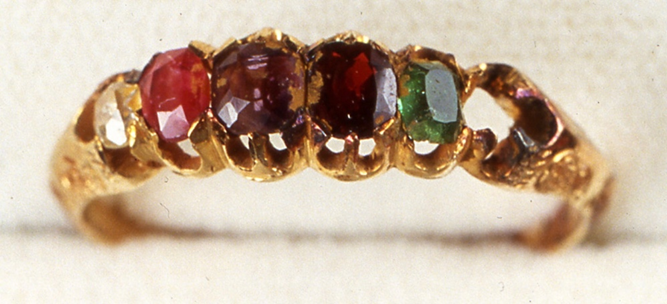
I believe we would fax messages to the Home Office once each day. Communications were different back then. Judy wrote back, rather quickly I recall, maybe only a day or two after my discovery of the jewels in the muck. “Could it be a REGARD ring?” she asked. A pre-engagement token of affection, a “friendship” ring if you will, a love charm from the mid-19th century.
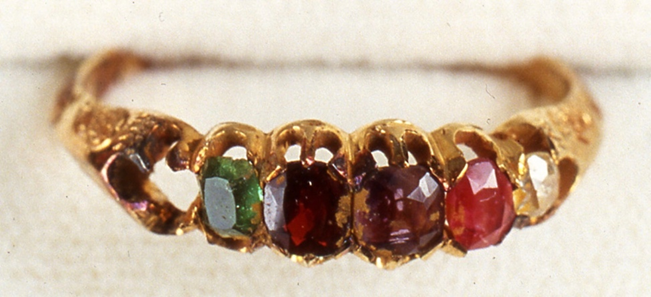
Of course! That’s what it is! I was elated. The gold always delights, but gold coins are money, historically a medium of exchange. This ring spoke about other cultural practices, men and women and courtship. I often talk and write about how the treasure has stories to tell. Lawyers are familiar with a Latin phrase that scientists should use as well, “Res ipsa loquitur.” The thing speaks for itself. Receiving this message from the historians, I felt like the treasure was shouting.
Our prime business objective for finding the shipwreck and the treasure was to recover the commercial shipment. With the amount of money we were spending, there wasn’t any wasted time. Almost all our landings on the seabed were adjacent to the big treasure pile. We established a “science station” nearby, which we could visit to tend experiments and observe and collect biology without spending an hour getting there. But, as you can appreciate, our main activity was picking up gold and trying to figure out how to do it most efficiently, balancing that with the care needed to not damage coins potentially worth $20 thousand apiece.
The debris field held many fascinations, some objects we could understand and some we couldn’t. Things look different after 13 decades under the sea. We knew there was gold in the debris field, but we didn’t explore extensively to locate widely dispersed gold. We continued to work on our prime objective, the multi-ton deposit at the stern of the shipwreck.
There was one concentration of coins sitting in the portside debris field that was clearly visible. It sat in an area that looked to be swept clean of sediment, a bare patch of sediment with a few dozen coins on top. The coins appeared to be the same size; we assumed double eagles. Sitting beside the coins was a chain. Its well-preserved condition suggested that it was gold, undoubtedly more jewelry.
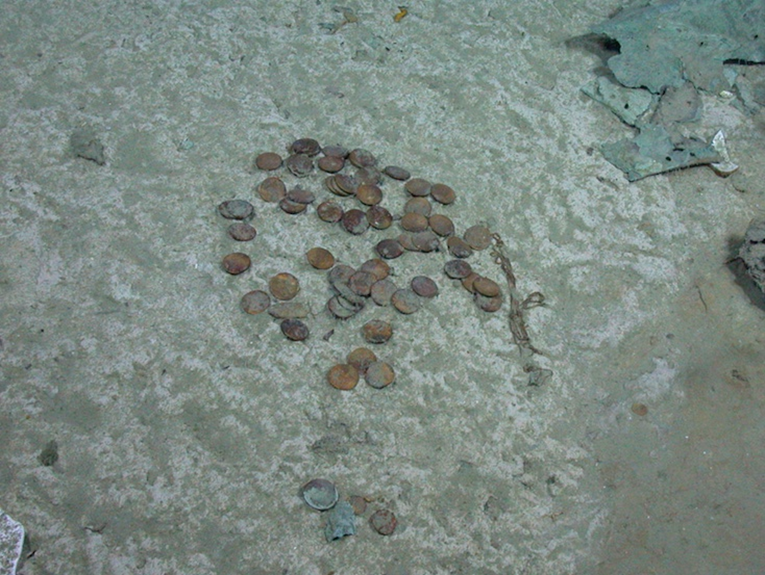
We found this first “coin pile” during early photographic surveys, and we descended for a close look, but never landed to recover anything. All of this we left for a later date, thinking that we could always come back to recover the pile. So, we left it as an “Ace in the hole.” It was there if we ever needed it. Meanwhile, we continued working on the much larger commercial shipment, where thousands of coins remained, then hundreds. We knew that at some point the commercial shipment deposit would be depleted, and we would then turn our attention to the passenger gold.
At the end of 1991, we hadn’t finished recovering all the commercial gold shipment, and so we had not taken the time to recover the little pile of double eagles out in the debris field either. In 1992, the ruling from Federal District Court in Norfolk granting us ownership based on Finders’ Law was overturned on appeal. The Circuit Court ruled (2 to 1) that Salvage Law should apply in our case rather than The Law of Finds, and the case was sent back to District Court and Judge Kellam for a second trial. (See Treasure Talk Episode 4, Parts 1 & 2.) The resulting legal entanglements coupled with other business complexities ushered in over two decades of human and robot inactivity on the S.S Central America shipwreck site.
I didn’t get back to the site for 22 ½ years. Many things had changed. Tommy Thompson was out of the picture, except as the subject of a manhunt by U.S. Marshals. The court had appointed a Receiver, Ira Kane, who in turn had hired me to resume my role as the Chief Scientist and Historian of the Project. I went back to the site with a new colleague, Craig Mullen, now serving as the Receiver’s Director of Marine Operations, and a new set of crewmates from our contractor, Odyssey Marine Exploration. No one else remained from the early expeditions. I held all the “corporate memory” of the shipwreck site and what we had done there. Ira Kane, referred to me as the “Last Man Standing.”
Indeed, I was still standing, and I enjoyed a sudden flood of new information. The passage of two decades had brought wonderful advances in technology, particularly in areas of digital photography, video, navigation, and user comment logging, and the integration of all these systems. As well, whereas 1990 Nemo had the thrusting horsepower of a garden tractor pushing 6 Tons of machinery through water, 2014 Zeus (Odyssey’s ROV) had more like the force of a sports car, and it could travel around the shipwreck independent from the motions of the ship it was tethered to by a mile and a half of cable. That’s an oversimplification of an enormously complicated subject: simultaneous surface versus deep-sea navigation. The important part here is that there had been huge advances, in the total power of the ROV, and in the world of computer controls and systems integration.
Within two weeks a digital photomosaic survey with excellent spatial control had revealed another couple dozen coin pile locations, both confirmed and probable. The one we knew about from the late 1980s was designated as “Coin Pile #1,” and it became convention to call places where we found at least two coins a “coin pile.” Once Odyssey had established a convention, it was hard to change, since we were operating 24/7, and it was more important to capture the data than to have it logically named, or to change the classifications. So, many spots within the 5-meter-wide commercial shipment deposit received designations as separate coin piles, although their starting positions before the shipwreck collapse had become difficult to discern, the boxes or bags as originally arranged within the strong room. In my mind, the commercial shipment started out as one deposit, then split into two huge “coin piles” as the shipwreck’s stern folded open during collapse.
Once the “coin pile” moniker had been established, Odyssey also designated some “Ingot Piles” and “Nugget Piles.” None of these rose to the anthropological significance of the coin piles in the port side debris field. Here we found the money of the wealthy street, in some cases concentrated into a literal pile.
Some of these deposits were coins only, just the money. But, more frequently we found suites with all kinds of valuables. In the final minutes, as the Central America was about to sink, the stern section was swamped first, and the men crowded onto to foredeck with the final possessions they were trying to save, their money, their jewelry, and their photographs. Most cast their heavy bags and gold-stuffed belts on the deck, some pouring out gold dust, as I mentioned in last month’s episode. These bags perched on deck as the ship spiraled upright to the bottom during a half-hour descent, impacting the seabed with enough force to explode the decks and boilers up and over to the port side, and propel the passengers’ bags into a broad area, now comprising the portside debris field.
So, there are “coin piles” where we found mostly coins, perhaps with one or two pieces of jewelry, like Coin Pile #1 that we first saw in ‘88. There were also coin piles that had flashy numbers of small gold coins, beckoning us into an array of jewelry, large gold nuggets, and photographic cases, as well as the coins. Coin Pile #2 was like that. I’m currently working with a colleague on research about what the constituent coins in these coin piles tell us.
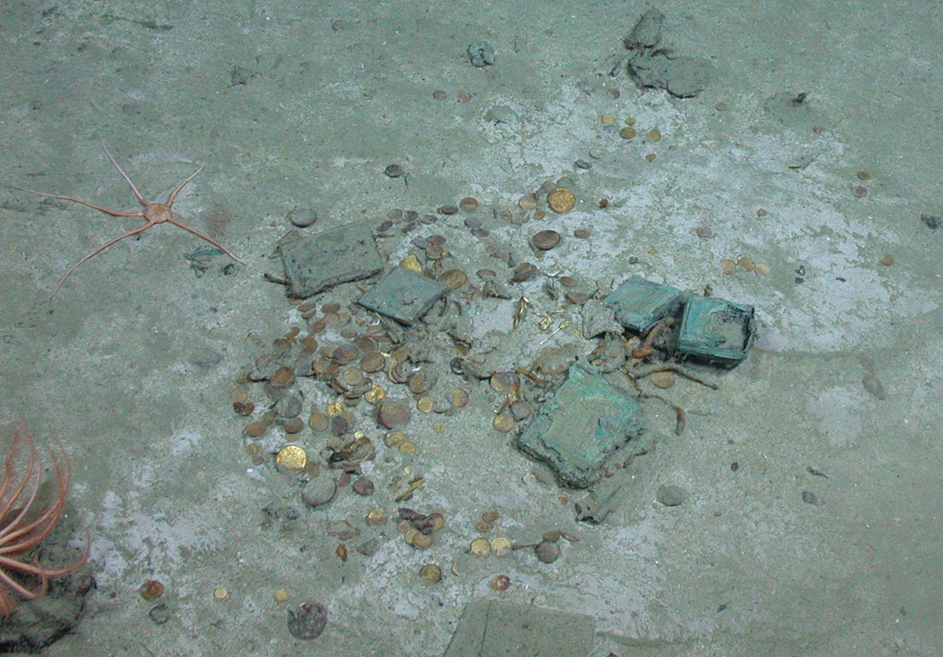
The jewelry found in the coin piles speaks more directly to the eye than a sheet of coin statistics ever will. It represents the aesthetic history, and these pieces have much to say about the flair and panache projected by wealthy society in 1857.
Certain jewelry is characteristic and emblematic of the California Gold Rush. Large, attractive, natural nuggets of convenient size were fashioned into jewelry by simply affixing a stickpin or a pinback. We recovered many such pins, very popular among men who had been to Gold Rush California. They were worn almost like badges, flashy declarations that the bearers had been there.
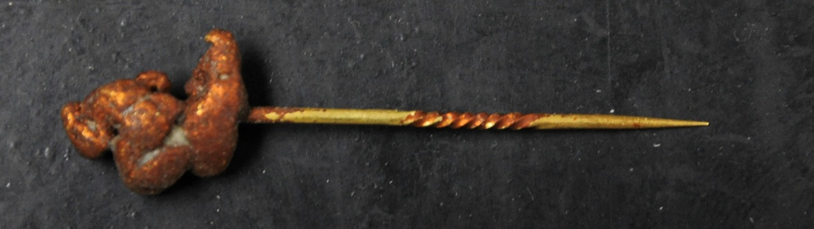
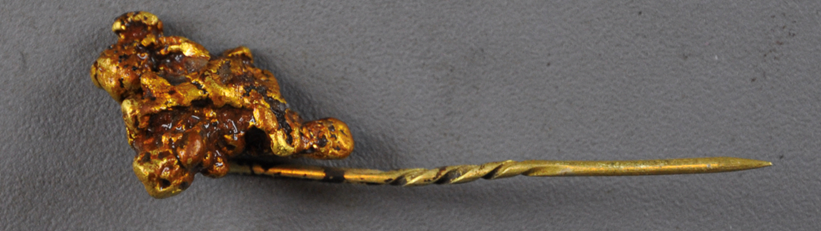
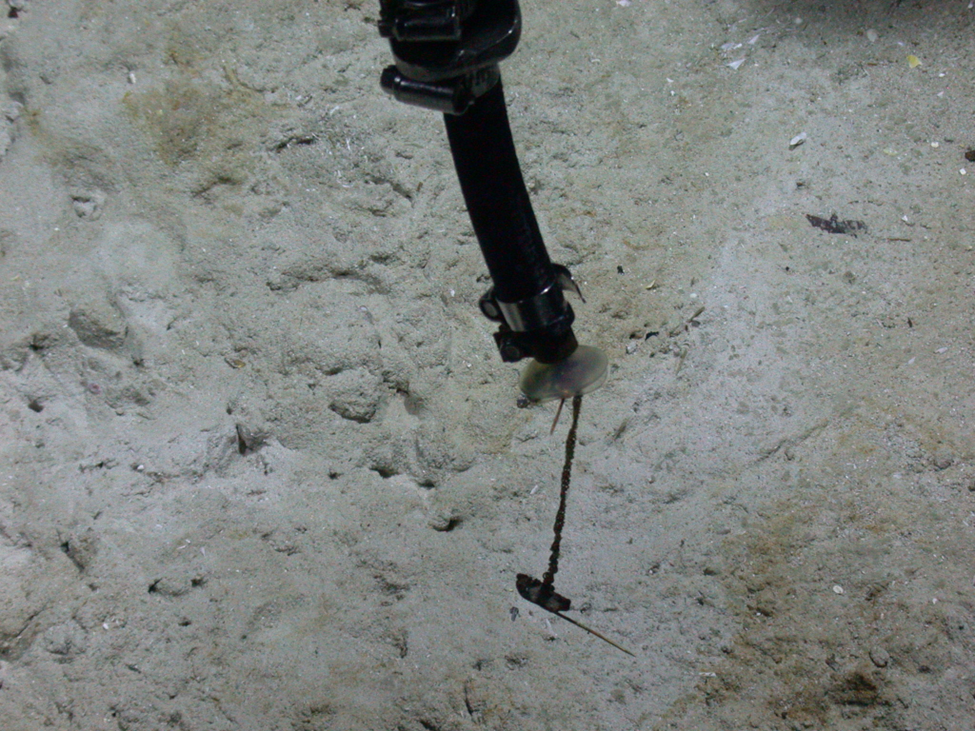
Perhaps the fanciest was a double-nugget stickpin, with two nugget stickpins connected by a gold chain. We recovered this from Coin Pile #10 during Dive 18, on May 21, 2014. You can see one nugget dangling from the chain while the operator holds the other nugget with the limpet suction cup.
The piece after conservation is stunning. It would have once adorned the jacket or collar of some California gentleman, someone really duded up!
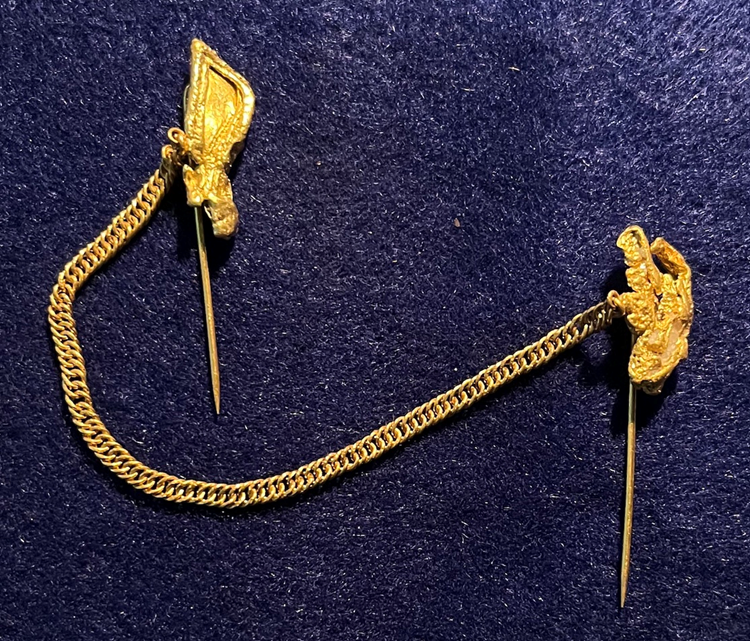
The nuggets used for this are very decorative, but also geologically significant. These nuggets show the intricate patterns and natural designs of native gold crystals as they grew within the Mother Lode.
The one-dollar denomination of gold coin began with the sudden influx of gold in 1848 – 1849. In 1849, the US Mint introduced the one-dollar coin, the smallest denomination of gold coin, followed by the introduction of a new largest denomination, the twenty-dollar double eagle, in 1850.
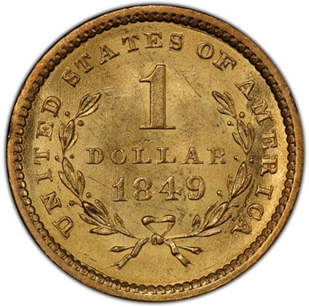
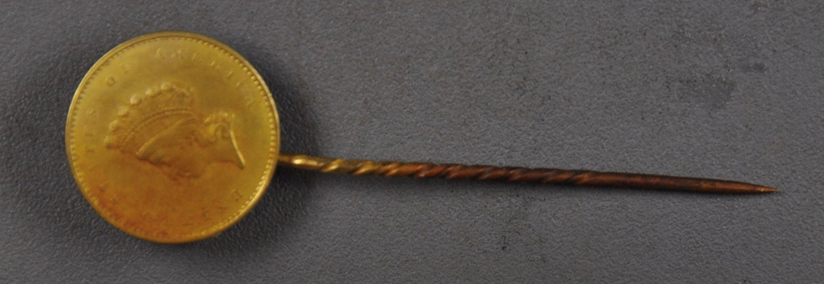
Hundreds of gold dollars appear in the SSCA monetary treasure, but a one-dollar gold coin also shows up in the jewelry. During Dive #63 of the 2014 expedition, while exploring deposits found well out into the portside debris field, we found this Type II Gold Dollar with attached stickpin.
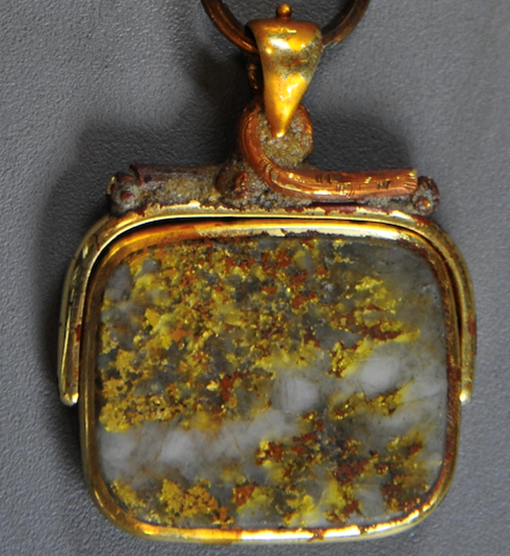
Another use of the native gold in jewelry was in the form of gold-bearing quartz, used as cut, shaped, polished, and set gemstones. This sort of gold-quartz jewelry was a characteristic California style, and emblematic of Gold Rush success.
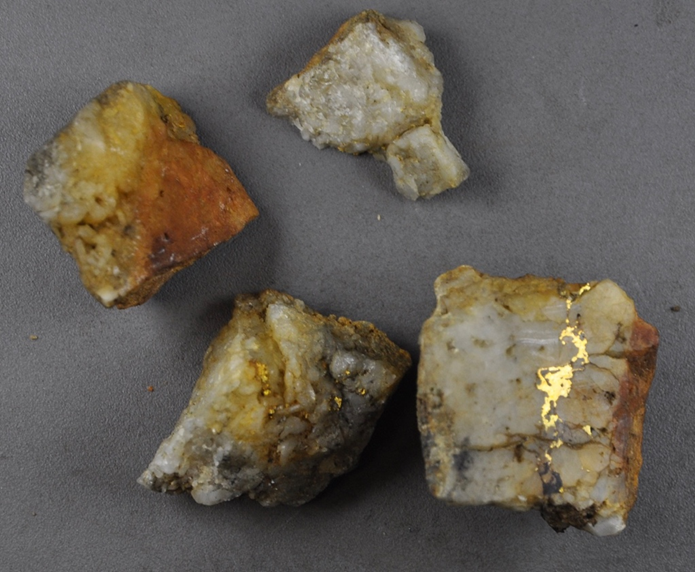
Among the passengers on the SSCA, there were two gentlemen known to be jewelers by profession. As a geologist, I was thrilled that we were finding jewelry made out the native quartz, but I couldn’t be more pleased than when we found little chunks of raw gold-quartz, only partially cut and processed, that must have been intended for some east-coast craftsman’s bench. The largest of these, the one reflecting the cut gold vein in the lower right, is an inch across.
The presence of jewelers on board is also suggested by my last example. Found in Coin Pile #10. It is hard to figure out exactly what the purpose of this tiny ring was, engraved “GIFT” as it is. Surely it is not an actual gift being carried by someone to an intended recipient back east. Why would a gift be labeled so blatantly? It’s diminutive size also begs an explanation.
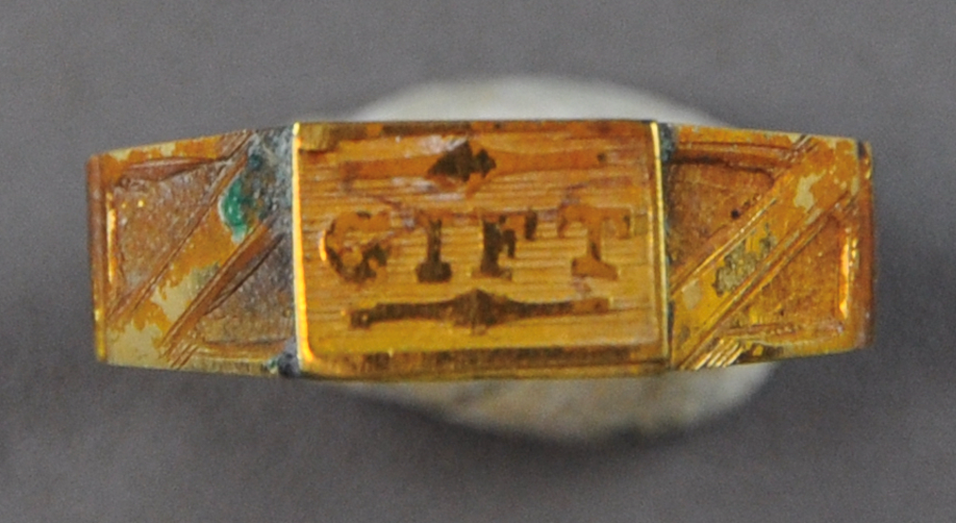
Perhaps it was originally intended as a jewelers’ sample, a specimen of the engraving skill of artisans available to the merchant who would show such a piece. It is not the flashiest piece of jewelry we found. Not by a long shot. But I think it holds an interesting message, and I will share some thoughts.
In its revolution around our star, in late December the earth’s northern hemisphere tilts back toward the sun, a moment known as the Winter Solstice, whereupon the hours of daylight begin to increase, and the night gets shorter. Ever since ancient times, people eagerly awaited the return of the light, (and the warmth,) and the holidays of many cultures and religions cluster around these days, which mark human religious events (Christmas, Hannukah…) as well at the celestial. Gift giving is an important part of many celebrations.
The “GIFT” ring emerged out of the chaos of the shipwreck, as did the entire S.S. Central America treasure. The treasure is a gift from the past to the present, informing our minds and enriching our experience with tangible pieces of that opulence that shone during the Gold Rush. Out of disaster, degradation, and deep darkness, there arose the greatest lost treasure in United States history.
May wonderful things emerge for you in the New Year!
Best of Fortune!