
What is a Morgan Silver Dollar?
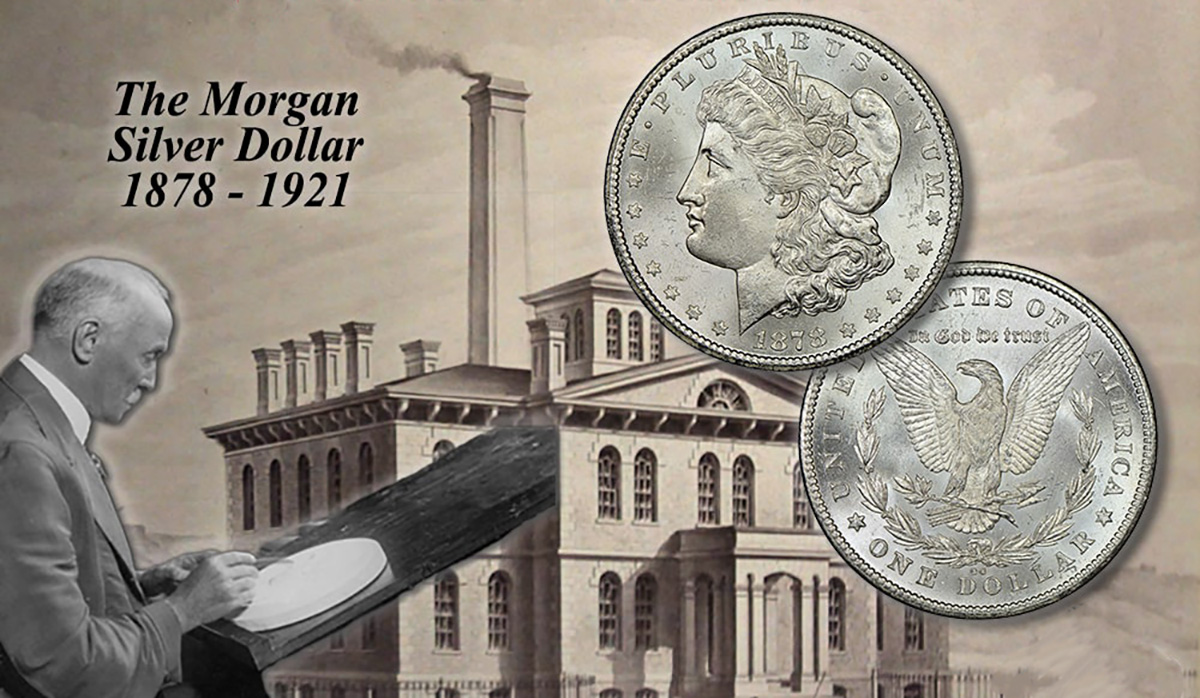
The Morgan Silver Dollar is an American classic. Minted between 1878 and 1904, with a final issue in 1921, each coin contains 90% silver and embodies the vision of accomplished engraver George T. Morgan. Liberty’s profile on the obverse and a commanding eagle on the reverse define the coin’s unmistakable look. The Morgan Dollar set a new standard for U.S. dollar coinage, elevating both design and ambition. For anyone drawn to genuine American history, the Morgan is where the story begins.
Why Build a Morgan Dollar Collection?
The Morgan Dollar series captures the ambition and history of America’s growth years. Each coin reflects a moment in time, with stories tied to mints in Carson City, New Orleans, San Francisco, Denver, and Philadelphia. Tracking down key dates and rare mint marks becomes a genuine pursuit for collectors. Certified coins from PCGS or NGC confirm quality and authenticity, and a complete set often outpaces the value of silver alone. No other U.S. coin series offers the same blend of challenge, history, and proven staying power.
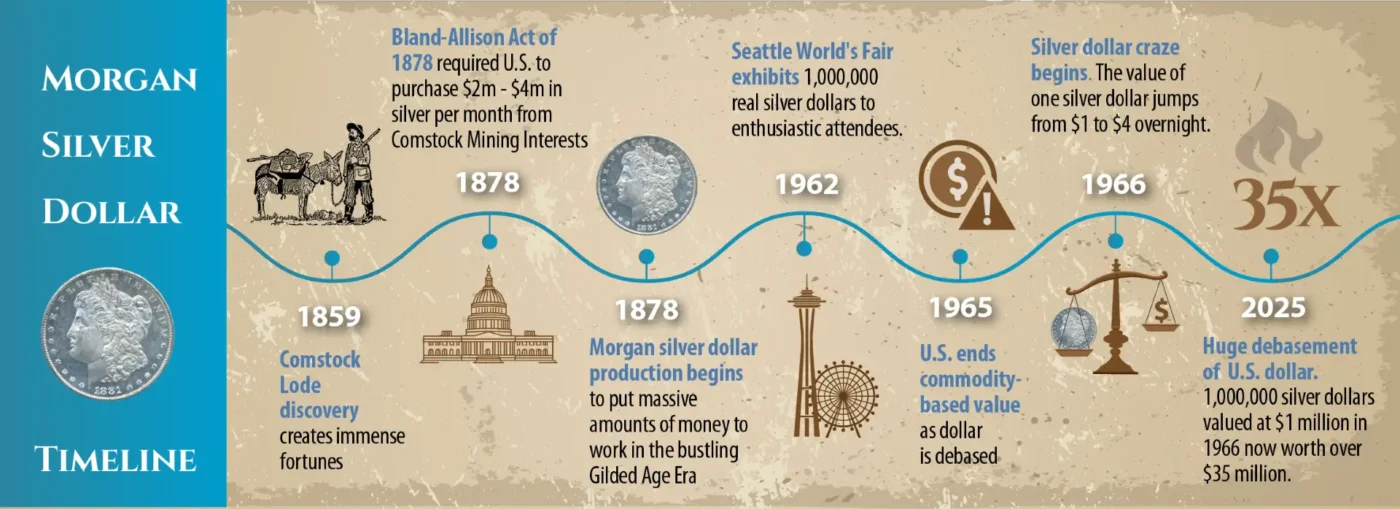
Morgan Dollar Investment Potential
Morgan Dollars are widely regarded as both collectibles and reliable hard assets. Consider the advantages:
- Market Demand: Key dates and high-grade coins often command premiums far beyond their silver content, reflecting real interest among both collectors and investors.
- Certified Security: Coins graded by PCGS or NGC come with verified authenticity and condition, reducing risk and boosting buyer confidence.
- Long-Term Growth: Historical price trends suggest that rare Morgans often outperform traditional investments, even when precious metals fluctuate.
- Intrinsic Value: Morgan Dollars are made of 90% silver, which guarantees a clear, established baseline for value.
- Portfolio Diversification: Morgans introduce true variety to any investment approach, pairing history with genuine scarcity.
For investors who value security and substance, Morgan Dollars set the standard.
Coin Grading Explained
Condition is everything with Morgan Dollars. Professional grading services like PCGS and NGC use a 1 to 70 scale, with higher numbers indicating better detail and preservation. Grades combine numbers and letters: circulated coins are graded G (Good), VG (Very Good), F (Fine), VF (Very Fine), XF (Extremely Fine), or AU (About Uncirculated). Uncirculated coins use the “Mint State” scale, labeled MS60 to MS70. Even a small jump in grade, such as MS63 to MS65, can mean a significant increase in value. Always verify a coin’s grade and authenticity through a trusted certification.
MORGAN DOLLAR FREQUENTLY ASKED QUESTIONS
What is a Morgan Silver Dollar?
A Morgan Silver Dollar is a U.S. coin minted from 1878 to 1904 and again in 1921. It contains 90% silver and features designs by engraver George T. Morgan.
Are Morgan Dollars a good investment?
Many collectors and investors view Morgan Dollars as a reliable store of value, especially rare dates and higher grades. Certified coins offer both historical interest and market trust, with values that have often outpaced silver prices over time.
What makes one Morgan Dollar more valuable than another?
Value is driven by rarity, grade, mint mark, and demand. Coins from scarce years or mints such as Carson City, or those in high grades, command the highest prices.
How should I store Morgan Dollars?
Store coins in certified holders, slabs, or acid-free capsules, and keep them in a cool, dry place. Avoid cleaning them, as original surfaces are more valuable.
How can I spot counterfeits?
Buy only from reputable dealers and prioritize coins certified by PCGS or NGC. Third-party grading significantly reduces the risk associated with buying, and most fakes are easier to detect when held in a certified holder.
Why are coins often named after engravers?
Coins are sometimes named for their designer when the design indicates a change in style or sets a new standard. In the case of the Morgan Dollar, George T. Morgan’s work was distinctive enough that collectors and dealers began referring to the coin by his name. The name is about recognizing a design that defines an era, not about fame.