
Treasure Talk with Bob Evans, News, Rare Coin Articles
Treasure Talk 14 Part 1: The Treasure Inhabitants
May
Treasure Talk 14 Part 1: The Treasure Inhabitants
In springtime, in my southeastern Ohio neck of the woods, the earth casts off winter’s grip, the fields and forest burst forth with wildflowers, and there is suddenly a lot of grass to mow.
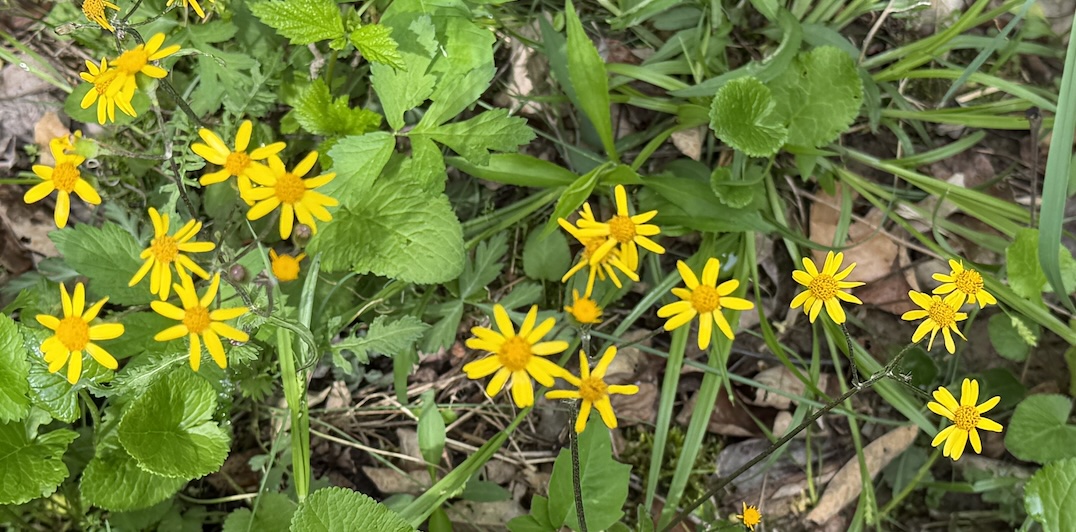
The land sings in celebration. Colorful migratory birds are arriving daily from Central and South America, places thousands of miles south of here. We humans celebrate this vernal awakening with holidays sacred and secular. As a boy, I learned about nature and its joys in these fields and forests, as well as suburban backlots and creek beds. I may be a numismatist now, but I started out as a field scientist. For guys like me, nature presents a smorgasbord of opportunity for observation and discovery, beckoning the curious to explore.
Mark Twain understood this urge, writing in The Innocents Abroad (1869):
“What is it that confers the noblest delight? What is that which swells a man’s breast with pride above that which any other experience can bring to him? Discovery! To know that you are walking where none others have walked; that you are beholding what human eye has not seen before; that you are breathing a virgin atmosphere. To give birth to an idea–to discover a great thought–an intellectual nugget, right under the dust of a field that many a brain–plow had gone over before. To find a new planet, to invent a new hinge, to find the way to make the lightnings carry your messages.
To be the first–that is the idea. To do something, say something, see something, before any body else–these are the things that confer a pleasure compared with which other pleasures are tame and commonplace, other ecstasies cheap and trivial. Morse, with his first message, brought by his servant, the lightning; Fulton, in that long-drawn century of suspense, when he placed his hand upon the throttle-valve and lo, the steamboat moved; …Columbus, in the Pinta’s shrouds, when he swung his hat above a fabled sea and gazed abroad upon an unknown world!
These are the men who have really lived–who have actually comprehended what pleasure is–who have crowded long lifetimes of ecstasy into a single moment.” The S.S. Central America Project granted me opportunities to experience these moments, although perhaps not on the world-changing scale of Morse, Fulton, or Columbus. But I have made discoveries and have been present during discoveries. And I can attest that the ecstasy and excitement is real.
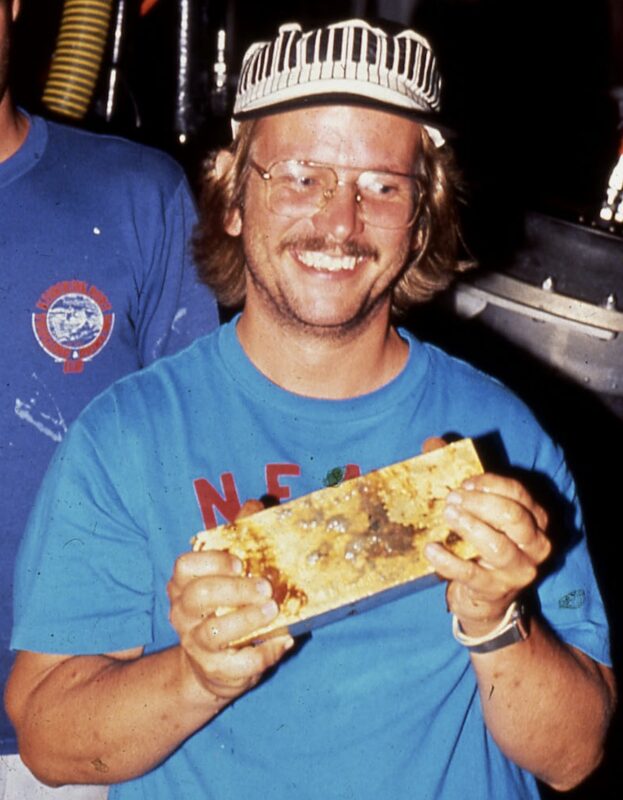
The S.S. Central America shipwreck and surrounding debris field comprise about one billionth of the surface of the earth. This helps me to put the extent of my own explorations into proper context. But it certainly has been a thrill to discover and study this tiny piece of the planet. I found myself “beholding what human eye had not seen before.” It was a new place, its secrets concealed by great depth. Aside from the incredible treasure, there was a lot more to discover, including the strange and wonderful animals that live around the shipwreck.
Historic Exploration:
We were not the first expedition to probe the depths in this patch of ocean.
Those of us living today don’t give it much thought, but, until the latter half of the 19th century, humankind didn’t know the answer to one of the great geographical questions:
How deep is the ocean?
Since antiquity, mariners had determined the depth of the waters under them by lowering weighted lines with knots tied at specific depths, noting when the line went slack. This allowed them to find bottom features down to a few hundred feet with enough accuracy to determine channels for safe navigation, and shelves where fish and lobsters congregated. But below that, the drag on the line would increase and muddle the results. So, the greater depths remained unknowable, a realm of speculation and myths, perhaps the home of unseen monsters.
In the mid-19th century, William Thomson, the man known to scientific history as Lord Kelvin, became interested in the business of laying undersea telegraph cables. Finding the best routes for such cables entailed mapping the depths, deeper than the cod-lines would be effective. In 1872, Thomson conducted experiments, showing that by employing piano wire instead of cod-line, the weight could plummet downward with minimum friction and drag. He added instrumentation to gauge the depth, instead of counting knots. A young enterprising US Naval Officer, Lieutenant-Commander Charles Dwight Sigsbee, took these concepts and invented “The Sigsbee Sounding Machine,” which became the standard for such work for the next half century. Work with these new devices not only revealed the safest routes for the undersea cables connecting the world, but it also shattered previous human concepts about the depths, as the unknown became more known.
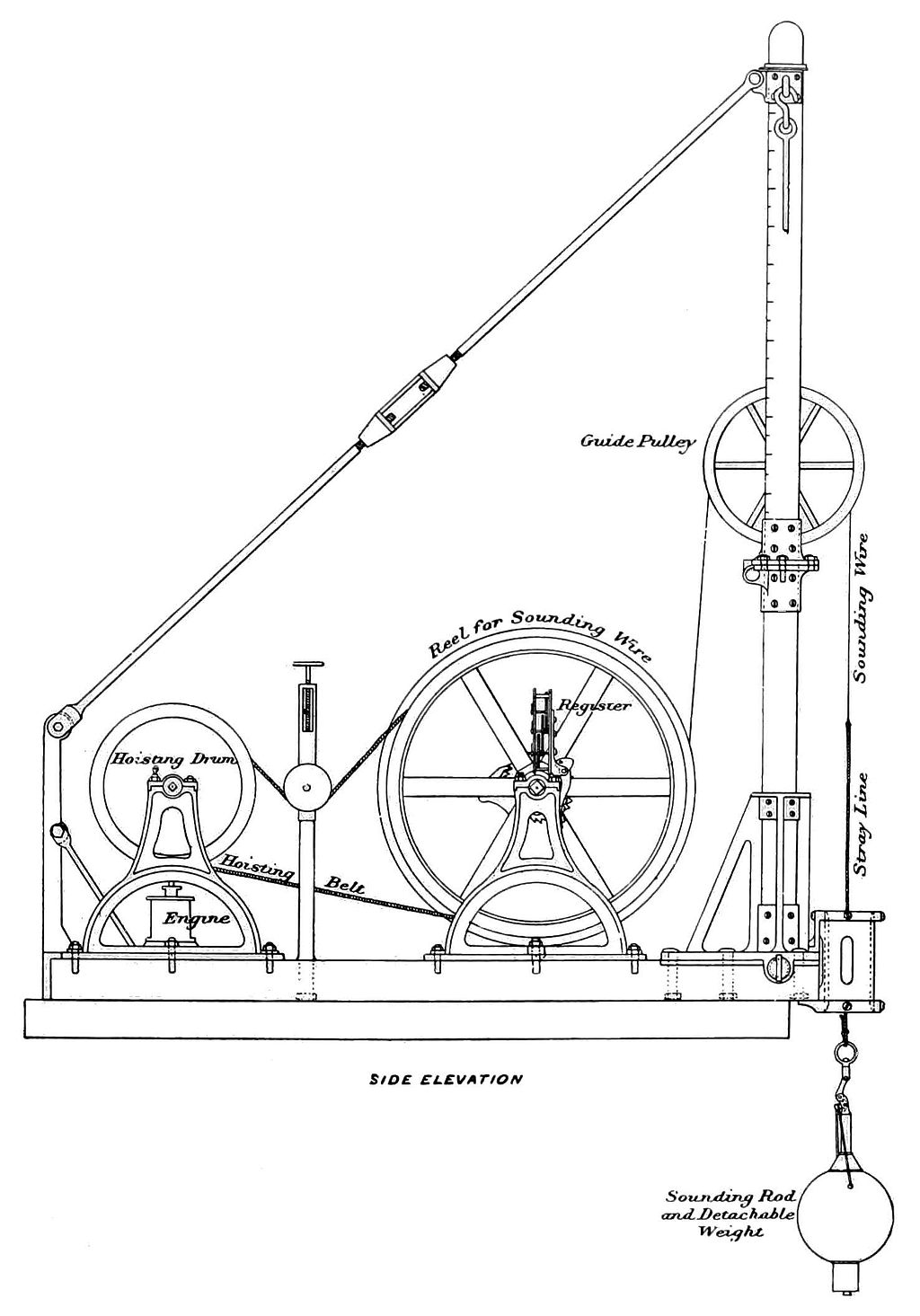
A contemporary report declares, “The result has taught us that there are in the ocean, generally not far from the shore lines, immense depressions of the sea-bottom, which, in their relations to the topography of the ocean beds, can only be compared to the highest peaks in the Andes and in the Himalaya chain.”
Sometimes history deals a strange hand. Sigsbee, whose inventive skill unlocked the great secrets of the deep for the first time, is remembered, if at all, for being the Captain of U.S.S. Maine, when it blew up in Havana harbor on February 15, 1898, the spark that ignited the Spanish-American War.
But two decades earlier, Lieutenant-Commander Charles Dwight Sigsbee was making great and important discoveries with his sounding machine and other equipment. Between December of 1877 and the hurricane season of 1880, the United States Coast and Geodetic Steamer Blake made important discoveries surveying the Gulf of Mexico, the Florida Keys, the area surrounding many of the Caribbean islands and encompassed by them, as well as the southeast coast of the United States. Sigsbee himself was the officer in charge for the first two of the three voyages. The stated objective of these expeditions was to determine the depth and extent of deep-sea features, and to describe the animals found to be living there. This was cutting-edge deep-ocean exploration during the Rutherford B. Hayes administration.
Blake was at the top of that game, a rather small steamer, a “work boat” equipped for work with the Sigsbee Sounding Machine, as well as “the dredge, the trawl, the tangles, and all the apparatus necessary for the exploration of the fauna of the depths of the sea.”
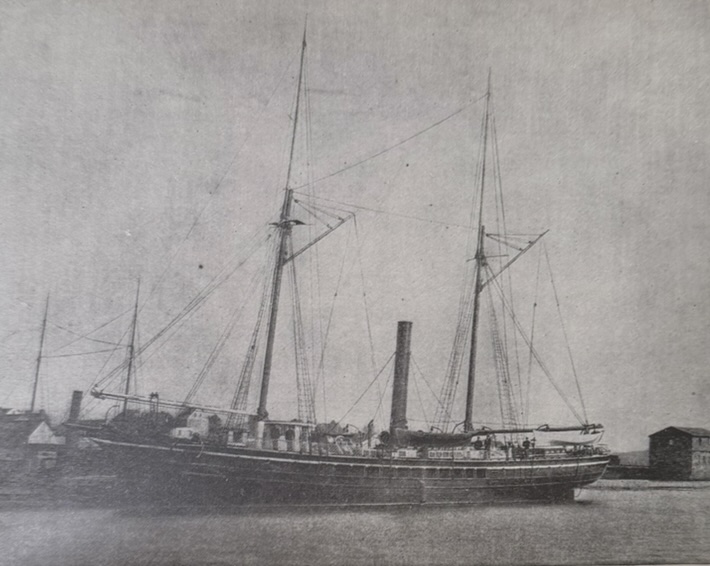
Sigsbee himself was to command the first two voyages of the Blake, studies around the Caribbean islands and the Gulf coast. The United States government of the 19th century used Navy officers, and sometimes crews and ships in peacetime, to conduct marine research of national importance.
At that time, Sigsbee was about the same age as I was when I first worked at searching for and finding the SSCA, early to mid-thirties; interesting for me to think about.
The Cayman Trench was initially named the Sigsbee Trench. The third voyage, led by Commander J. R. Bartlett, USN, covered areas off the southeast coast of the United States, and it discovered and mapped a large mid-depth plateau, given the name “Blake Plateau.”Later oceanographic surveys found other features bordering this plateau, and these also were given the “Blake” moniker: Blake Escarpment, Blake Ridge, Blake Spur, and Blake Canyon.
The Spur and the Canyon are south of the area where we searched for the SSCA, and so they never came into play into our project. We studied parts of the Blake Plateau, Escarpment, and Ridge during our search for the treasure.
The Blake Plateau sits beneath water that deepens to around 1100 meters, or 600 fathoms, just as originally determined by the studies conducted aboard its namesake research vessel in 1880. The Blake Escarpment represents the Continental Slope in this area, the edge of the Blake Plateau (and in some sense the true edge of North America,) where it drops steeply toward the abyss. In many places around the world’s continents, continental slopes deepen directly down to abyssal depths of 5000m, what among deep-ocean equipment designers is known as full ocean depth. (Note: relatively narrow and limited deep-ocean trenches are much deeper, but most of the ocean floor is 5000m or less in depth.)
At the latitude where the Central America sank, the Blake Escarpment portion of the US continental slope presents a different scene. Part of the way down the slope of the steep escarpment, a large sediment dune of sorts, rests against it. Known as the Blake Ridge, this giant deep sea “sand bar” below the Gulf Stream has buried the seafloor here with thousands of feet of sediment known as ooze. The oozy seabed of the Blake Ridge begins around 2000m deep and extends seaward for 150 miles, sloping ever so slightly, an average of around a 1 percent slope. The Central America shipwreck site sits near the upper end of the Blake Ridge, about 2200m deep, just a few nautical miles from where the ooze has piled against the sharper slope of the escarpment. It is a little steeper here, but still a gentle slope of just a few degrees; effectively a flat featureless plain; the perfect place to look for a shipwreck. And find it.
When we did find the S.S. Central America shipwreck, we were met with a previously hidden community and their world. A hundred years before us, the instruments used during the voyages of the Blake had penetrated deep below the waves and discovered the lay of the land, and the general form of some of the animals living there. But no living thing dredged up from the great depths arrived alive at the surface, probably succumbing more to the temperature difference than the pressure.
Renowned American biologist Alexander Agassiz, of Harvard’s Museum of Comparative Zoology served as the principal scientist for those expeditions. In his comprehensive two-volume report (1888), he laments, “We can scarcely hope ever to watch the habits of the deep-sea dwellers, and see them in their natural attitudes, and we must be satisfied to imagine what these are by analogy with their shallow-water allies.”
The SSCA Project gave us a chance to fill in some of those blanks, a century after Agassiz expressed his frustrations. As we arrived on the shipwreck in 1988, we were greeted by the sight of those deep-sea dwellers, and because we returned day after day, and year after year (for 4 summer seasons, 1988 – 1991,) we were able to see them in their natural attitudes. We also found that some of those habits differed from the shallow water allies.
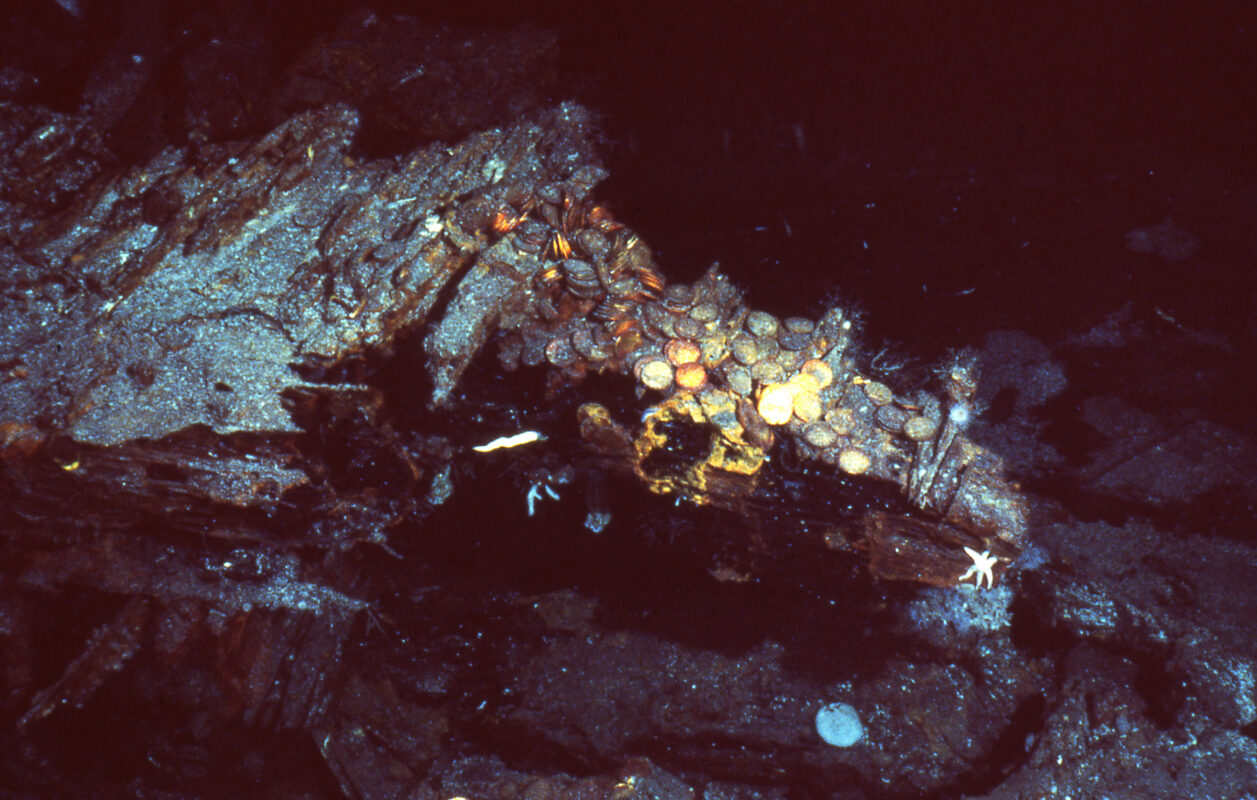
The S.S. Central America shipwreck teems with life. When found, a portion of the exposed treasure was covered with a rich community of invertebrates. For our peer-reviewed monograph about our scientific efforts we selected this image for the cover.
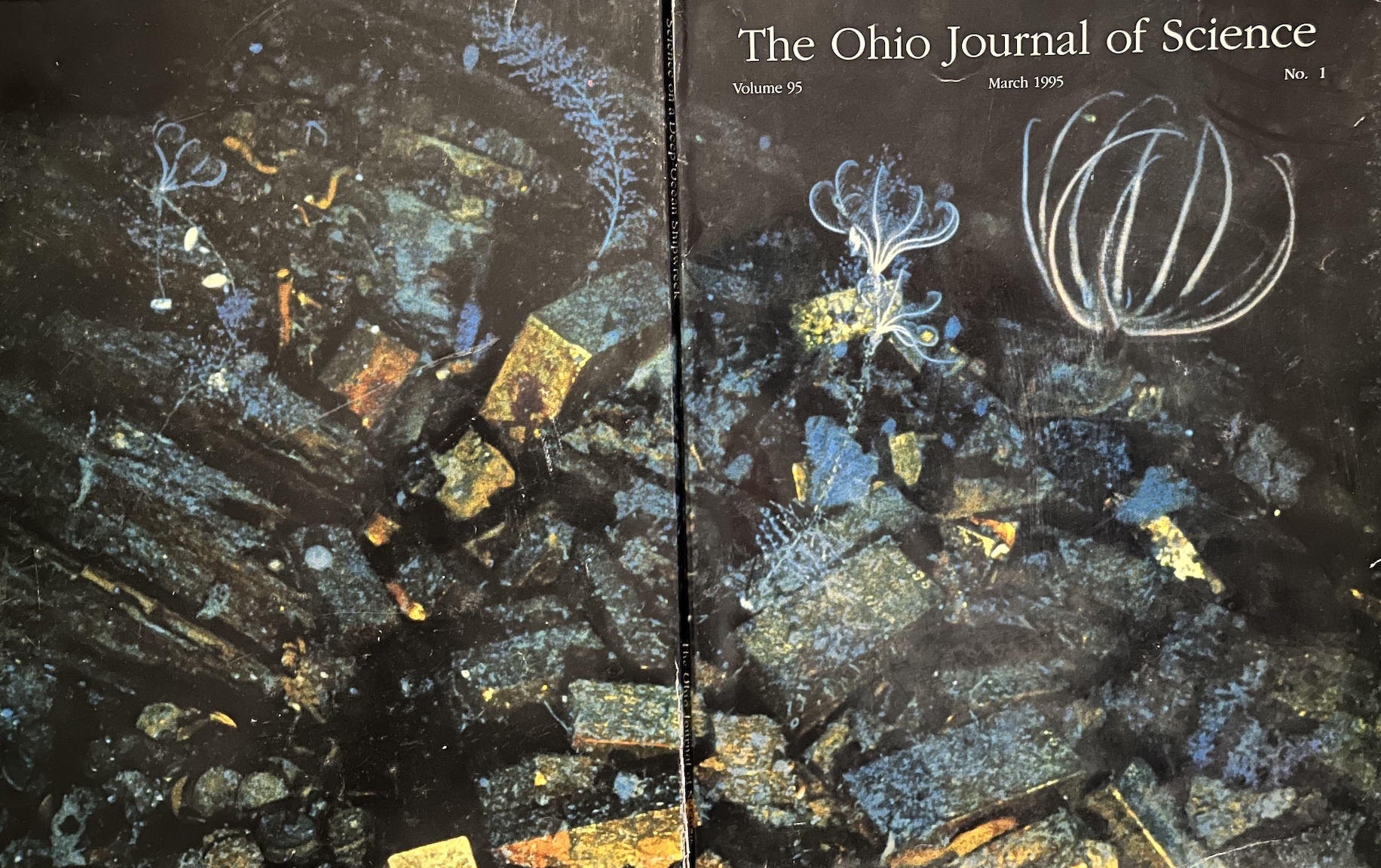
Growing on top of the top of a pile of gold bars, there sat the deep-sea equivalent of a coral reef, a virtual forest of corals and sponges crawling with strange denizens like feather stars (crinoids,) sea cucumbers, starfish, barnacles, and mollusks.
Why so much life? Isn’t a shipwreck “dead” place?
Hundreds of miles to the north, off Greenland and the shores of Canada, in the seas of the near-midnight sun, long dusks and dawns are separately only by brief darkness. The extended hours of light permit algae and phytoplankton to bloom in riotous abundance, infusing the surface waters with oxygen, and nutrients foundational to the food chain. These northern waters and their annual burst of productivity draw all parts of the aquatic community to the feast: fish and whales and birds and seaborn humans.
This high-latitude water becomes heavier as it cools, denser than the warm Gulf Stream waters flowing into the area from the south. So, the cold, oxygen and nutrient rich water sinks and flows southward, as a countercurrent to the Gulf Stream, a flow known to oceanographers as the Western Boundary Undercurrent. It is this water that washes continually over the SSCA shipwreck, bringing life as it also nourishes the organisms that are consuming the wood and corroding the iron.
Nemo worked within an interesting neighborhood, and our cameras allowed us to see a wild array of seldom or never-seen animals, while we worked on the treasure and explored other parts of the shipwreck. Here are some of my favorites, and some highlight memories.
Brisingid Starfish: When we first saw the shipwreck in September of 1988, we were greeted by a host of strange 14-armed starfish arrayed on the corroding frames of the paddlewheels.
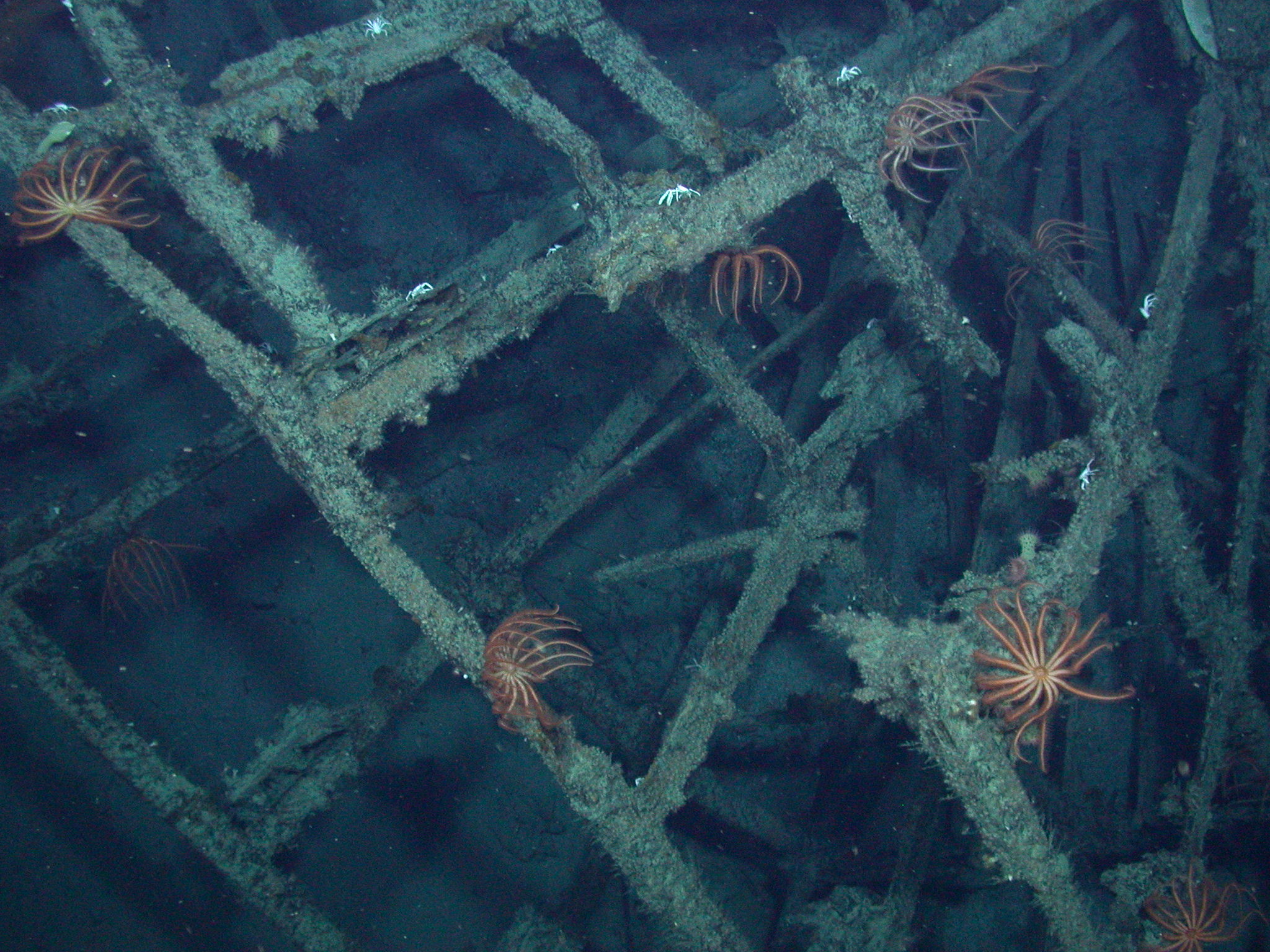
These are “Brisingid” starfish, (genus Brisingia) also sometimes called basket stars. The echinoderms, the group of animals that includes starfish, brittle stars, sea urchins, crinoids, sea cucumbers and their relatives, do very well at the shipwreck site.
Brisingid starfish were conspicuous on almost every prominence arising off the seabed, like beautiful ornaments, sitting atop the peaks. The are filter feeders, not active predators, relying on organisms and nutrients brought their way by the currents. They can move, but only very slowly. They can change from “arms up” to “arms down” in around three hours. We disturbed some who were in the commercial shipment area, but they had found new peaks and perches by our next dive. They are slower than sloths. I’m sure it is very energy-efficient in these cold, high-pressure waters, 2 or 3 degrees centigrade, let’s say 37 degrees Fahrenheit, all the time, 220 atmospheres pressure, or over 3,200 pounds per square inch.
There is another way in which these starfish differ from their shallow water allies. These starfish appear to engage in copulation. Out of a multitude of sightings, twice we found the larger orange females, up to around 18 inches across, sitting atop the smaller white males. On subsequent dives (as I indicated, they move slow,) we saw that the females had moved on, and had not eaten the males, which does happen sometimes in nature.
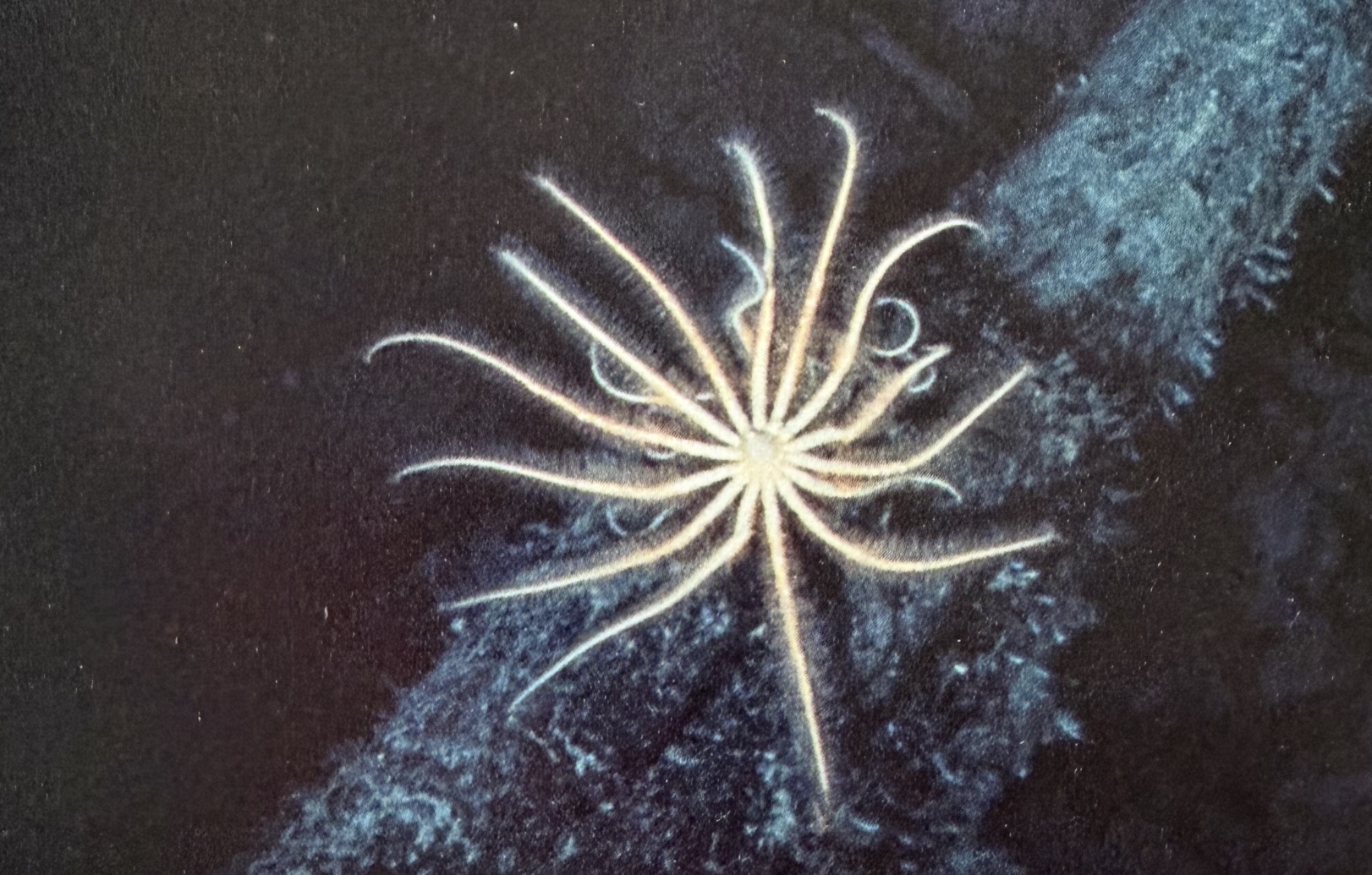
Starfish in shallow waters are usually broadcast breeders, males and females casting their gametes to become zygotes in the currents. Perhaps to ensure better chances at success, these starfish resort to “closer intimacy.” I’m not totally joking; that’s a potential reproductive strategy. (Cue the soft music… and cut those bright lights!)
Corals:
These feathery corals, Chrysogorgia, seen here growing on top of a corroding iron water tank, were another filter feeder found almost everywhere on the site.
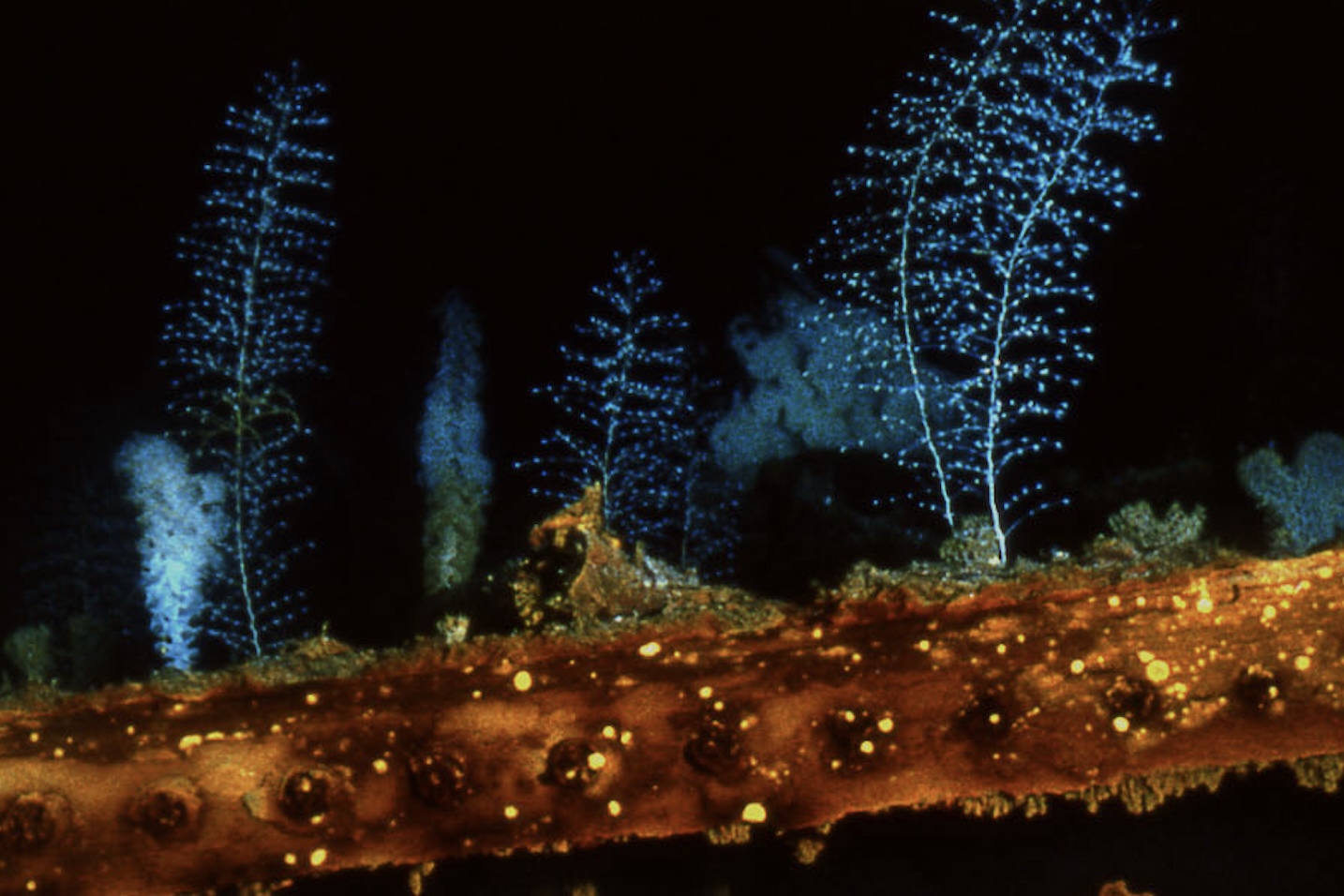
Here is a detail of the Ohio Journal of Science cover image, showing a colony attached to a gold ingot in the commercial shipment deposit. Chrysogorgia means “Golden Coral.” The stems of these “plumes” have a golden or brassy sheen.
The family they belong to are known as gorgonian (from the multi-headed gorgon) or soft corals, possessing a stem with multiple branches and heads. A Smithsonian biologist studying these animals with us said it was the first instance he knew of Golden Coral growing on blocks of gold.
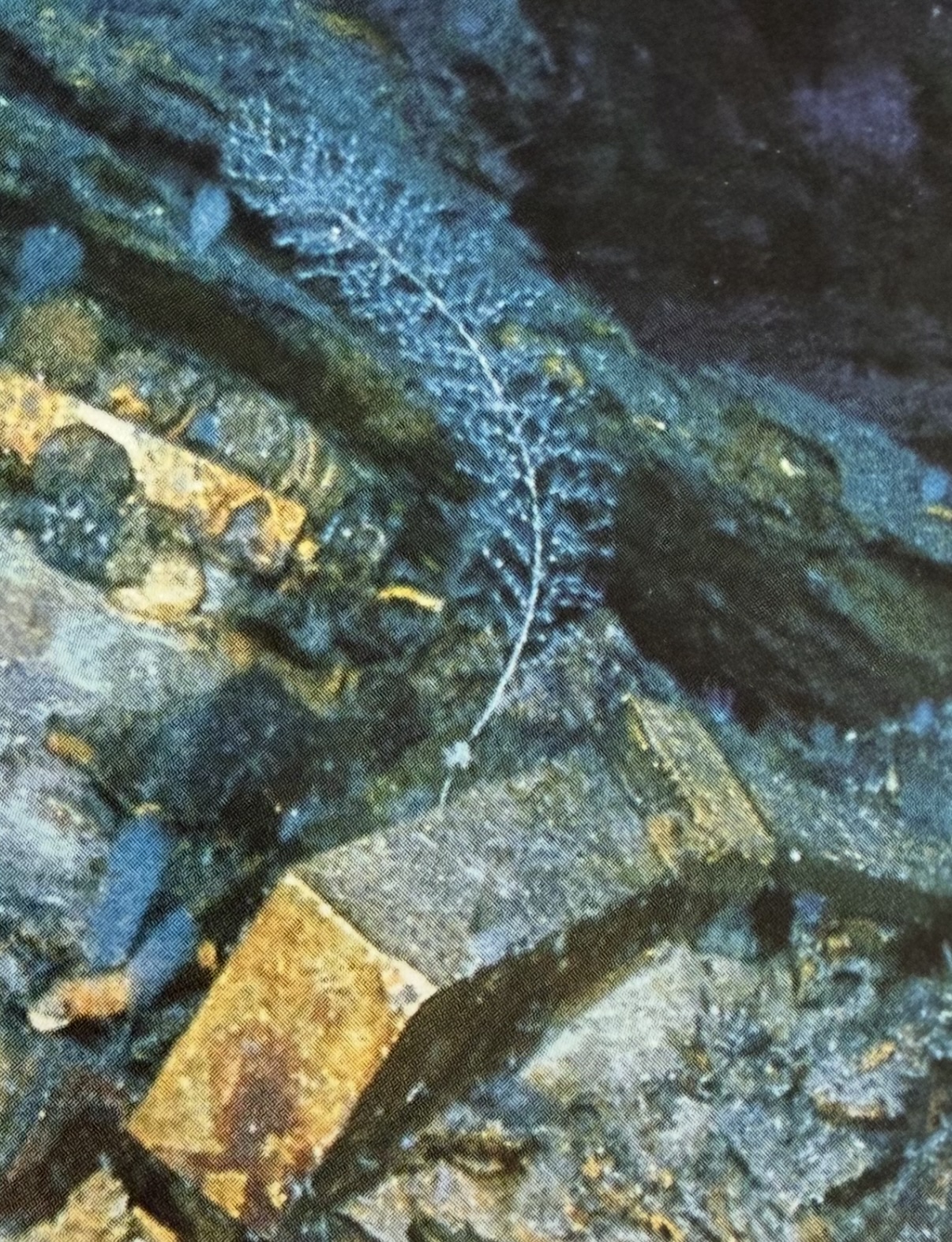
The coral reefs of shallow tropical waters require the sunlight for the photosynthesis component required for reef-building or “stony” corals. But the flexible, gorgonian (multi-headed) corals are well-adapted to the deep, lightless seabed, reaching upward and wafting to and fro in the nutrient-rich waters bringing them food, or in the wash of our robot’s propellors. They look very delicate, but they could take a pretty strong current.
My university studies in Paleozoic invertebrate paleontology (mostly weird marine animals that lived hundreds of millions of years ago) had prepared me very well for encountering odd animals and determining their general nature. I was familiar with most of the branches of the animal kingdom.
But very early in the project, it became obvious that our work would offer unique opportunities for scientific study of a new kind of biological habitat, in a previously little-explored patch of the ocean floor. In addition, we were going to go back repeatedly, and be able to observe the living community, day after day, possibly year after year. This would not be the “Grab and Go” of the dredges and trawls that Alexander Agassiz and his successor scientific fishermen employed. Our cameras would be watching, and our manipulator could take samples or specimens much more surgically than a dredge.
Dr. Charles Edward Herdendorf (known to all of us as Eddie) is a Professor Emeritus from the Ohio State University. For years he was the Director of the Franz Theodore Stone Laboratory, OSU’s biological research station on South Bass and Gibraltar Islands in Lake Erie. Stone Lab is a Sea Grant Institution, a consortium of university facilities and institutions dedicated to aquatic science, with Stone Lab’s specialty being Limnology or lake science, the study of the great inland seas.
Tommy Thompson studied under Professor Herdendorf during his college program of ocean engineering, with a summer field course at Stone Lab that I guess was memorable enough for both. As our early project developed, Tommy approached Eddie about being our project’s “Adjunct Science Coordinator.” By that time, Eddie was an Emeritus Professor and retired from his Directorship, but he had the high reputation, the contacts and the credentials. Top oceanographic experts would talk to him without questioning, “Who are these guys?”
When we first began to explore wooden shipwrecks over a mile down, I had scientific wild-ass guesses about what we were seeing. We scientists called these “SWAGs.” But now we would get to share our footage and images with the experts who knew the answers, or something closer to the answers.
Eddie found a scientific community eager to share in our data and tell us what they saw. While I was busy with the front-line science of the dives and the treasure recovery, he was compiling a catalog of all the species being seen and questions being raised by his correspondents. Experts received video footage and stills, and the responded with species identifications and additional requests for footage. Four top marine biologists signed on for at-sea participation, allowing them to join us aboard ship, to direct actions and observations during certain dive segments, and to examine specimens fresh from the seafloor.
In addition to Eddie, our visitors were:
Tim Coffer, Smithsonian Institution, National Museum of Natural History, Professor Ron Toll from the University of the South, Professor Henry Reiswig of McGill University, and Professor Ruth Turner of Harvard. I was truly honored to serve as the field scientist hosting this group at our floating outpost 150 miles offshore. For me, their presence was like a master class; a hands-on, real-time, post-graduate, marine science education. Fortunately, there were never any exams.
Sponges:
Sponges and corals abound on the SSCA site, appearing to blanket almost every rotten timber or corroding iron surface still visible and not buried in the drifting sediment. So, we had an international recognized sponge expert join our team to visit the new world.
Henry Reiswig was a world expert in hexactinellid sponges, which are also known as glass sponges. Many different kinds of sponges formed forests around the shipwreck. Sponges are among the very strangest of earth’s lifeforms, with a limited number of types of cells with seemingly fluid functions. They form “colonies” or masses with elaborate and intricate architecture, yet some can be forced through a screen and re-constitute on the other side. Very weird. And they are, of course, entirely filter feeders, living off the same food as the Brisingids and the corals.
Henry was thrilled to see this new habitat. We had sent him pictures, so he knew a little of what to expect. But none of us had his practiced and expert eye for the unusual.
Sometimes, corals and sponges both grew from the top of surfaces, with sponges alone growing on the side, as in this picture of the purser’s safe as first found.
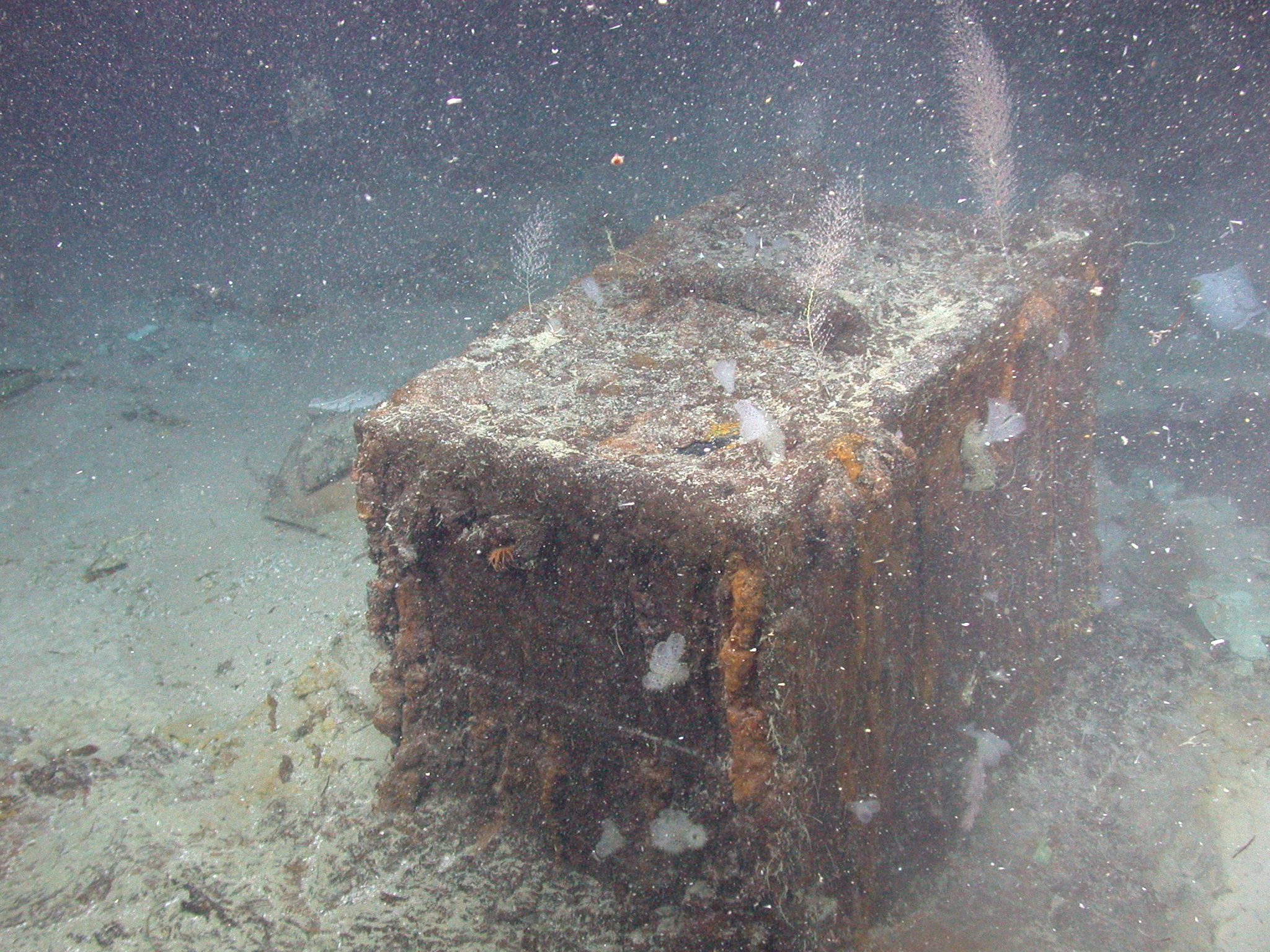
Broken Dishes:
One moment in particular stands out for me. We had as many chairs as possible crammed into our control room as we invited the scientists in for a few hours to direct the biological research. As we trained our cameras around, the biologists were making discoveries and taking notes. And giving directions like, “Can we look over there to the right.” Or “Zoom in on that!”
As we zoomed in on one specific multi-lobed sponge, Dr. Reiswig sat fixed on the screen, his eyes widened and his jaw began to gape.
Eddie said, “Henry, what is it?” Henry replied softly, “That… Uh… we don’t have one of those.”
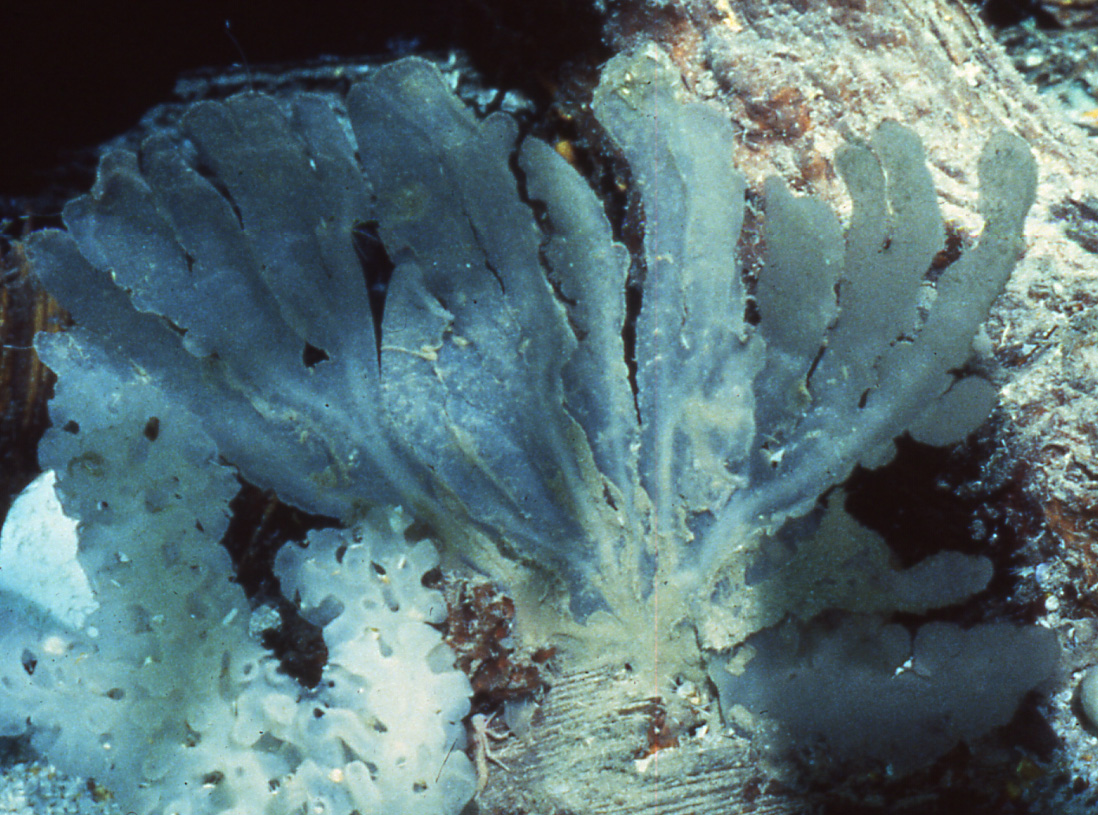
The pilot deftly clipped a right-side branching lobe from the sponge, and we put it into a chamber for transport to the surface. Henry Reiswig was experiencing the ecstasy of discovery.
Microscopic study revealed this sponge to be truly new to science, not just a new species, but a new genus as well, a whole new kind of animal, never before known.
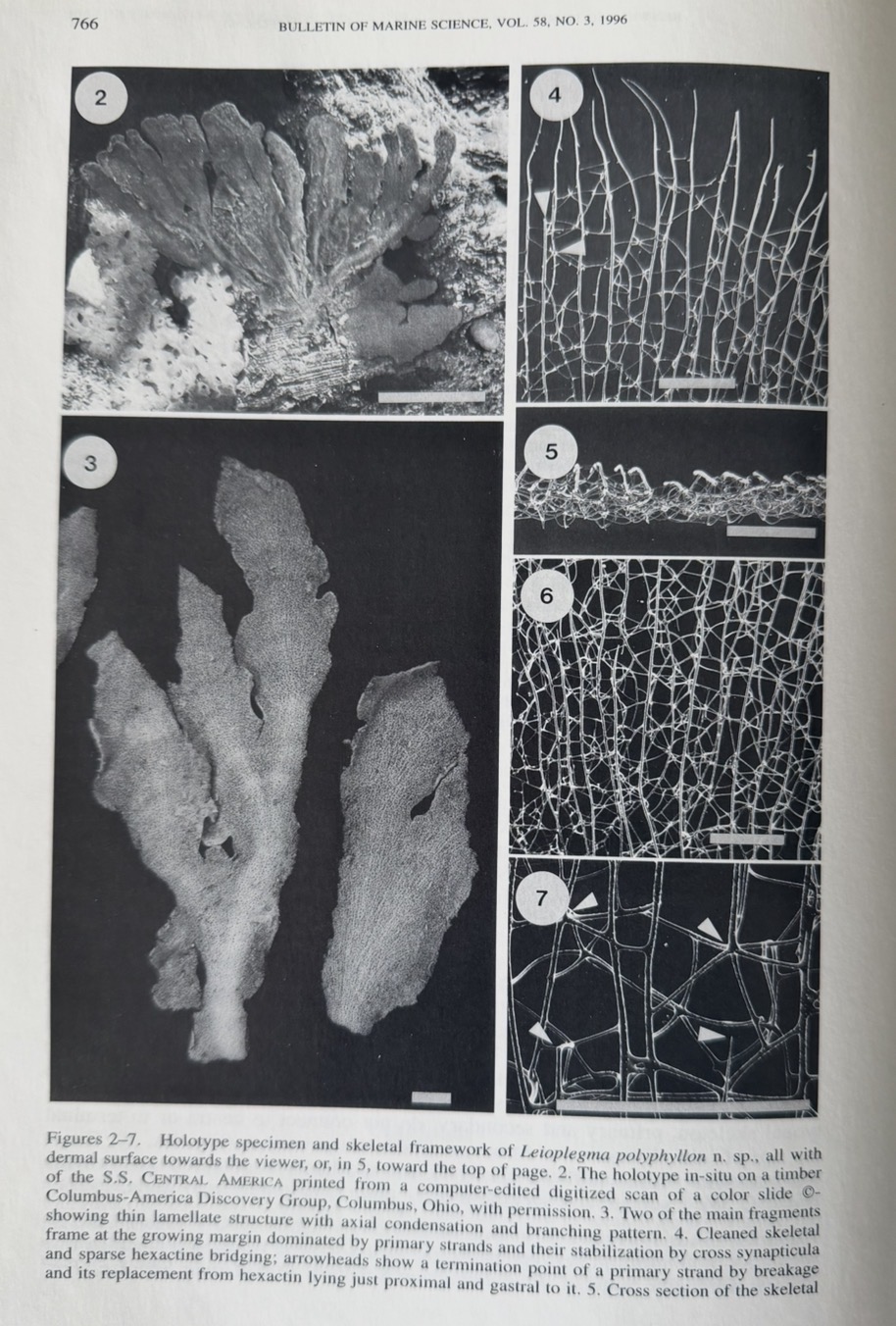
The animals that ate the Ship of Gold:
From the time the first forests formed, 400 million years ago, give or take (I’m not about to take on that question here,) the world’s continents have expelled material from those forests into the oceans, some even into the deep oceans. Certain marine animals developed to make use of this resource.
Biologists call the phenomenon when a tree sinks to the bottom of the sea a “woodfall.” On September 12, 1857, as the greatest lost treasure in United States history sank to the seabed, an enormous woodfall occurred as well on the upper margin of Blake Ridge, 2200 meters deep, when the equivalent of several large oak and pine trees, along with assorted other materials, landed in the oozy sediment. It did not take long for the local biology to colonize this wooden feast, landing as it did in water that was oxygen and nutrient rich as well.
The margins of land also provide many places where wood and water have met over the eons. And so, there are animals that colonize or consume the aquatic structures of humans. Shipworms. These animals are not actually worms, but wood-boring bivalves, clams. In shallow water, mariners and dockside industry are well aware of shipworms, Teredos. They bore into the wood of ships and boats and dock pilings and anything that touches the water, particularly warm tropical water.
Consequently, over the centuries many methods were tried to forestall their damage. Ancient ship practices included careening, deliberately running the ship into shallow water at high tide, awaiting the ebb. When the water receded and the ship’s hull was exposed, the crew would pull the ship over sideways (careening,) scraping and setting fires to char the hull surface, rendering it as unattractive to Teredos as they could, before the flood tide and refloating. This worked imperfectly, and the annals of the sea are filled with stories of “leaky old boats” destroyed by shipworms.
In the 19th century, on ships such as the Central America, the hulls were covered with copper sheeting hammered in place by copper nails. Everything below the waterline was coppered, with brass or bronze fittings and fasteners as well, the copper being toxic to the animals that foul and infest the hulls of ships, and shortened their useful lives.
There are many different species of burrowing clams, some from a different family than the shallow-water Teredos. The S.S. Central America shipwreck was eaten by a couple different kinds of deep-sea wood-boring clams, known as Pholadids, animals similar in lifestyle to the shipworms of shallow water. We just called them all shipworms to simplify matters although the professors could get picky. These animals start life as a free-swimming larva, then attach to a wooden structure and grow a shell. The shell is the tool that the does the boring into the wood. Here is a photo through the microscope of a shell from the SSCA, showing the raspy edge the animal used to file its way into the timbers.
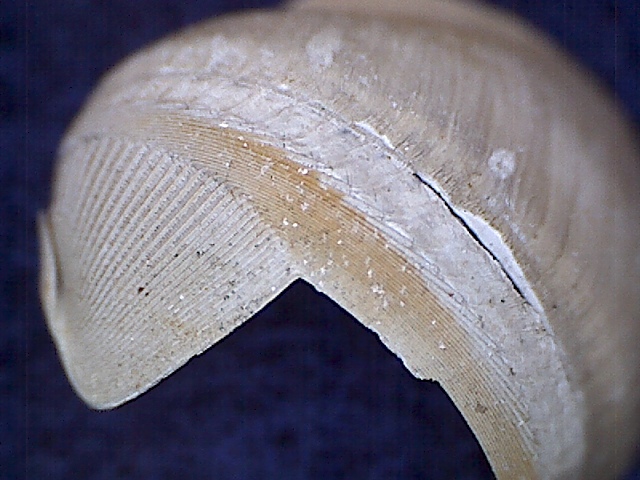
The clam doesn’t actually digest the wood. That is done by bacteria in the animal’s gut, similar to the symbiosis termites use to eat houses and barns.
This animal is largely responsible for the degradation and collapse of the shipwreck. To fully study these animals, Eddie had recruited a true science legend, Dr. Ruth Turner, to study our shipworms. She was quite literally a pioneer among women in marine biology, a world-renowned malacologist (the scientists that study mollusks, like clams, snails, etc.) And she had held the Alexander Agassiz Professorship at Harvard, providing an interesting historical connection to the research a century earlier on the Blake.
In 1990, as an Emeritus Professor at the age of 75, she joined our at-sea scientists’ club, to let us know what else we had found, aside from the stupendous treasure. Ruth Turner was an experience for all involved. Born in 1914, she was from a “smoking generation,” so she bummed three cigarettes a day from our ship crew. Three. Exactly. She forgot to buy her weekly pack before embarking with us. She hadn’t quit entirely, but she was disciplined. Sherie, the assistant cook, one of few smokers on board, expressed astonishment to me, “I about died!” she said about being asked for a smoke from the venerable, but clearly life-chiseled professor.
She was still a scuba diver, despite decades of measured smoking. She had stories of being stalked by crocodiles while sawing mangrove root specimens in the swamps of Indonesia. Ruth was small, still athletic, and as smart as Einstein, but in a different field.
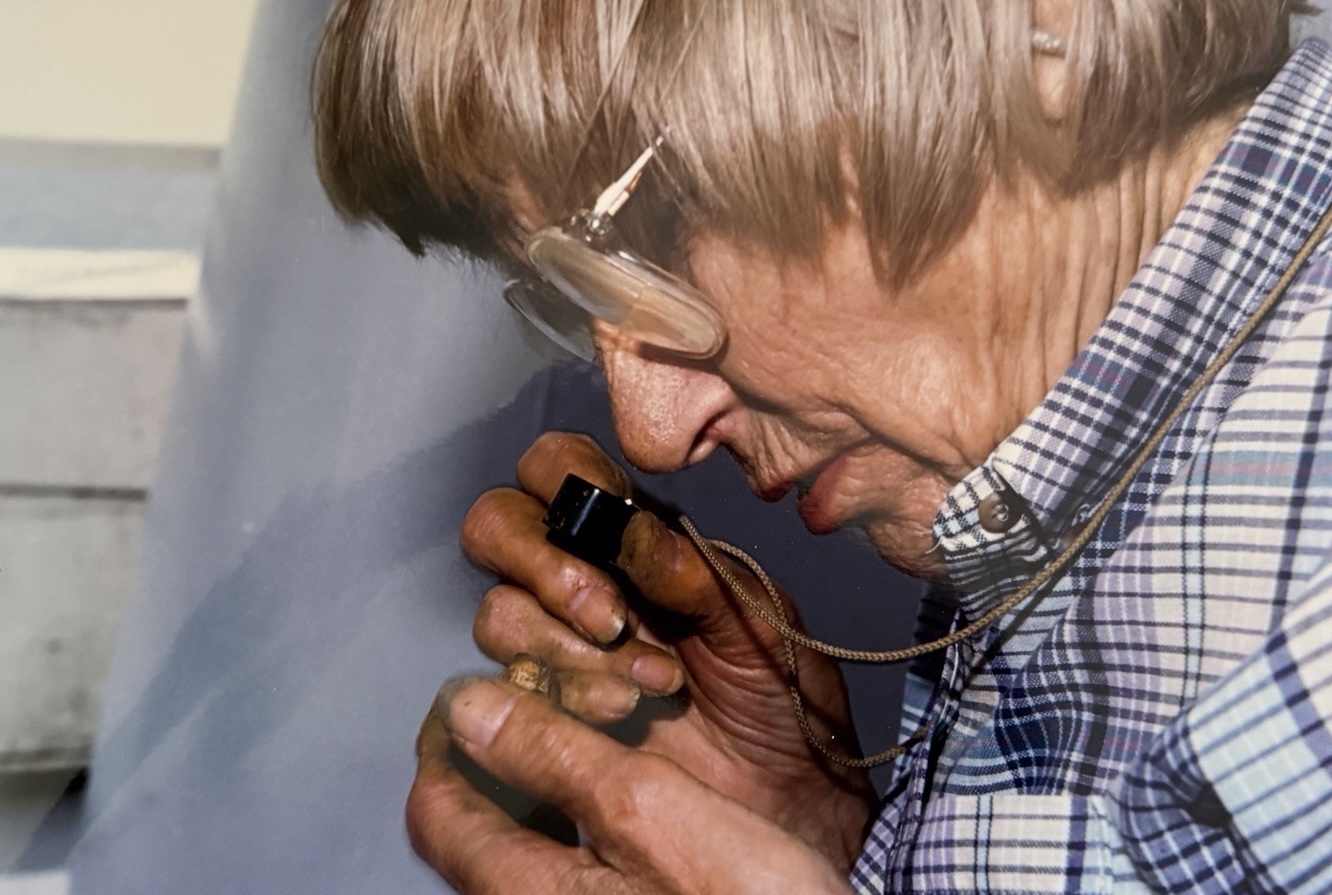
She was with us for five days on site, before taking the 150-mile trip back to port aboard a Carolina fishing vessel, the Reel Action, during a scheduled supply and personnel exchange. Witnesses report she provided a parting shot of her charm.
The Reel Action was a fishing boat, so of course a crewman caught a small mahi. As it thrashed on the deck, Dr. Ruth Turner of Harvard leapt to her feet, whipped out her knife (of course she had a knife,) and shouted, “Sushi!” She proceeded to hand slices of the still flopping fish to startled onlookers. She clearly was not an ivy-covered professor, and while she was on our ship she mingled easily with everyone, from fellow scientists to the deck and engine crew, quickly becoming “Dr. Ruth” to all. She turned our mess hall into a marine biology classroom.
I learned a lot about wood-boring clams, and many other topics. She was there specifically to sample the SSCA “shipworm” occurrence and evidence. She had examined specimens collected on the submersible Alvin from the Titanic and other deep sites, and she was eager to learn about the animals that ate the Ship of Gold.
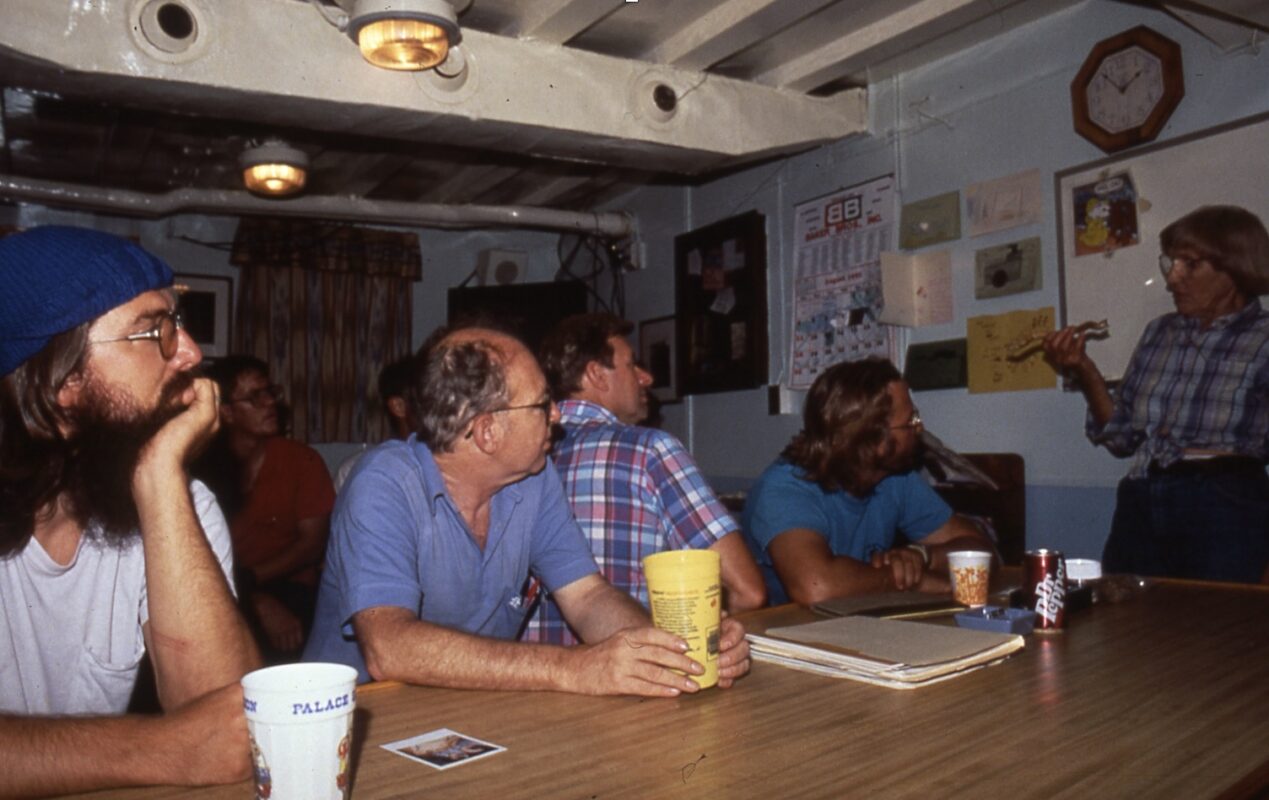
My fellow crewmates did not have my science education. So, they had nicknames and misnomers for much of what we were seeing. I put up with engineers referring to the corals and sponges as “plants” (because they looked like plants.)
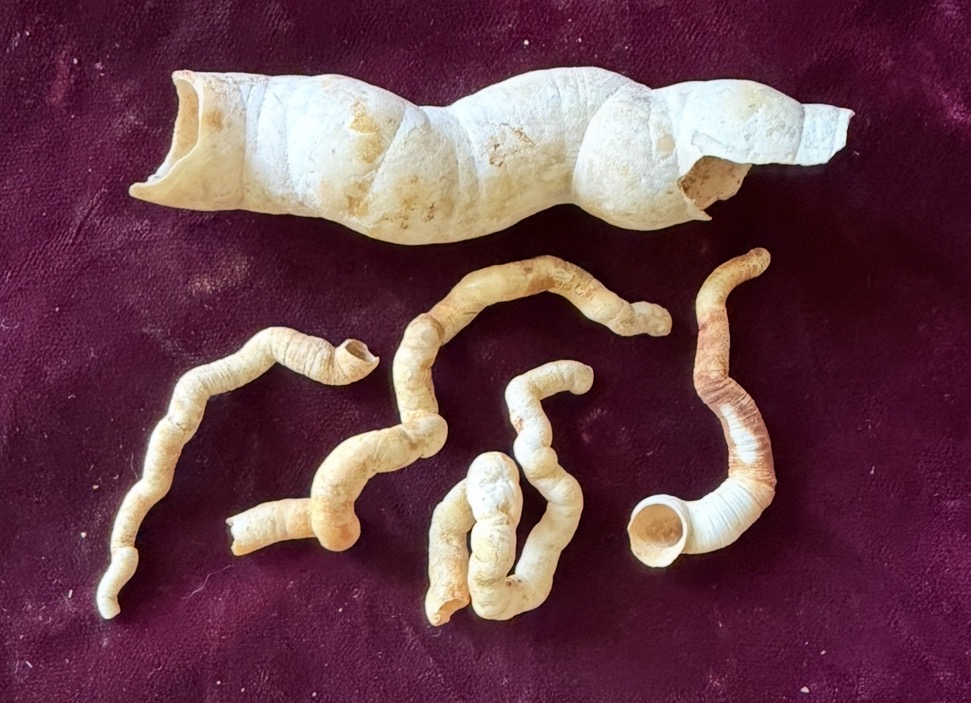
The shipwreck site is littered with thousands of calcareous tubes that look like worms, some of them with undulating, twisted forms. These became either “tube worms” or “worm tubes,” which is a little closer to the truth. The shipworm bores a tiny hole into the wood at first, then progresses into the structure and lives its entire life completely inside, enclosed in its food source. But it maintains that connection with the outside water through the tunnel it makes as it burrows further, a vital pathway for respiration and excretion.
The shipworms that ate the SSCA line their burrows with shell, forming the calcareous tubes we see everywhere after the wood partially or fully disintegrates. The largest burrow linings approach the size of the largest shells, up to about an inch in diameter, but most are a quarter inch or less. Here we see the white “shells” of the burrow linings exposed on disintegrating wood on the site. Drifting gray sediment fills other tunnels and voids on this worm-riddled beam.
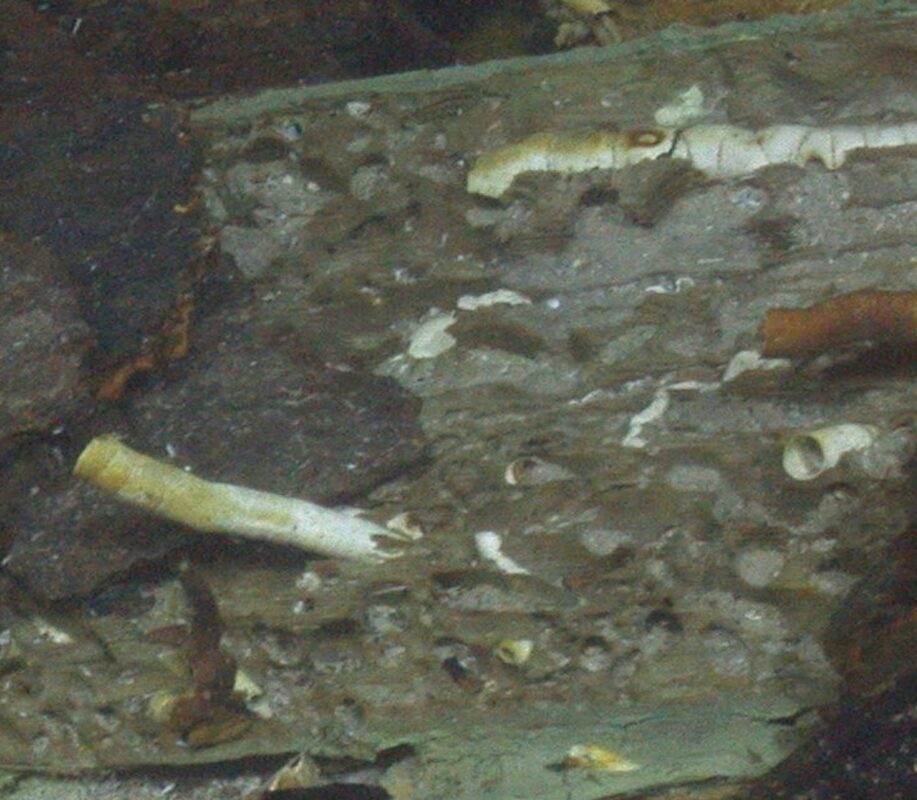
After the wood collapses completely, sometimes the tubes are all that is left, and they can be seen almost everywhere in the sediment all around shipwreck, and they showed up in numbers in our sediment traps.
Some of the winding paths these animals took during their lives, twisting and turning as they tunneled through their food, make my own life look straightforward.
The year before Dr. Turner joined us at sea, Eddie had constructed a wood degradation experiment, and we had placed numbered 4×4 posts of untreated oak and pine in an array at a short distance from where we regularly worked, on the commercial treasure shipment. It was easy to pivot to for close observation, and it was close enough to monitor by pointing our cameras in that direction.
We would “slip” little bits of science into the program whenever it would not disrupt recovery operations, the whole idea behind an “adjunct science and education program.”
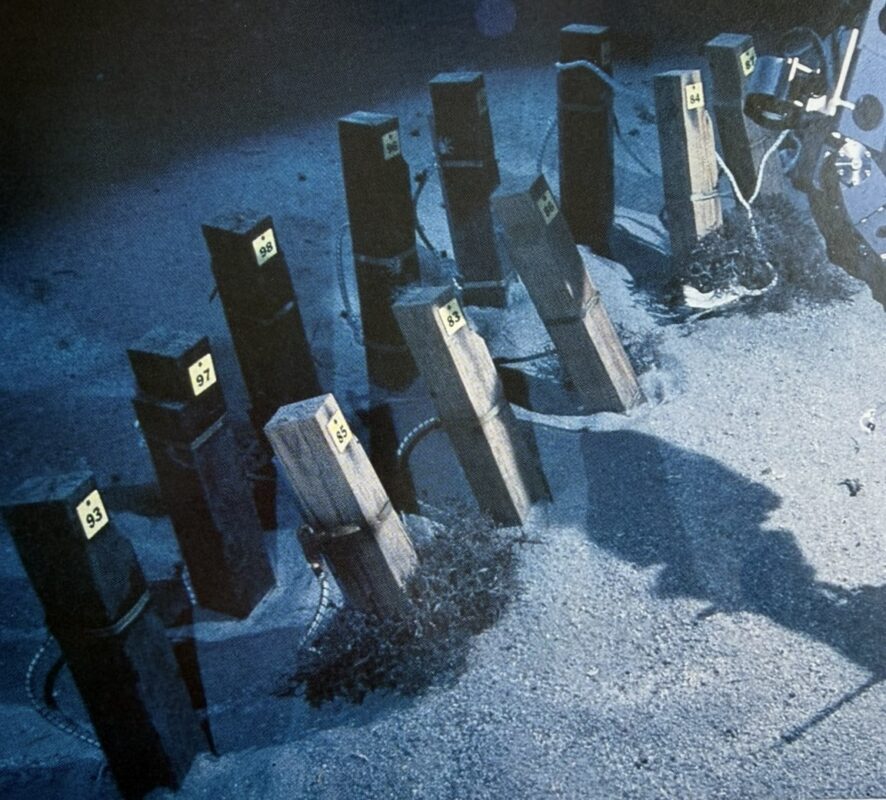
We retrieved one post the following August, and Dr. Turner examined it for evidence of wood-boring clams. She found some juvenile specimens, barely penetrating far from the surface. After several days of looking at fresh specimens of shells and viewing footage, she though there was evidence for at least one new species of “shipworm.” But without the soft parts and organs, and a proper dissection, such a conclusion could not be verified and published. The ongoing wood experiments would probably provide the final answer on this, since we planned to be back year after year, working on a profitable shipwreck, long into the future.
Epilogue to this subject:
As I have explained in other episodes of Treasure Talk, particularly Episode 4 (Can We Keep It?), In 1992, legal matters intervened in our regular pursuit of treasure on the SSCA shipwreck. A 1990 Federal Court Decision granting our project and investors ownership of the shipwreck’s treasure was overturned on appeal, and the matter went back to District Court for a new trial based on the Law of Salvage instead of the Law of Finds of the original decision. Ultimately, our project prevailed to the tune of over 92% of the value of recovered treasure, as valued in ways well beyond this article.
As Chief Scientist, I joined the first expedition after 1991 to return to the S.S. Central America shipwreck site, in April of 2014.
The legal and business issues were a necessary and expect part of the project, but perhaps not to the extent that transpired. There was a 22 ½ year hiatus in treasure recoveries from the SSCA site. There was a similar interruption in the science program.
The observations made, video and still images captured, and the specimens collected were distributed to specialists following the active 1988 – 1991 years. A series of articles emerged, describing many new species. But our experiments sat fallow on the seabed next to the shipwreck.
Obviously, in 2014, over two decades after I had last seen it, the SSCA site was a re-discovery as well as a new revelation. The technology had improved greatly in 22 years, particularly digital logging, controls and images. When the time came to explore the area near where we had deployed the wood experiments, they were nowhere to be seen. We landed on the bottom and I checked my notes. “Yeah! They should be around here somewhere.” Then I saw a plastic ID tag that we had place on a post assembly, lying in the sediment.
I instructed the pilot to root around in the ooze surrounding the tag, and he began to find short stubs of 4×4, just the parts that had been forcibly inserted into the ooze 24 years earlier. We picked up a couple for the science program, at this point, me.
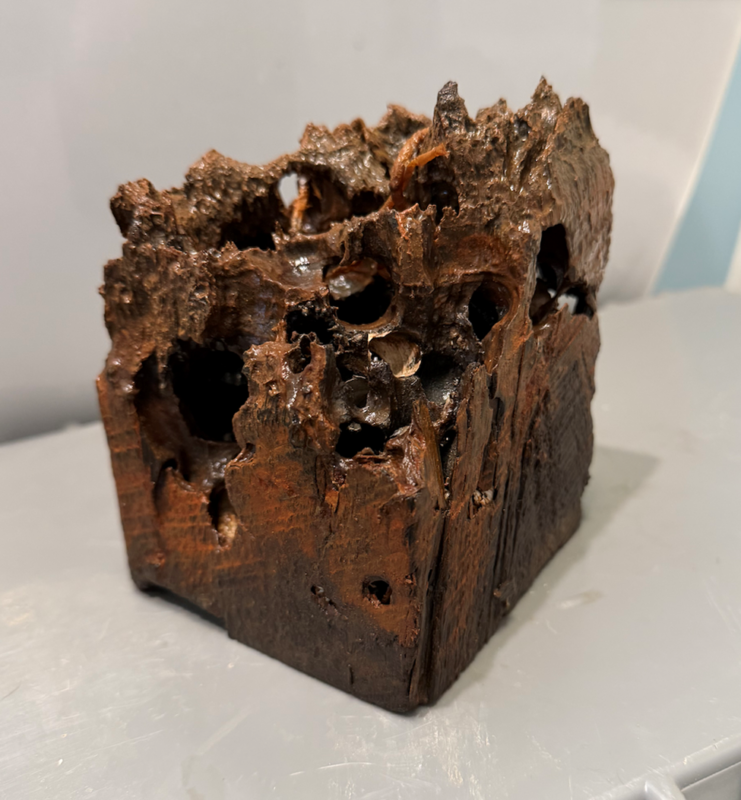
Totally gone! Eaten down to the mudline in only 24 years! Unfortunately, we had already blasted through the entire cycle of colonization and consumption of wood that these underwent, and there were no living tissues or soft-tissue remnants in these stubs. The remaining empty shells of a few shipworms rest in some of the burrows, but nothing that would allow description of new species.
The bait experiment with the wood atrophied due to unforeseen non-scientific issues. But this result is interesting, nonetheless.
Let’s consider that it was 131 years between the enormous woodfall of the SSCA onto the Blake Ridge and the first time we saw it. September 1857 to September 1998. Then consider that in 24 years our pieces of oak and pine were almost totally consumed. This suggests that a large part of the consumption and structural collapse of the shipwreck occurred in the first few decades of its time. We were indeed fortunate that enough remained of the ship’s oaken beams that they sat proud from the bottom, showered with gold coins and available for our cameras and our awestruck eyes.
Tomorrow in Part 2, Going fishing: The animals that move