Treasure Talk with Bob Evans, News, Rare Coin Articles
Treasure Talk 13: Shipwreck Scenes of History
Mar
Treasure Talk 13: Shipwreck Scenes of History
The S.S. Central America shipwreck site rested unseen for 131 years, hiding a great treasure, but also concealing scenes that tell stories. Within the shipwreck and the surrounding debris field, there are places and objects we encountered that resonated with the echoes of Gold Rush commerce, with life onboard, and with the great peril the crew and passengers faced as some were rescued and many were not.
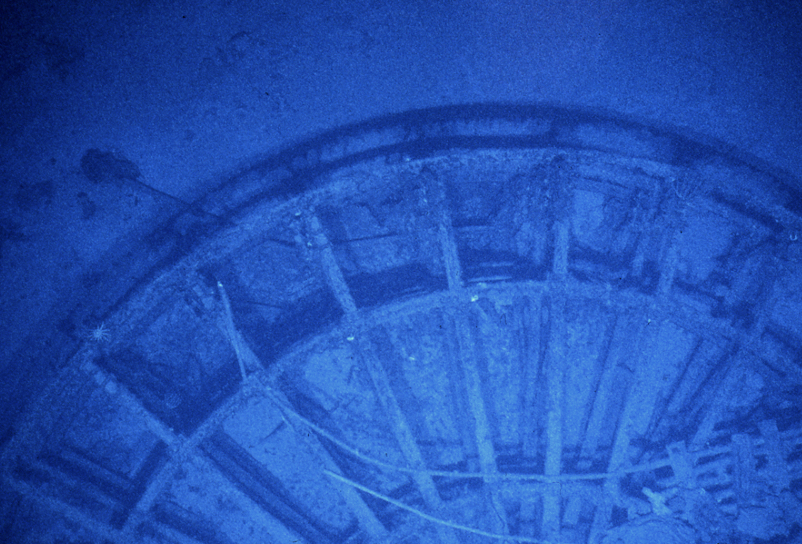
The paddlewheels:
On our very first encounter with the physical S.S. Central America, we passed directly over the enormous paddlewheels that pushed the giant wooden vessel through the waves 43 times from New York to Aspinwall (now Colon) then to Panama and back.
In Treasure Talk 12, I described the jubilation in the Control Room as our cameras swept across this unmistakable, identifying feature.
Captain William Lewis Herndon stood atop the paddle-box and fired a signal that they were about to sink.
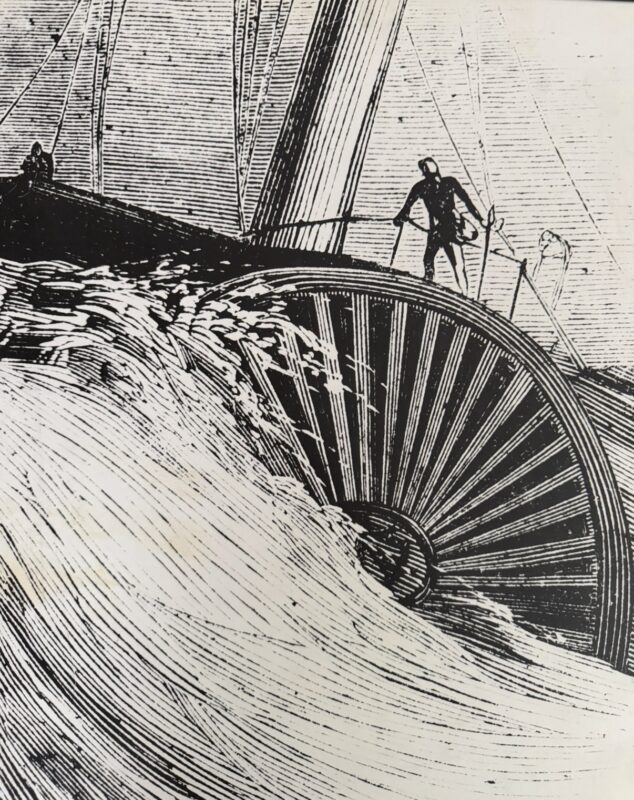
As told by passenger Thomas W. Badger, “At 10 minutes of 8 o’clock Capt. Herndon took position on the wheel-houses with his second officer, and fired rockets downward, the usual signal, to the brig and the schooner (nearby ships,) that we were sinking rapidly. This was a fearful moment, and must have been also to the ladies on board the (brig) Marine, who understood the signal, all of whom had husbands or friends on board.” – New York Journal of Commerce, Sept. 21, 1857
The Commercial Shipment:
The reason for the S.S. Central America Project was a huge commercial shipment of gold that was on board, widely reported at $1,219,189.43. At the onset, we did not know what form this would take. It was simply reported in contemporary newspapers as “specie.” When we found the shipment, we discovered details that the written history lacked, recorded in a jumbled, precious pile at the bottom of the sea.
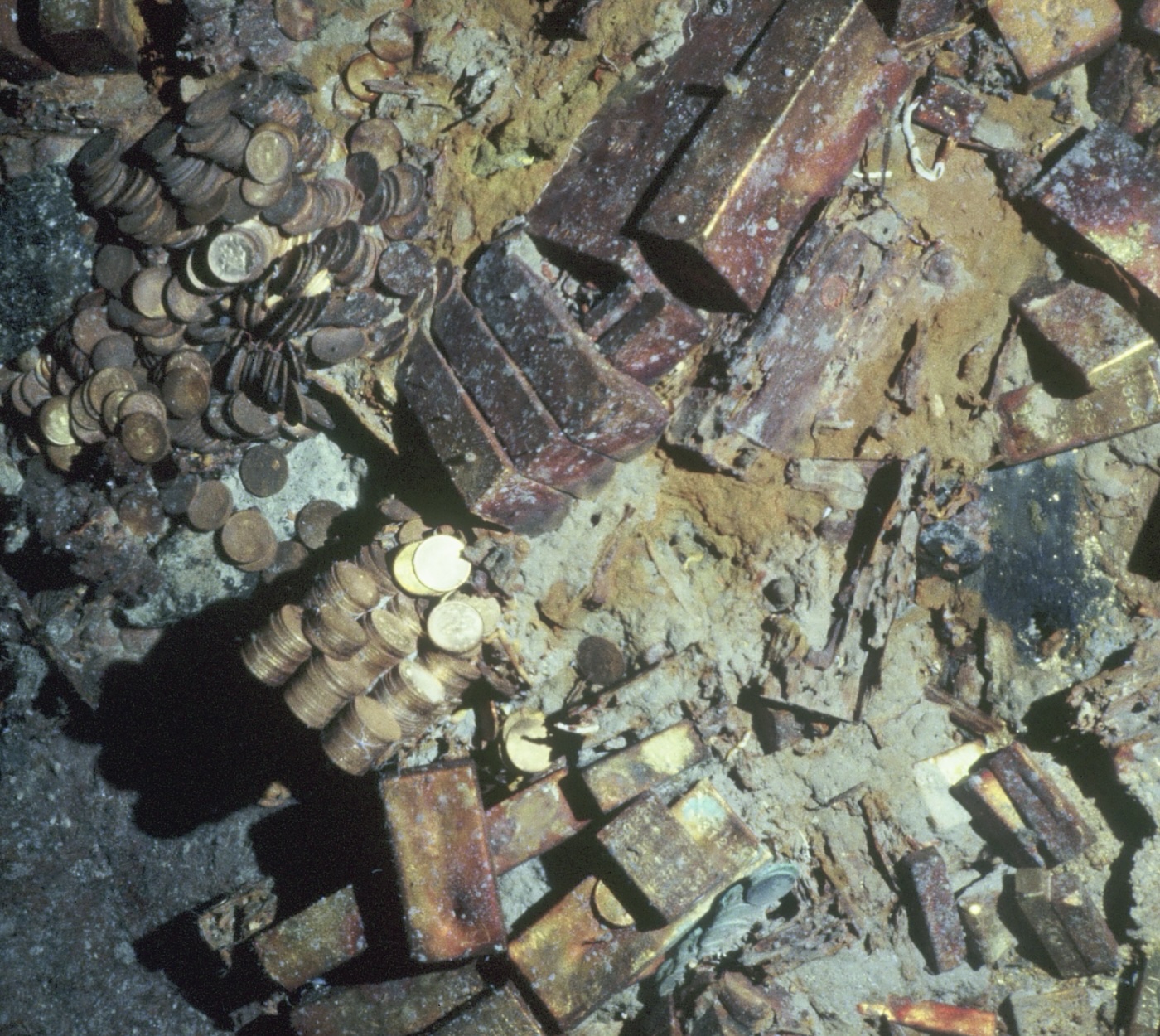
Big businesses, banks, and wealthy tycoons boxed up their gold and sent it from Gold Rush California to New York via Panama on the twice monthly mail steamships. Roughly 7/8 of the face value of the gold was shipped as assayer’s ingots, the very first form of precise money that most of the California gold assumed. Almost all the rest was in the form of $20 double eagles, large, high-value coins of limited use in daily street transactions.
These shippers, the big names in early Golden State commerce, obviously wanted to keep the easily usable money, smaller gold coins, in the hands of Californians, where it would stimulate the local, booming economy.
Here is the list of shippers of gold on the Sonora on August 20, 1857, as shown in the New York Tribune.
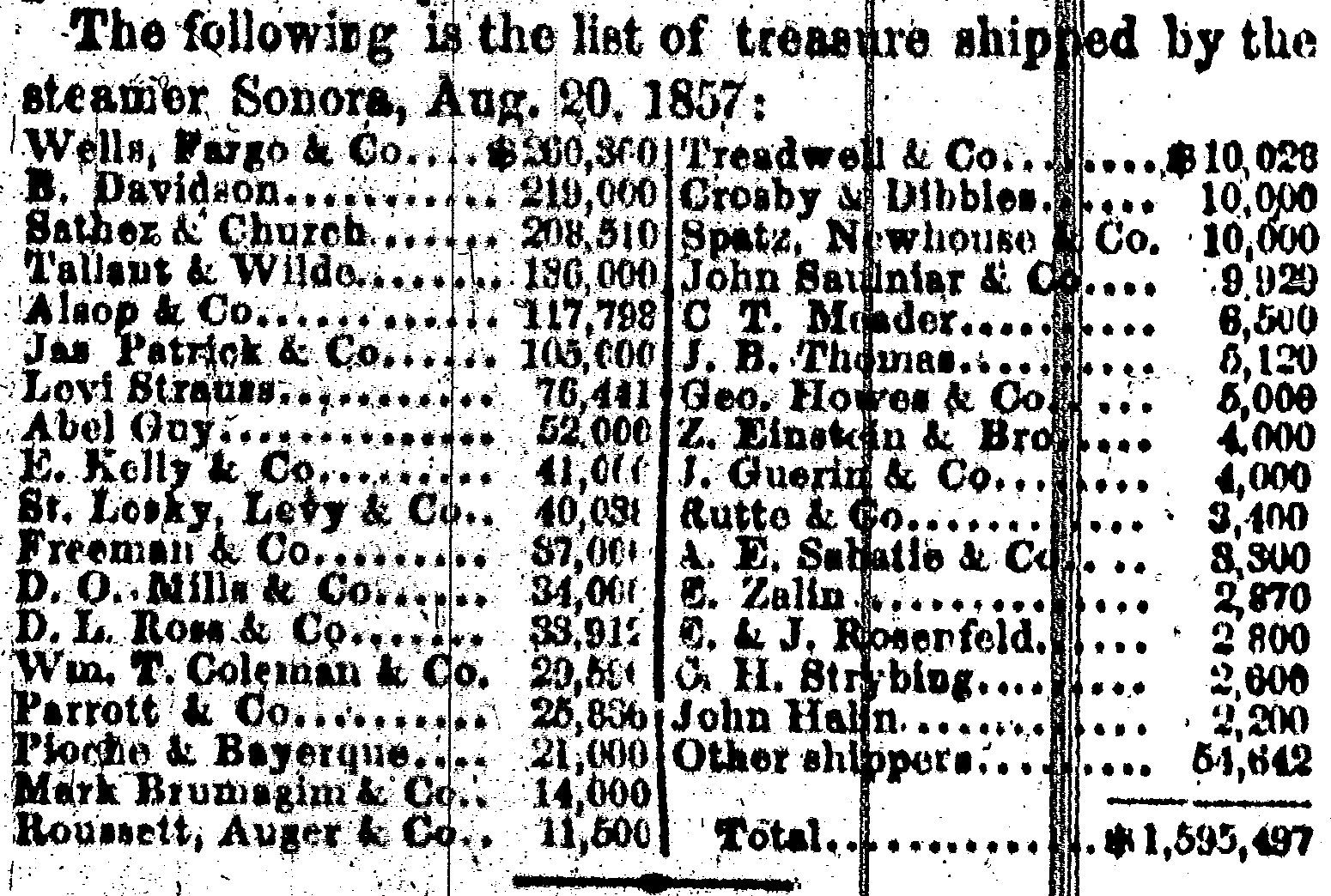
Most of these companies and individuals are known only in the historical record. But there are a couple names familiar to the modern reader: Wells Fargo and Levi Strauss.
There is more listed here than we found at the bottom of the sea. A little over $376,000 was shipped directly from Panama to ports other than New York, leaving over $1.2 million to be loaded onto the Central America, bound for New York, but destined to spend 131 years in the deep Atlantic instead. We found that shipment: over two tons of gold, comprising 577 gold bars and many thousands of mint-state double eagles in two large areas at the far stern of the main ship structure. As the Central America sat on the seafloor and slowly collapsed, the hull settled to either side, opening a little like a book.
This divided the treasure in the strongroom, tucked away in the stern of the ship, (only one way in and out) into portions that fell to the right, where it was buried by a drifting dune of sediment, and that which fell to the left, where drifting sediment did not completely obscure the treasure. A host of invertebrate animals grew on this deposit, as if it was just another hard substrate. You can see, starfish, and corals, and sponges, and crinoids (feather stars,) and barnacles; growing on blocks of gold.
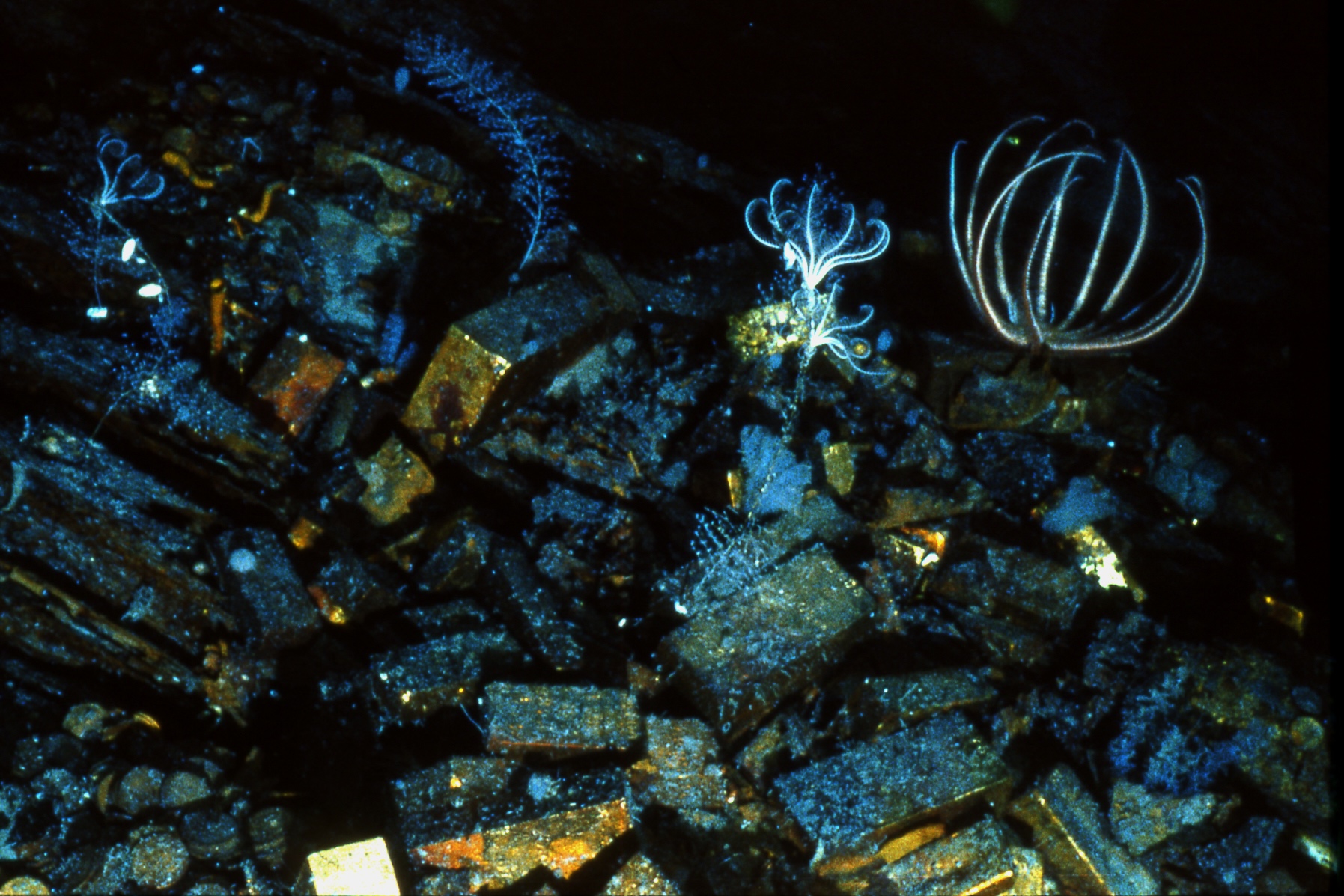
Importantly, we could find it with our cameras and didn’t have to dig for this part.
Hawsehole:
As I mentioned, as the shipwreck sat on the bottom and degraded, it collapsed to either side, opening like a book. Much of the collapsed structure and its components are difficult to decipher, and they hold no obvious relation to the recorded history of the sinking. But with scrutiny, some of these less prominent features are revealed as evidence of key moments in the S.S. Central America‘s final hours.
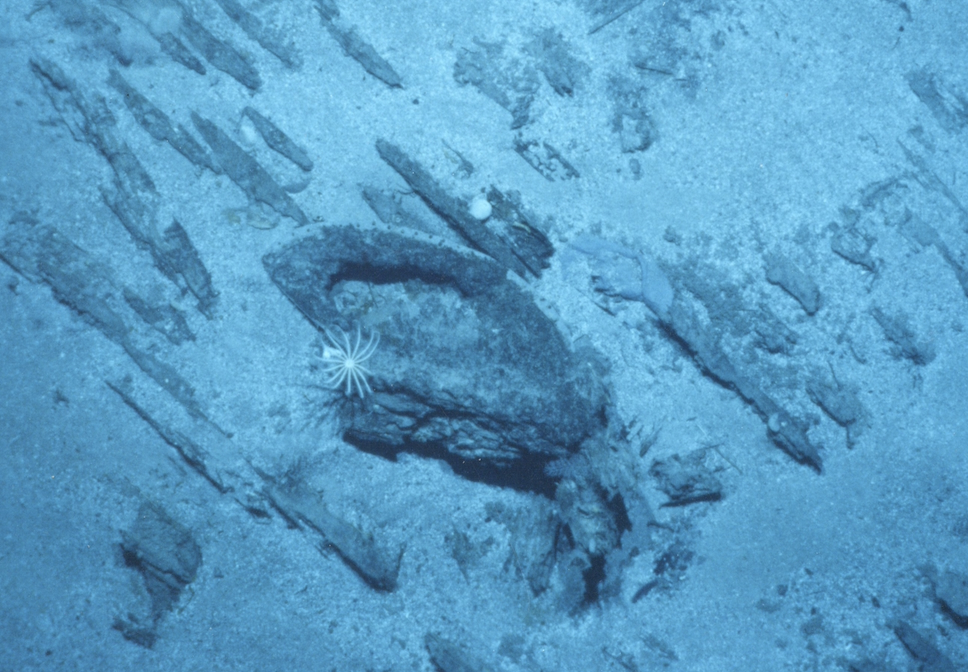
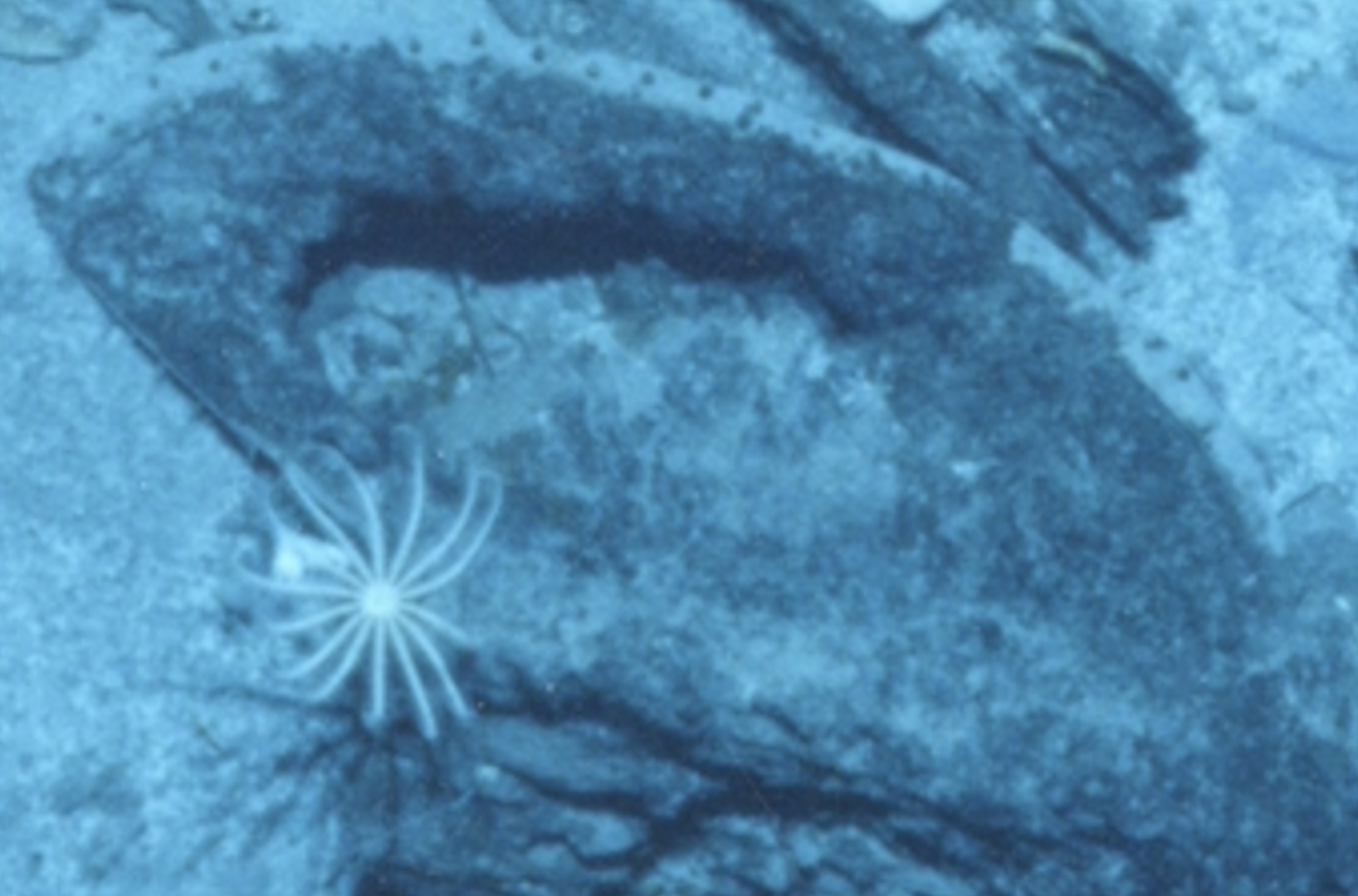
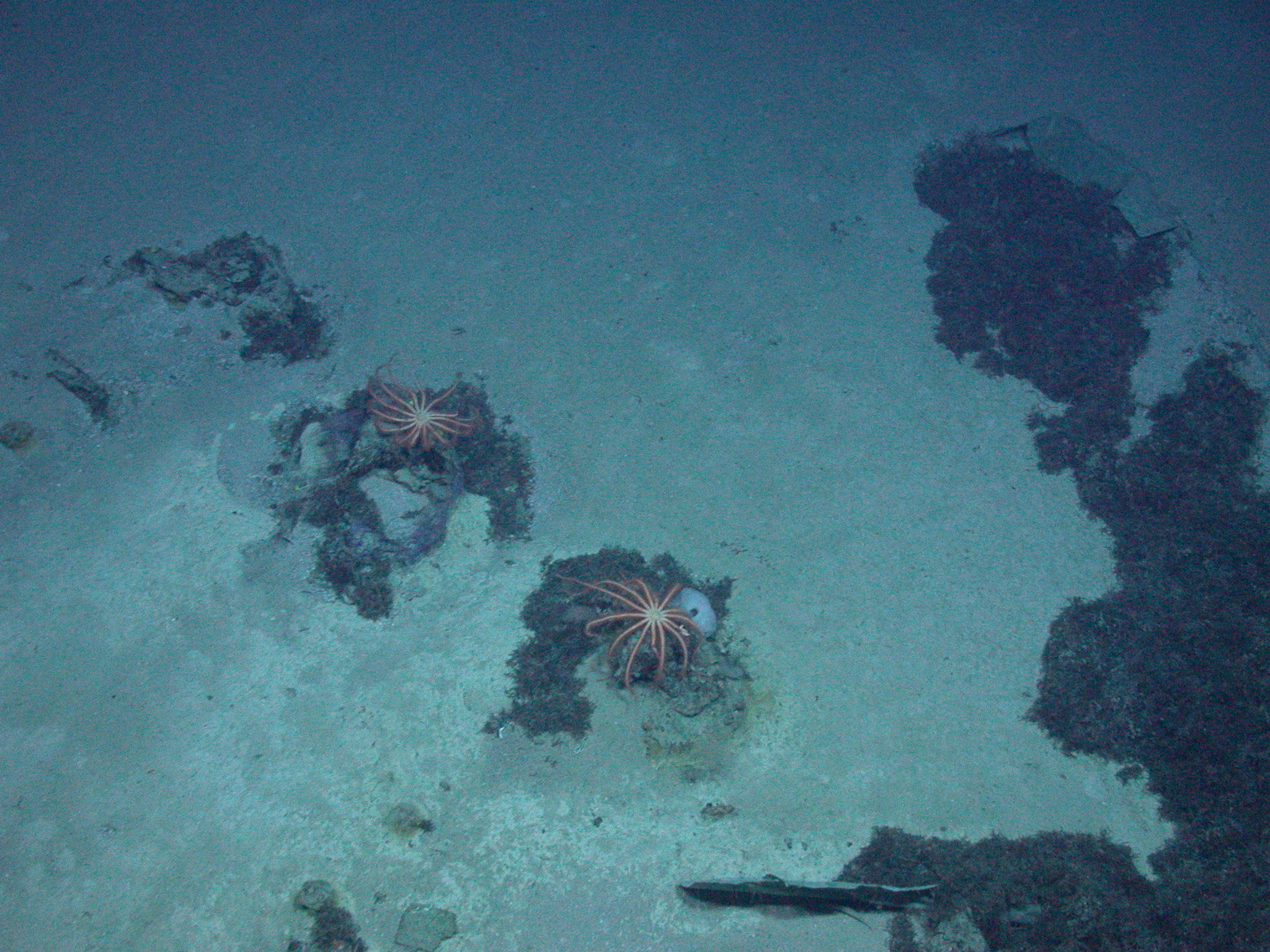
The starboard hull near the bow careened over to eventually lie flat on the seabed, where at first the shipworms ate the oaken timbers (whatever wasn’t poisoned by the copper bolts and nails) ,and then the drifting sediment partially filled the pattern that remained, reflecting the original frames and planks. The corroded and encrusted metal oval in the center of this picture is a hawsehole. This is the penetration in the upper part of the ship’s side through which the anchor chain normally passes. We don’t see a chain here, and that is the story.
As the storm worsened and the ship lost power, men worked below decks, forming lines to bail water from the hold. On the upper deck, as the powerless ship fell into the trough of the sea, the crew tried everything to get the ship to respond using whatever sail they could set. The wind was too strong for any sails to survive. The combined official account (called a “Protest”) of the surviving officers tells of drastic actions taken to right the ship and to find a way to head it either into the monstrous waves for a better ride, or to take the opposite heading for a similar result. The deck operations were under the guidance of Second Officer James M. Frazer.
“The ship was so listed over that (Frazer) could not see the discharge pump of the after pump. About 5 ½ o’clock in the morning… (Frazer) went forward, and having examined the forward pumps, sawed off the chain which was shackled to the starboard bow anchor and let it and the anchor go. He had endeavored to do this during the night, but had found it impossible. The object of this was to lighten the ship’s head. That anchor, with the chain attached to it, weighed about 2 ½ tons.” – Protest (affidavit) of the surviving officers, New-York Times, Sept. 23, 1857
The portside anchor of the S.S. Central America is still sitting on the cathead, the mount for it that juts from the ship’s edge. But the starboard anchor and chain are gone, rusting on the seafloor somewhere miles from the shipwreck, cut away by James Frazer 14 hours before it sank. The shipwreck now reminds us of this story with an empty hole, sometimes adorned by a starfish.
Davits:
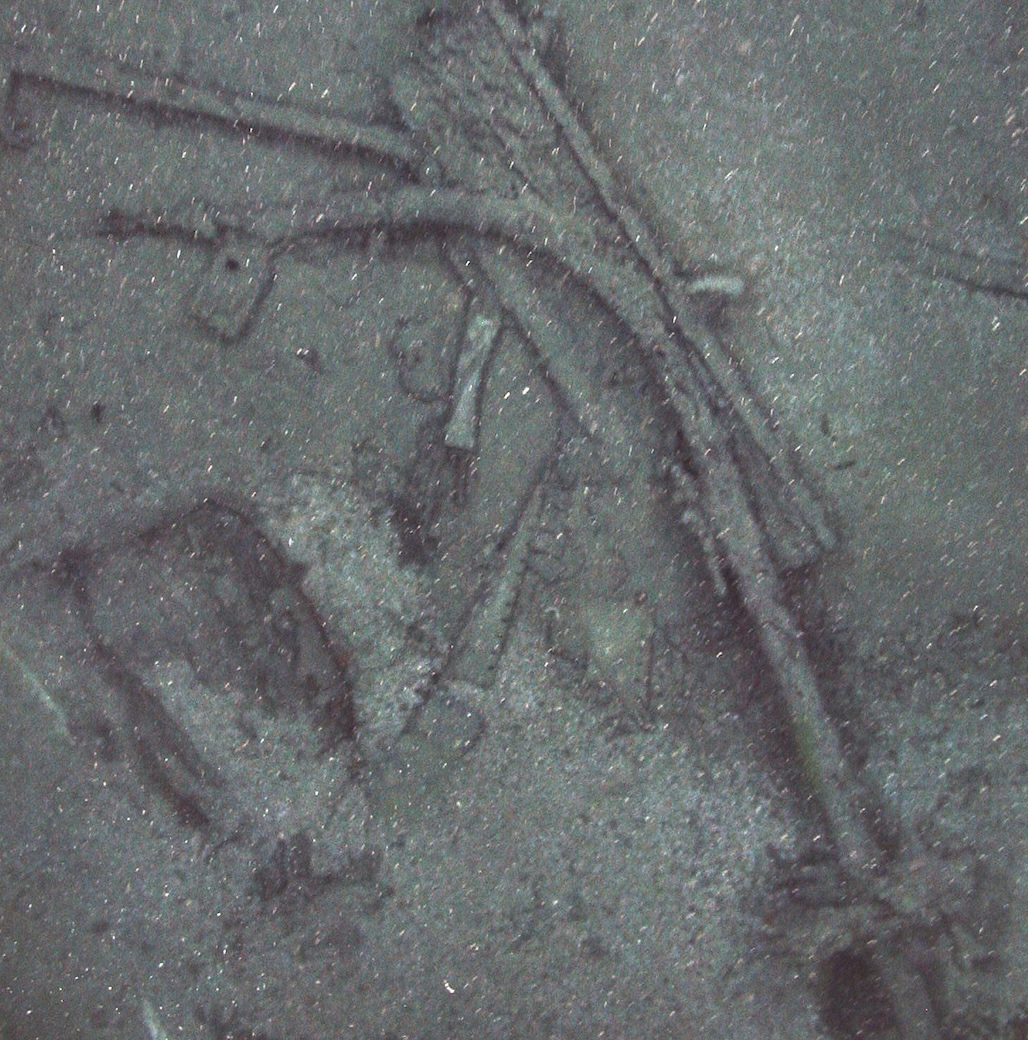
Davits are short booms that can extend over the side of a ship. Typically, lifeboats are suspended from davits, lashed there until they need to be lowered and launched. The S.S. Central America ‘s versions were single bent pieces of tubing, apparently bronze, and somewhat resembling an inverted “L” or perhaps a hockey stick. We found one of the S.S. Central America’s lifeboat davits, sitting on top of other chaotic elements of the collapsed ship. Here it extends from its base at the lower left, up and to the left, where we find a two-pulley block from the block & tackle system of rigging used to lower the lifeboats. (Drifting particles of sediment create the snow flurries that partially cloud this scene.)
Chief Engineer George Ashby described the difficulties in launching the lifeboats.
“We had lost one boat from the davits the previous night, leaving us five. Capt. Herndon ordered the boats lowered as soon as the brig rounded to. Two of them were lowered safely; the third was stove (crushed and cracked) and rendered useless. One man who was lowered in her was rescued with difficulty. The fourth boat was launched from the upper deck safely.” — New York Tribune, Sept. 22, 1857
Zooming in, we can see the double-pulley block.
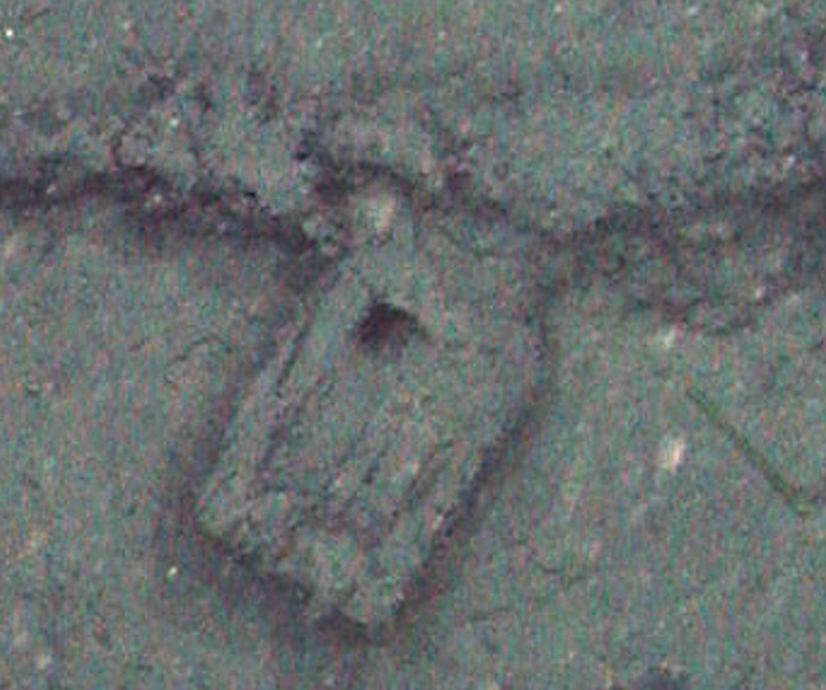
This feature’s purpose was discharged, and the pulley now sits empty of line and the lifeboat, similar to the evidence of the dire situation illustrated by the missing anchor and chain.
Passenger Virginia Harris provided a vivid account of her transfer to the lifeboat: “A noose was made on the end of a rope and slipped over me, and I was lowered down. When I began to slide down, a great wave dashed up between me and the little boat, which threw the boat off from the ship and left me hanging in the air with the rope around my waist. I was swung hither and thither over the waves by the tossing of the ship, until the boat came under me. I was dropped suddenly into the boat when it happened to come directly under me. As soon as I got into the boat, I looked up and saw the captain was fixing a cape around my child, and in a few moments afterward he lowered it down to me.”
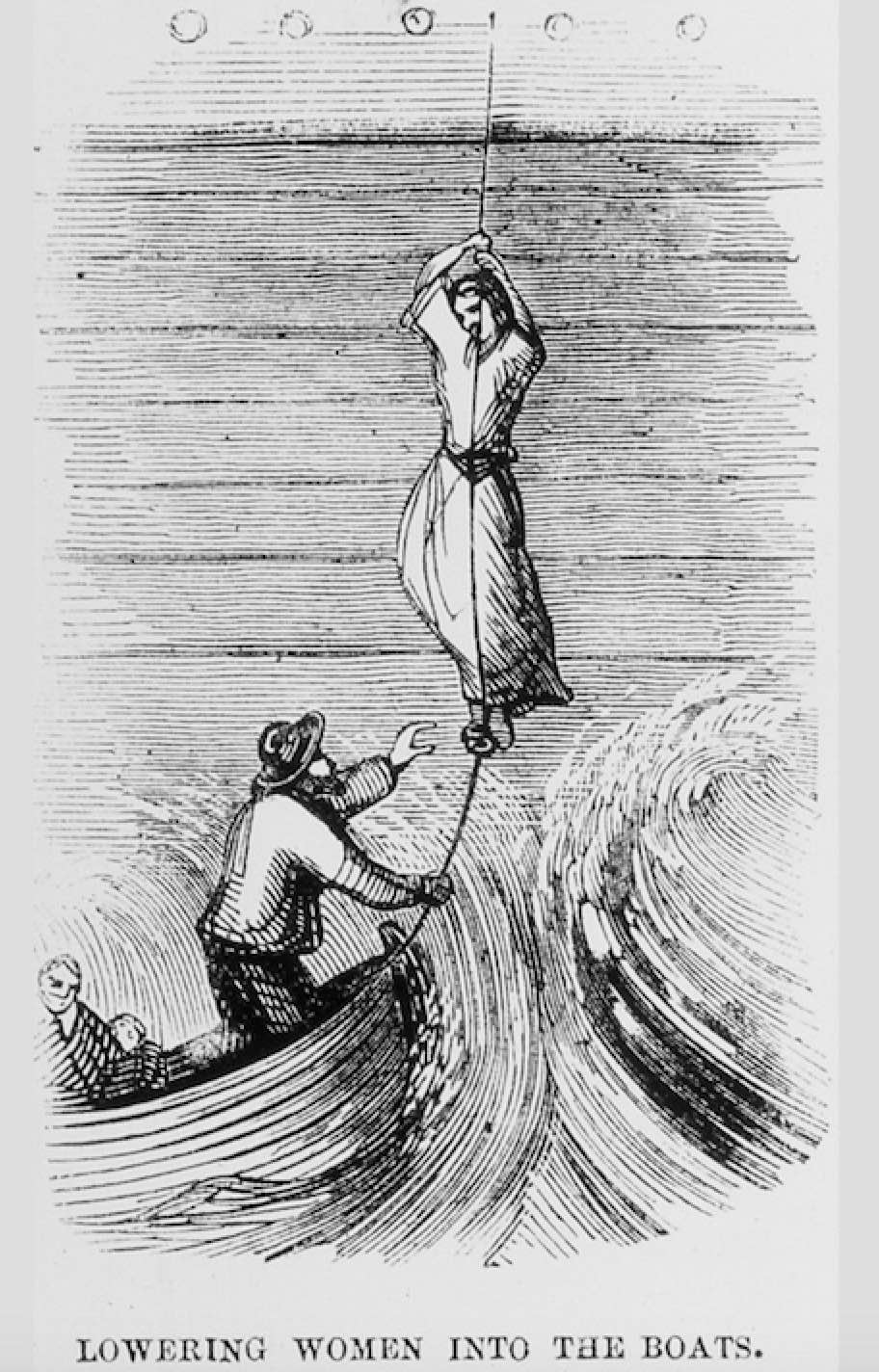
This scene from Frank Leslie’s Illustrated Newspaper is scary enough, but it doesn’t do justice to Virginia Harris’s experience.
Broken Dishes:
Anyone who has experienced rough weather at sea knows it can be hard to keep the dishes on the table. Gravity and “which-way-is-up” is variable at sea. Throughout the S.S. Central America shipwreck site we found broken plates, saucers, and other ceramics, testimony to the violence of the hurricane and the waves that battered the steamer.
Passenger Almira Kittredge heard a story about the tumbling dishes, “The tables were set on Friday, and some of the passengers – mostly second cabin passengers – had taken dinner, when the captain called up all hands to help in bailing. Two little girls, Miss Lockwood and Miss Pahud, got their dinner, nevertheless, and had a very merry time over it. The sea tossed the steamer about very violently, but the girls laughingly told us how they had braced themselves, to the table and ate away. When the dishes flew about smashing and crashing as they fell to the floor, the girls laughed merrily, thinking it was rare sport. They were decidedly jolly, little realizing the danger in which they stood.”
New York Herald, Sept. 27, 1857
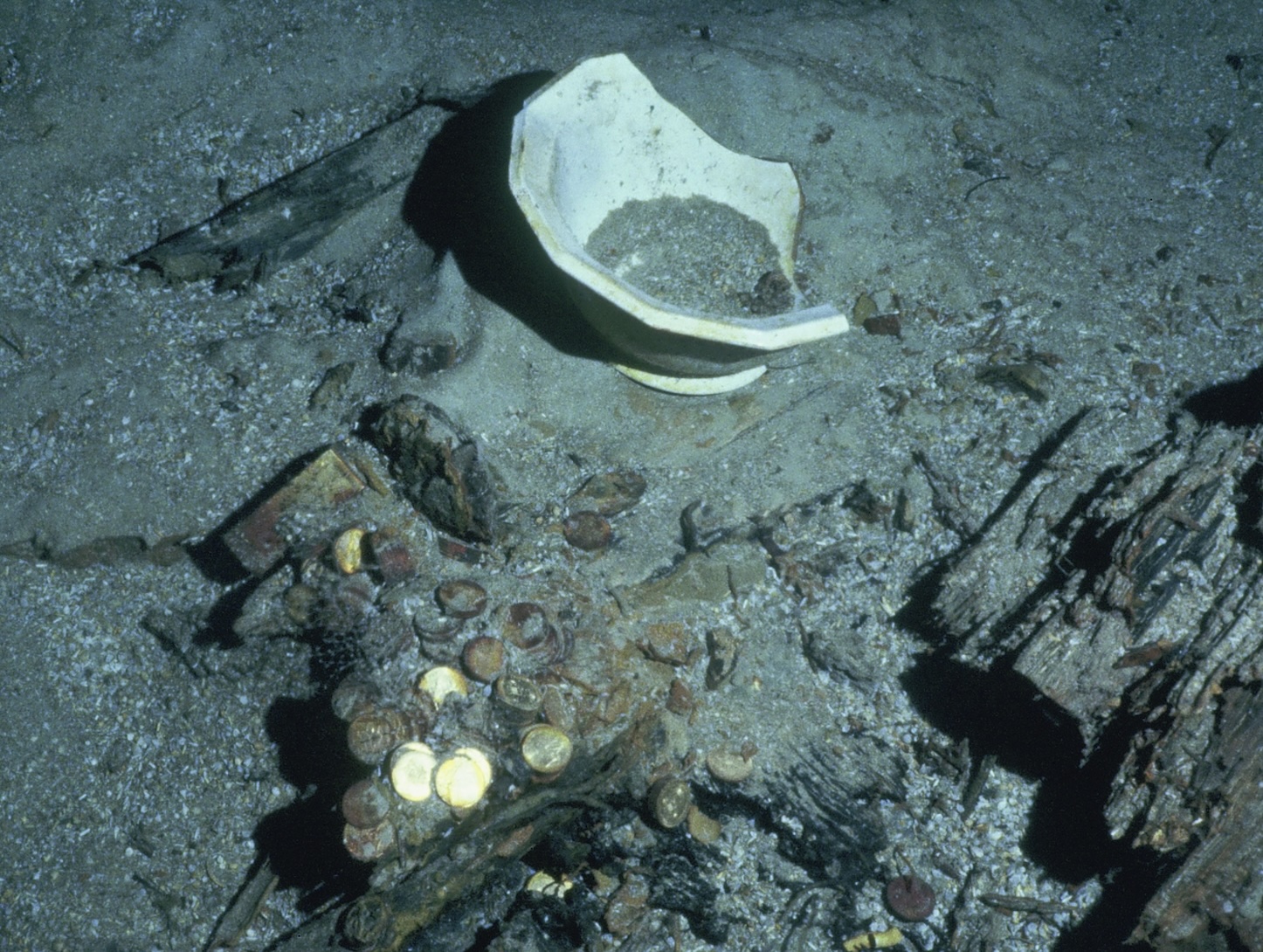
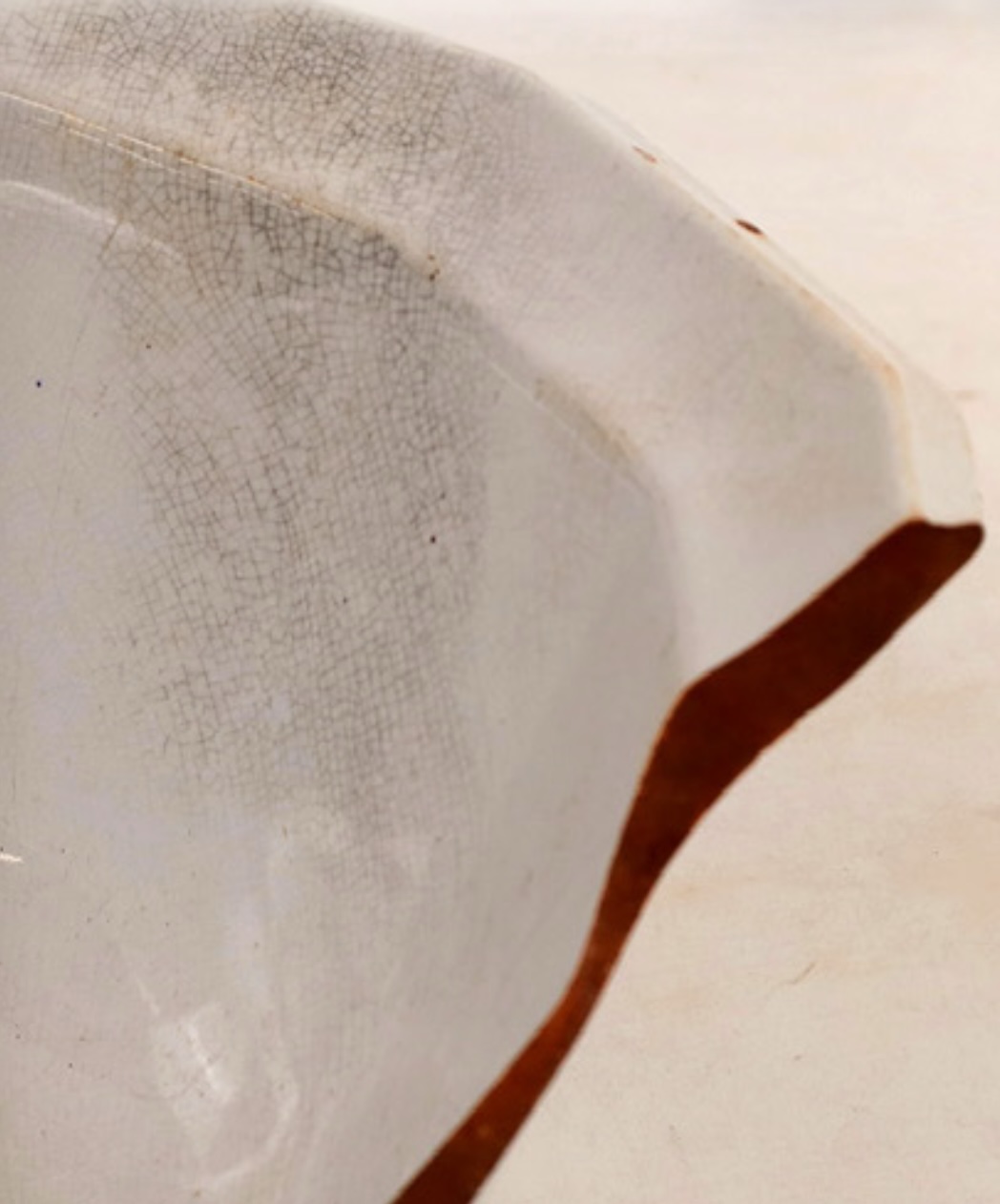
This broken wash basin, once used by cabin passengers to refresh and clean up, settled right next to the commercial shipment as the shipwreck collapsed. It achieved “celebrity status” by appearing in many photographs of the gold.
The broken unglazed edge, stained by rust, shows that it broken during the storm and shipwreck.
Wines, etc.:
In several spots around the shipwreck, we encountered clusters of bottles, obvious vestiges of drink stored and ready for the passengers on this prestigious and well-stocked steamship. Here is what remains of one such case, a group of nine bottles fanned across a spot in the debris field of the shipwreck. From the shape of the bottles, it is likely that this was a case of whiskey. We see only nine out of a normal case of a dozen, so three had probably been consumed.
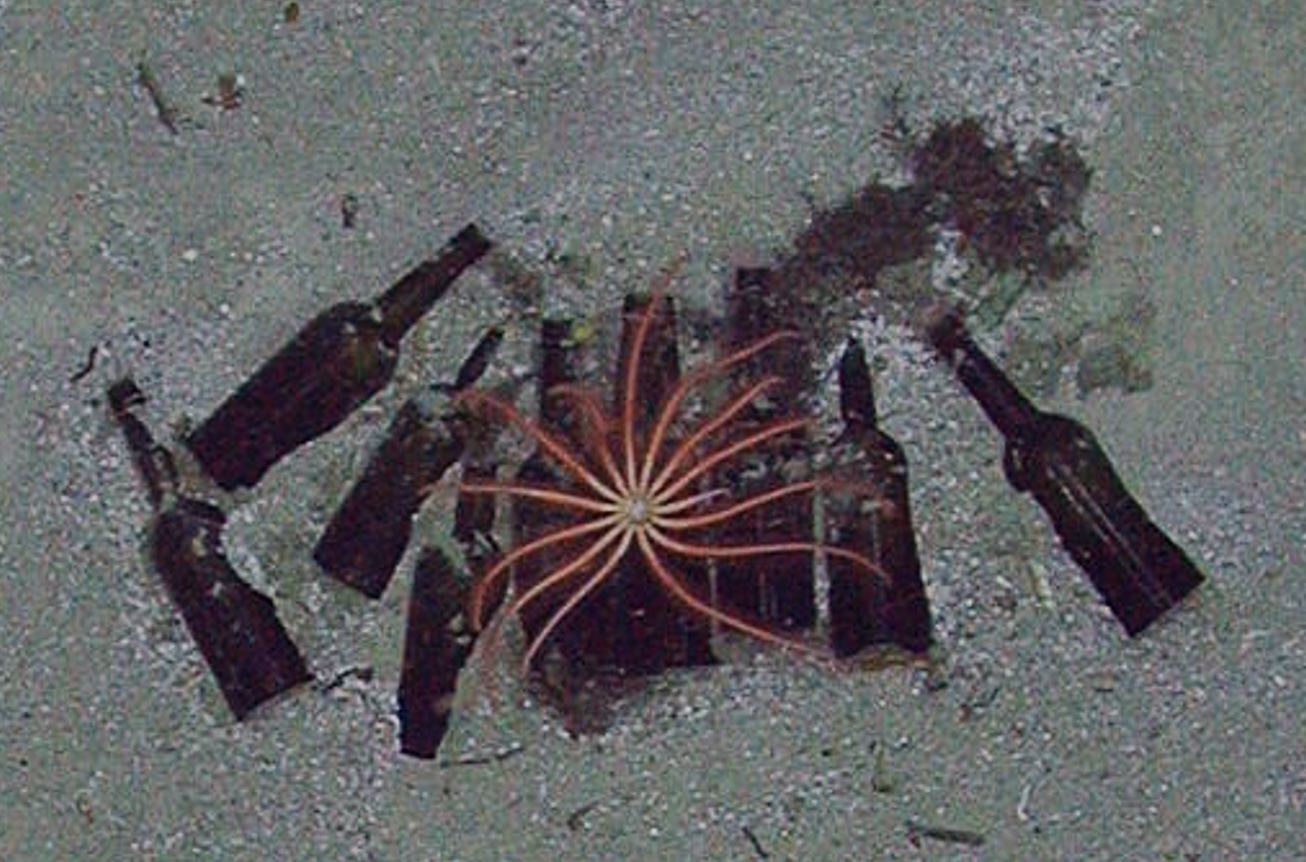
A beautiful female Brisingid sea star (Brisingia costata) sits on top of the cluster, spreading her 14 arms. These starfish are not active predators. They are filter feeders that perch on high, hard objects and substrates, arrange their arms upward, and feed on components of the benthic snow. I have written before (Treasure Talk Episodes 5 & 9) about the pteropod ooze that makes up the sediment where the S.S. Central America came to rest.
This mixture of tiny and microscopic shells drifts and swirls in the bottom currents, combined with small swimming invertebrates and microorganisms that make the soup that feeds these starfish.
It must be amply nutritious, because these large, colorful animals adorn dozens of spots around the shipwreck.
Other artifacts provide the historical record and context for the boxes of whiskey, wine and beer that now populate the debris. Purser William Hull of the S.S. Central America kept a stack of passenger ticket receipts bundle up in his safe. We opened the safe and recovered the contents during the 2014 expedition.
The passenger ticket receipts show “fine print” in the lower left corner, describing certain onboard rules, offerings and financial expectations.
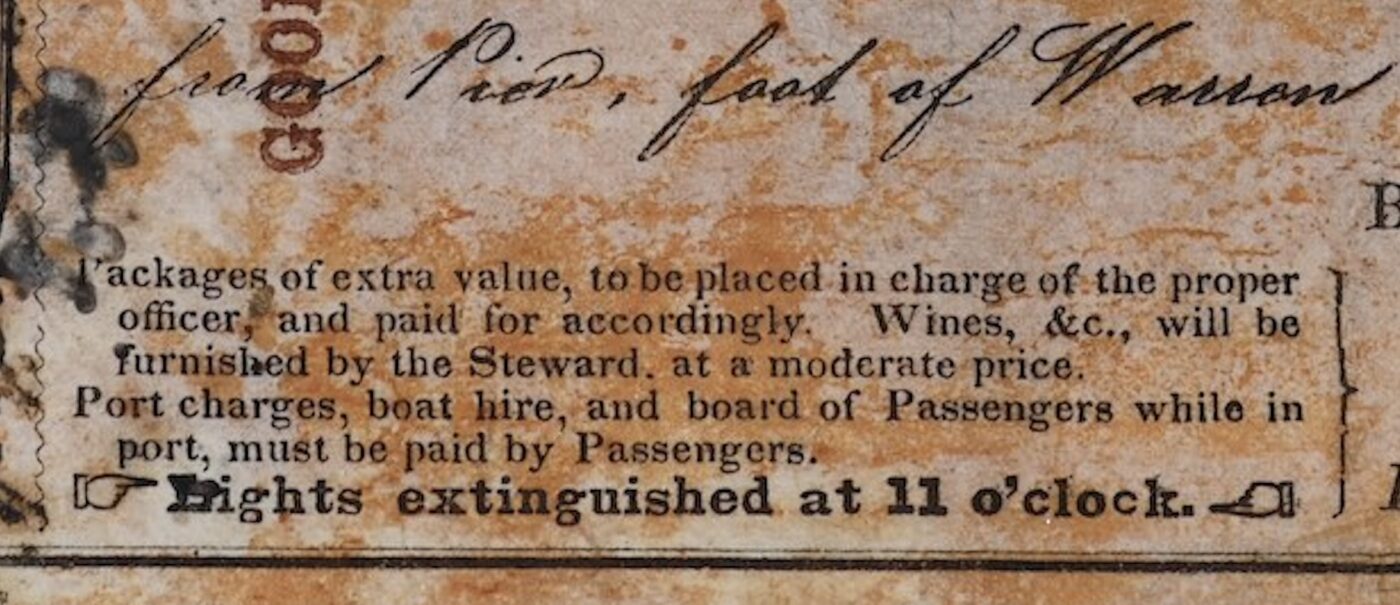
It seems that the whiskey we saw in 2014, guarded by its starfish Steward, was once available “at a moderate price.”
Remember, it gets dark after 11.
Coin Pile #1:
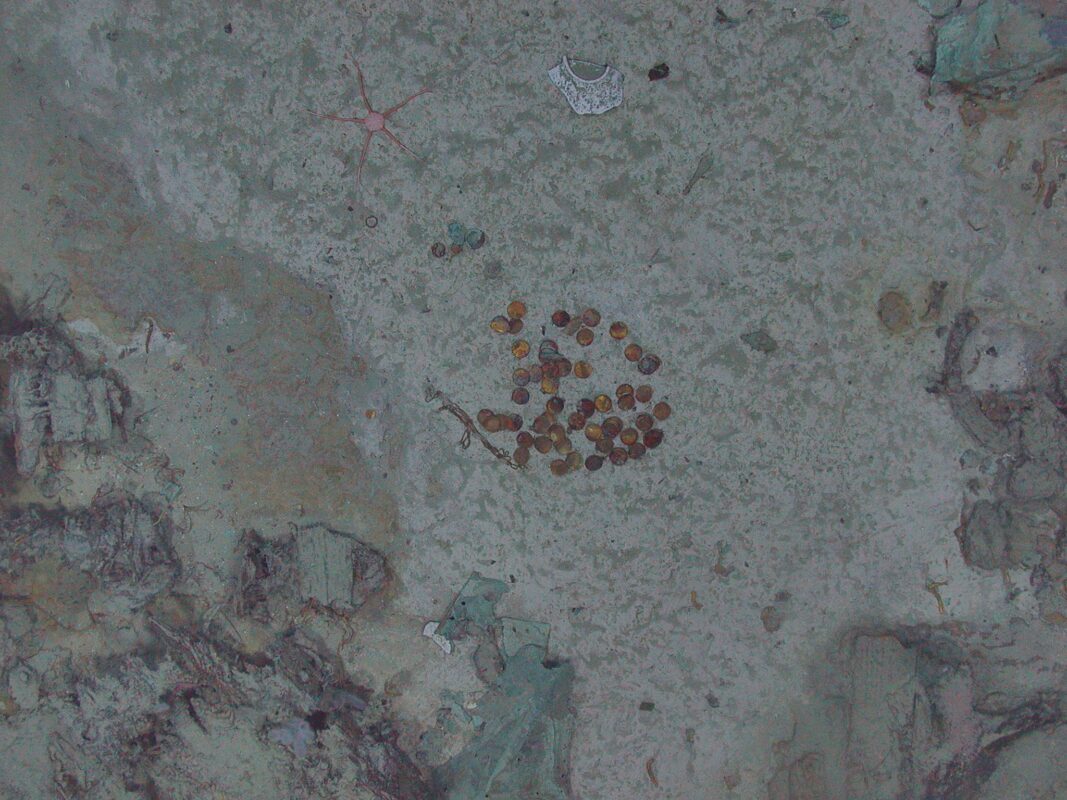
This tight grouping of coins appeared in September of 1988, shortly after we found the shipwreck. We had limited maneuverability with Nemo, our remotely operated vehicle used by the Project during 1987 – 1991. We surveyed the whole debris field in dozens of dives during those seasons, but it was a slow process to do so. Nemo was underpowered when compared with the design of more modern ROVs, and it could not scoot around as quickly as Zeus, the robot we used in 2014.
This pile of a few dozen coins sat 65 meters (well over 200 feet) away from the commercial shipment deposit, which was thousands of coins and hundreds of gold ingots, more than two tons of gold. During the early expeditions, we never exhausted this supply of treasure, so we continued to work on recovering the commercial shipment, dive after dive. The little pile of coins lying in the debris field, quite a way from a truly enormous deposit, was a minor concern, just an interesting little highlight that we could go get anytime. So, we left it alone, confident that we would be back, year after year, until the Project reached its conclusion.
Then the legal matters intervened. Our ownership of the site, established through a November 1990 decision issued by the U.S. District Court for the Eastern District of Virginia, was overturned on appeal in August of 1992. Operations on the S.S. Central America ceased for over two decades, resuming under the aegis of the original company, but now under court-monitored receivership. Ira Kane, the court-appointed Receiver, selected Odyssey Marine to be the contractor for a return expedition, to recover the rest of the commercial shipment and whatever else the shipwreck might yield.
I was the only living human connection with the original expeditions, and I resumed my role as Chief Scientist and Historian. We designated this long-known debris field deposit as “Coin Pile #1,” and we found many more similar coin piles during a careful survey using thousands of photos to produce a photomosaic map of the entire shipwreck site. We recovered Coin Pile #1 on May 9, 2014, this deposit of treasure that I had been thinking about for over a quarter century. Then we learned its true nature and what it had to tell us.
As the sun set on September 12, 1857, the situation on board the S.S. Central America was hopeless, so far as saving the ship was concerned. Lifeboats had ferried the women and children to rescue by the brig Marine, which had been carrying a cargo of molasses from Cuba. As it grew dark, the lower deck levels filled with water, and the swelling seas battered the foundering vessel. The stern was settling faster, so this sent hundreds of men crowding forward toward the bow, clutching their last precious possessions: their money, their jewelry, and their photographs.
There were scenes of despair, as some men threw coins into the sea, or dumped gold dust on the deck, knowing that the wealth they valued was worthless at that moment, in fact a dangerous weight that would drag them down. Finally, the ship lurched at a sharper angle and was engulfed by the sea. A whole host of men dropped their belts, bags, and satchels of gold onto the deck as the ship dropped from beneath them.
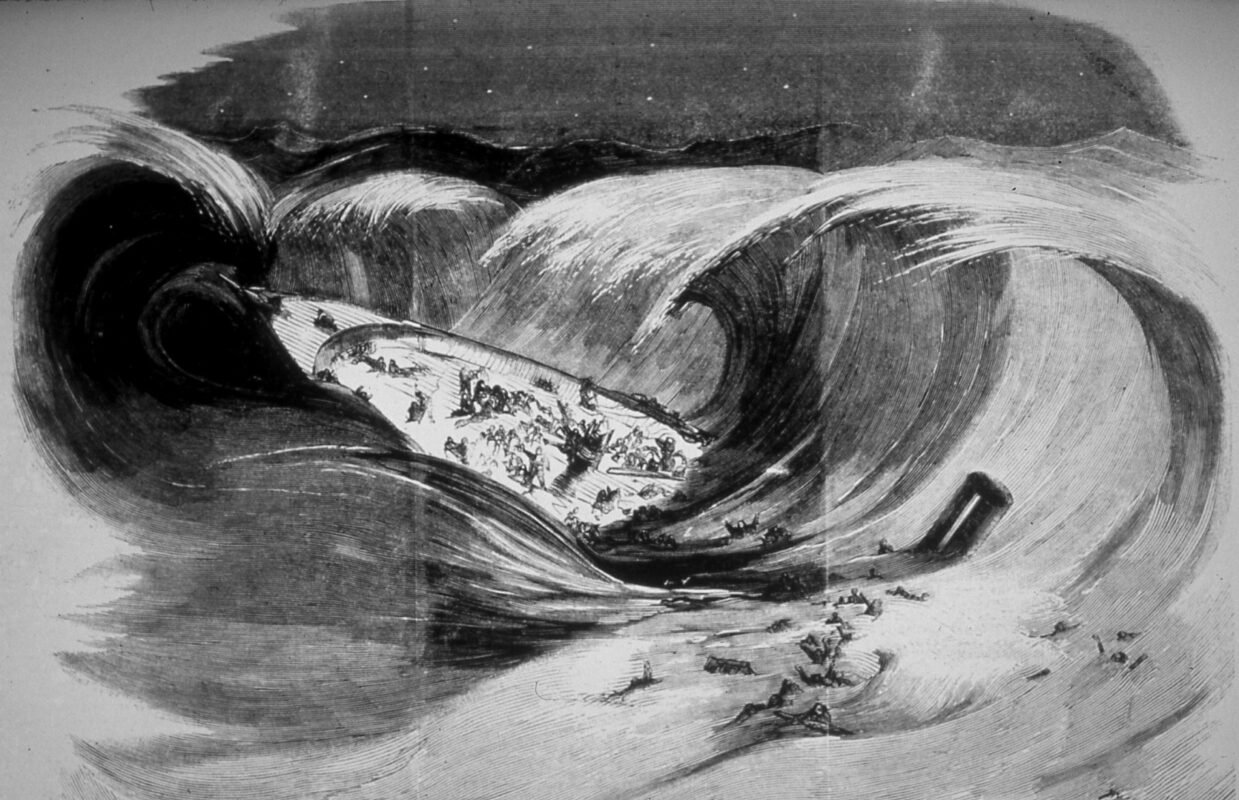
The ship remained upright during a spiraling 7,200-foot fall that last about half an hour. The ship’s main and mizzen mast and rigging acted a little like a squirrel’s tail, dragging through the deepening water, adjusting the sinking ship to where the bow was declined. Although it sank stern first, it impacted the bottom bow first, slightly listed to port. The impact at 3 knots made the ship forward of the central engineworks explode like a water balloon, the hydraulic force blowing the decks and even the boilers and water tanks over into a large portside debris field. This included the parcels of gold men had dropped on the foredeck.
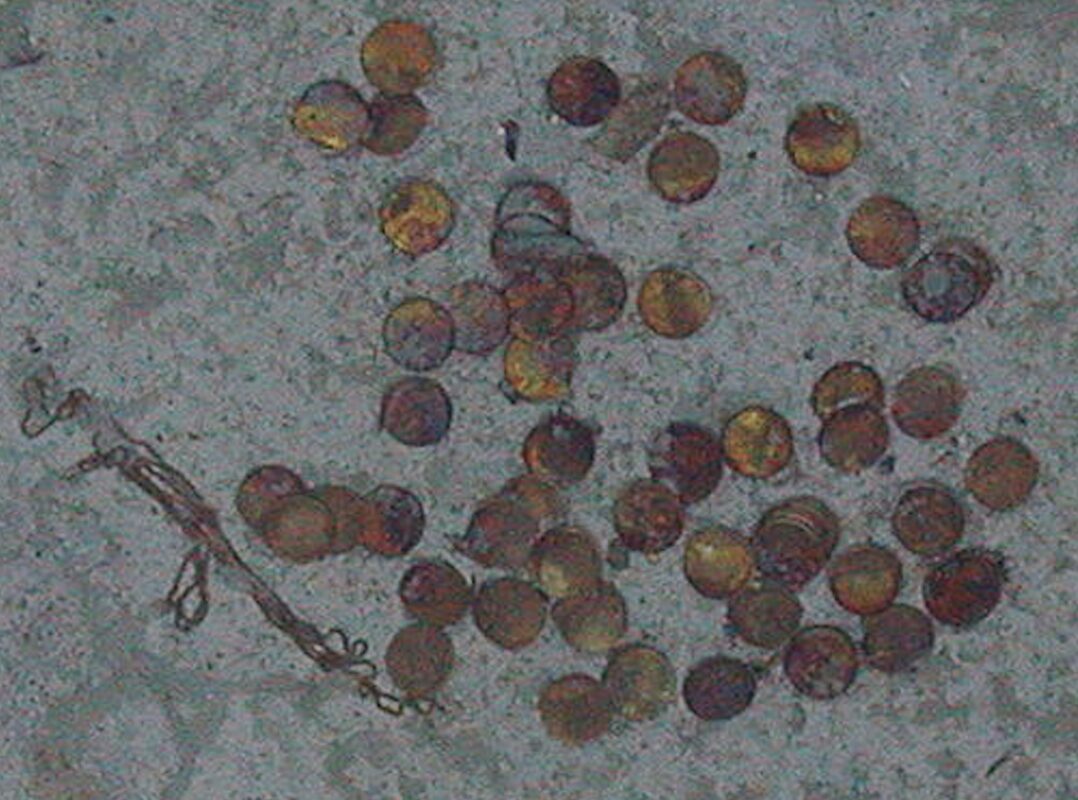
Let’s have a closer look at this parcel, Coin Pile #1, and see what it has to say. When we picked up these coins in 2014, I immediately noticed a difference, compared with what we had recovered from the commercial shipment in the earlier expeditions. From the haphazard pattern of the pile, I think it is likely that these coins, sixty-two $20 gold pieces, along with a long loop of gold chain, were the contents of a bag or purse that was dropped on the deck as the ship sank.
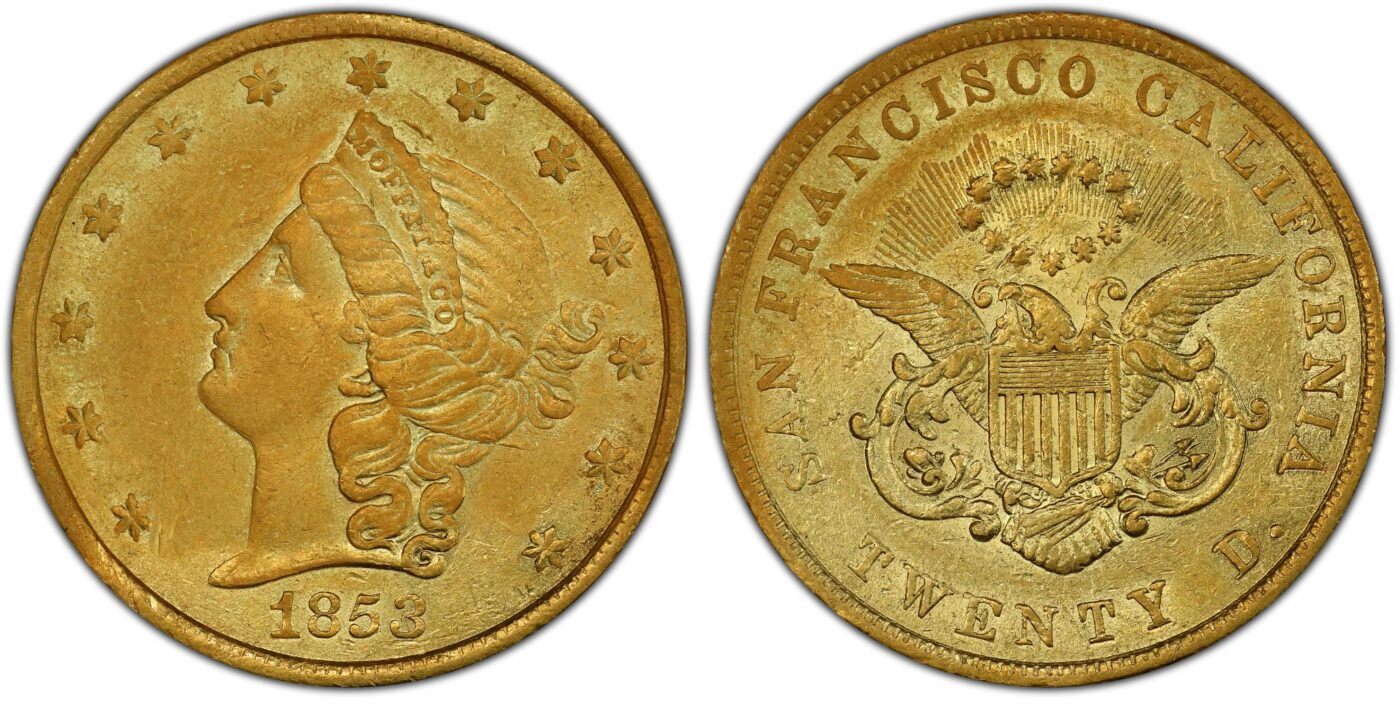
The commercial shipment’s coins were mostly U.S. $20 double eagles, thousands upon thousands of them. This is where the similarity ends. The original owner of this bag was a wealthy man, traveling with other wealthy people. A $20 coin was not very useful in day-to-day transactions. (A modern analogy might be a $500 bill, if there still was one.) It is likely that this man was a merchant, or at least someone who needed $20 gold pieces. But he was probably not from San Francisco. As we spread the pieces from this pile on the black rubber mats of the exam table, I immediately noticed something different. I had personally examined and curated over 6,800 double eagles from the commercial shipment, and I thought I knew what to expect from a group of only sixty-some. But among the dozens of Liberty Heads there sat the billboard face of an Assay Office $20.
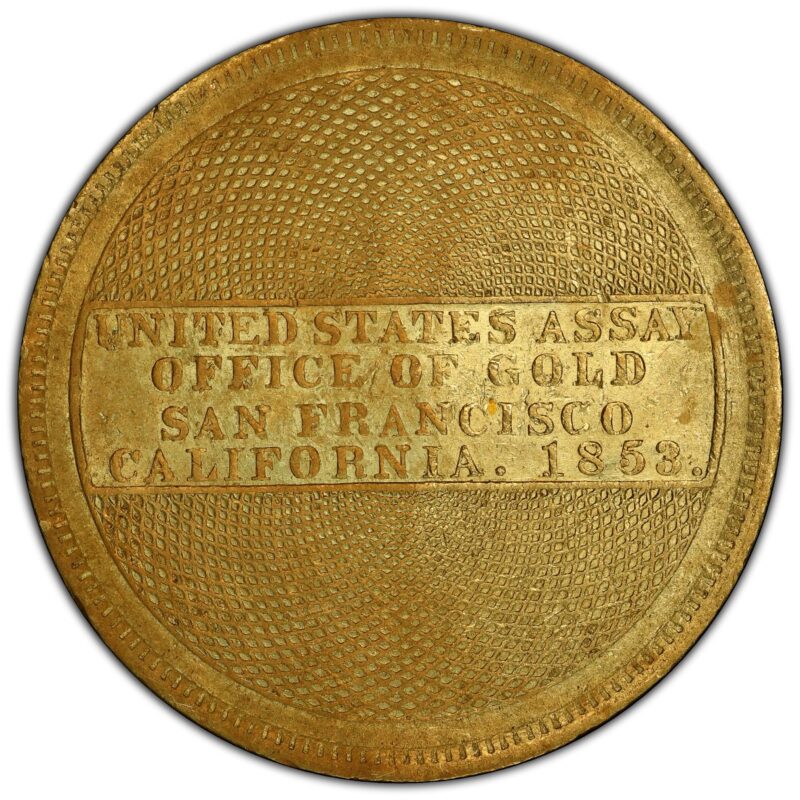
The design didn’t surprise me, but the size did. I had seen this sort of device on close to 200 $10 pieces made by Augustus Humbert or the successor Assay Office, coins that we recovered during the earlier expeditions. We found a whole box of privately-minted $10 coins in the commercial shipment, but not one single Assay Office $20. So, as I began examining the new recovery, cold, wet and glistening in front of me, I was smiling. This was clearly something new.
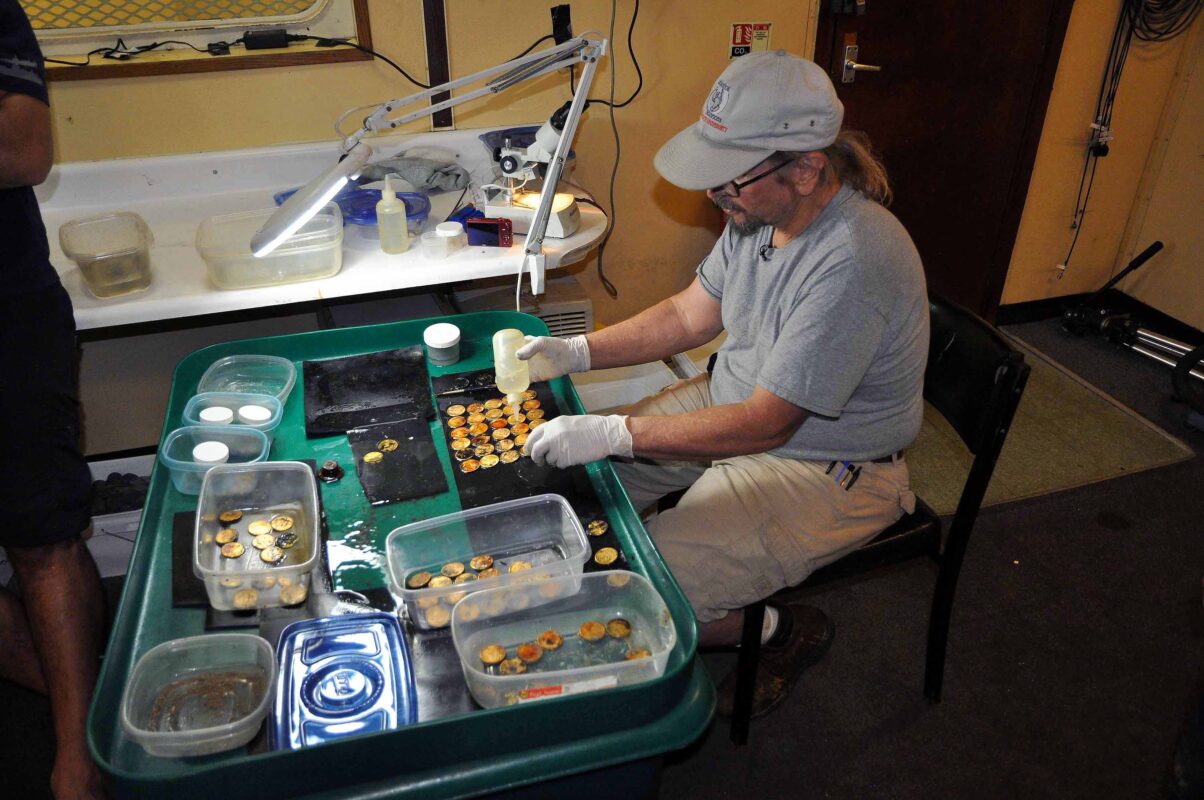
Quickly, I noticed that there were numerous other pioneer twenties, a lot of Kelloggs. I counted them up. Ten! We had found only 9 in the entire commercial shipment. There was also Moffat $20. Again, not something previously seen in the commercial shipment.
When the tally was finished, the sixty-two $20 coins broke down as follows: (numbers of coins in parentheses)
US Mints:
1857-S (23), 1856-S (7), 1855-S (7), 1854 (2), 1853 (6), 1852 (2), 1851 (2), 1850 (1)
Pioneer/Private Mints:
1855 Kellogg (4), 1854 Kellogg (6), 1853 Moffat (1), 1853 Assay (1)
So, who was the passenger who dropped his bag of coins onto the foredeck as the ship sank? As I mentioned before, I don’t believe he was from San Francisco. This bag has a completely different composition compared with the money in the commercial shipment. I have checked the die varieties of the 1857-S double eagles that came from this coin pile, and only one out of the 23 such coins was struck with the most recent reverse die, the Spiked Shield variety. This is unlike the commercial shipment, a sample of San Francisco contemporary usage where the Spiked Shield variety makes up 42% of the total. The coins in this bag are also in lower mint state or circulated grades, indicated that they probably spent time changing hands outside the city.
He may have been a merchant, carrying $1,240 of his wealth back east. Others on board spoke of having lost parcels of thousands of dollars of double eagles. But there may be another possibility. Could this man have been a successful gambler? Judge Monson, a First Cabin passenger and notorious gambler mentioned that, as the storm rose, “Thursday… the evening games of cards and other pastimes for diversion and amusement were dispensed with.” It is fantastic to think that men used $20 gold pieces as poker chips (they often played whist,) but the presence of a single piece of jewelry is odd.
When we found other coin piles with jewelry, they usually had many pieces, not just one. Perhaps this long loop of gold chain with a small jewel was offered up as a substitute as a losing player’s stack dwindled. Or it may have been a gift that the man was carrying for a loved one back east.
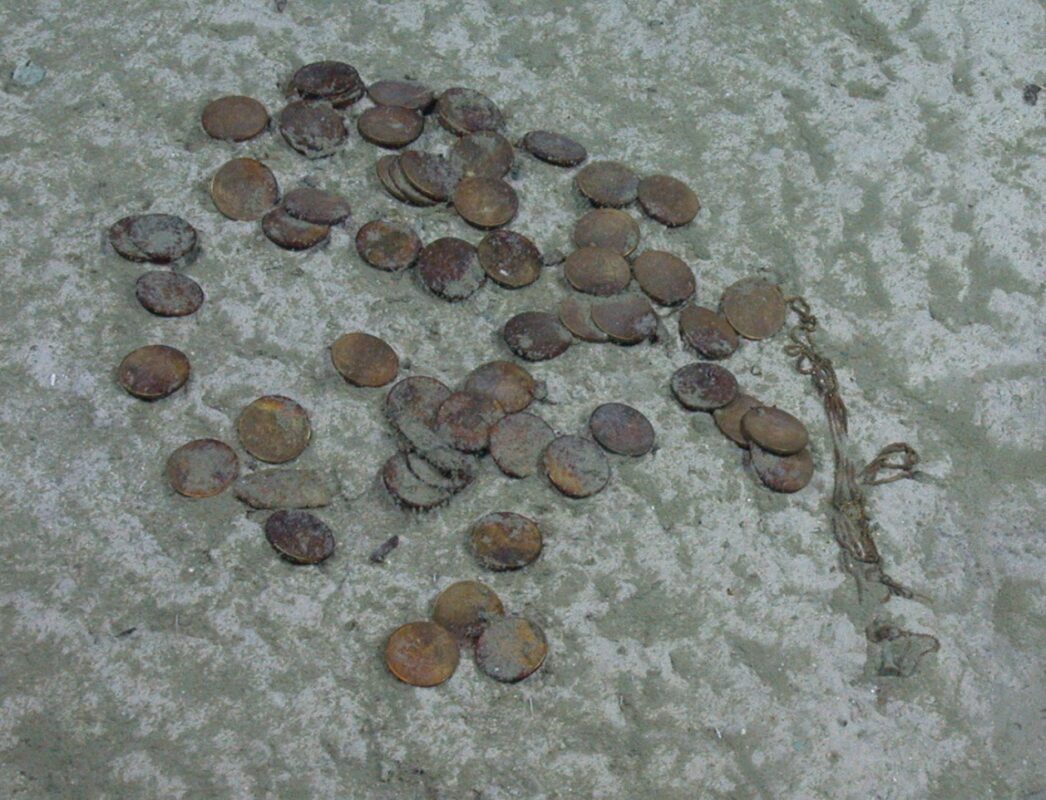
It is interesting to speculate.
More next time…