
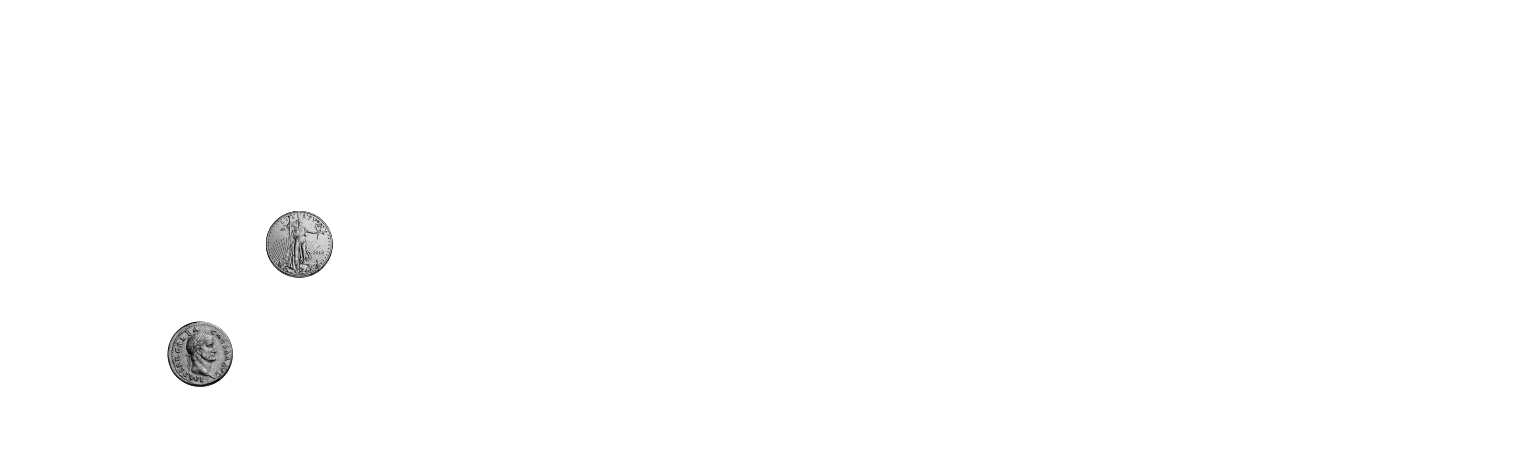
Gold investing
Pre-1933 US Gold What Changed and How to Buy Today

Apr
The 1933 order, collector exemptions, and a simple buying framework.
Gold coins were a common form of currency in the United States until 1933. That year changed how Americans could own gold and redefined the supply of classic U.S. pieces you see today. Here is what changed, what stayed legal, and how to buy pre-1933 gold with a clear plan.
What changed in 1933 under Executive Order 6102
On April 5, 1933, the United States issued Executive Order 6102 that, in the order’s words, “[forbade] the hoarding of gold coins, gold bullion and gold certificates” within the country. Violations could result in a fine of up to $10,000 or a prison term of up to ten years, under the Emergency Banking Act. Banks took in monetary gold, and much of it was melted.
What remained legal collector exemptions and small holdings
The order carved out specific exemptions. It allowed “customary use in industry, profession or art” and it permitted up to $100 in gold coins per person. It also exempted “gold coins having recognized special value to collectors of rare and unusual coins.” In plain English, collectible coins were treated differently from ordinary monetary gold.
How 1933 defined today’s pre-1933 US gold supply
Most circulating gold coins did not survive. Contemporary estimates indicate that the melt is at 90 percent or more of what existed at the time. The survivors that remained in private hands or bank holdings shaped today’s market for pre-1933 U.S. gold.
What “collectible” means in the market today
“Collectible” is a market term, not a legal designation for any single date or mint. In practice, buyers favor certified pre-1933 U.S. gold coins in attractive grades with strong eye appeal. Third-party grading from PCGS or NGC documents authenticity and condition, which helps with comparison and resale. This section is educational, not legal advice.
Pre-1933 US gold types to know
- Saint Gaudens $20 Double Eagle
Liberty striding with torch and olive branch; flying eagle reverse. Core of many pre-1933 sets. - Liberty Head Double Eagle, Eagle, Half Eagle, Quarter Eagle
The earlier classic designs in $20, $10, $5, and $2.50 versions. - Indian Head Eagle ($10)
Liberty in a feathered headdress; star count shifted from 46 to 48 in 1912.
- Indian Head Half Eagle ($5) and Quarter Eagle ($2.50)
Bela Lyon Pratt’s incuse designs with recessed devices.
How to buy Pre-1933 US gold today
- Pick your lane. Choose a type set (one of each) or focus on a single denomination you like.
- Set a budget band. Common dates in pleasing AU to MS grades usually offer the best mix of beauty and liquidity.
- Favor certification. PCGS or NGC holders make apples-to-apples comparisons easier.
- Prioritize eye appeal. Even color, attractive luster, balanced devices, and clean fields are worth a premium.
- Compare several coins. Consider more than one certified example before making a decision.
- Know the premium. Understand the spread over melt for the date and grade you are buying. Ask a specialist to explain it in dollars.
- Store it well. Keep coins in their holders, dry, and away from temperature swings.
Quick FAQ
Are pre-1933 US gold coins considered bullion or collectibles?
Collectibles. They have a bullion floor, but market value usually reflects the melt value plus a premium for date, mint, grade, and eye appeal.
Did all pre-1933 coins survive because they were collectible?
No. Survival was uneven. Many were turned in and melted. Collectors and a few bank holdings preserved the rest.
Do I need a specific date to qualify as “collectible”?
No single date is “designated.” The market and the coin itself drive collectibility; certification and eye appeal also contribute.
Where to look next
Ready to build a smart Pre-1933 position? Partner with Finest Known for clear guidance on type selection, premiums, and side-by-side comparisons. Start with our Double Eagles, then consult with a specialist to find the right coin that matches your budget and goals.